How a sound pulse can make water form bubbles
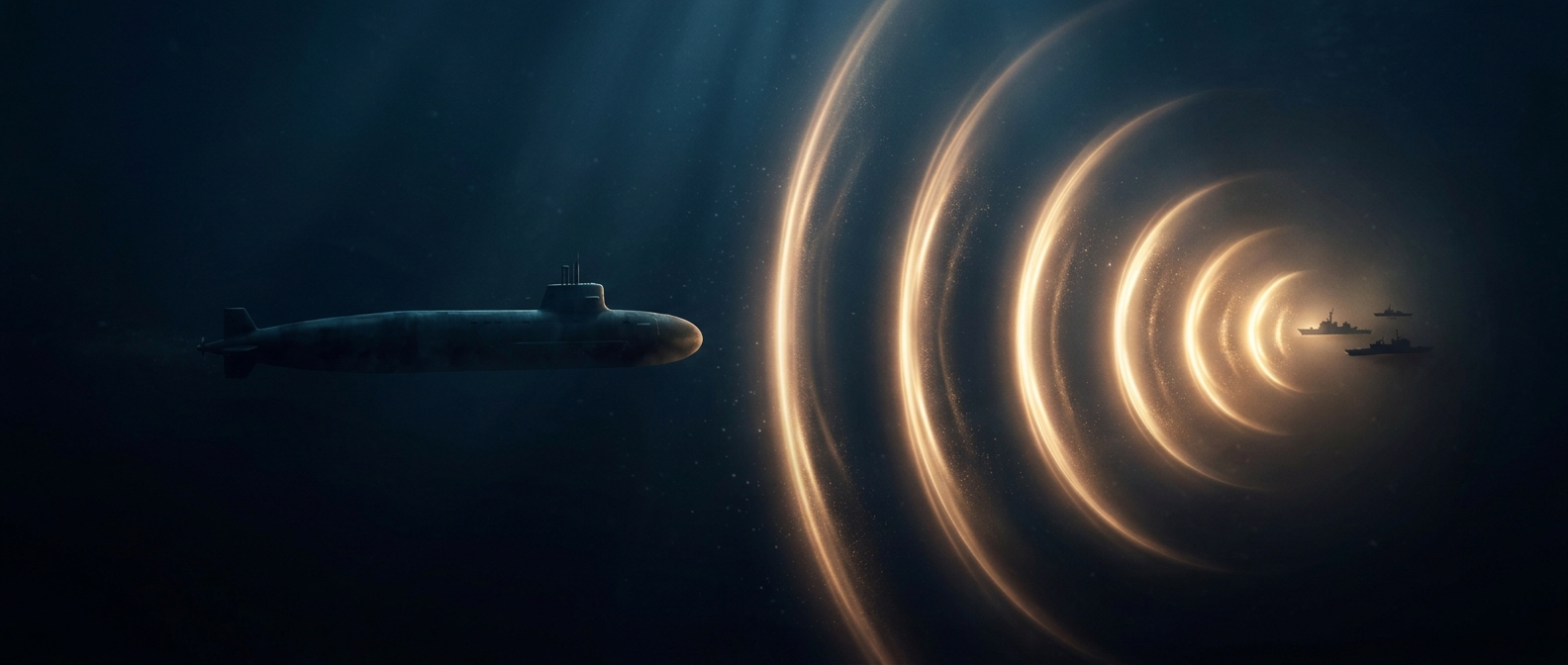
Sonar sends sound through water as a traveling pattern of pressure increases and decreases. A sufficiently powerful pulse can make the pressure dip sharply during part of that cycle. If it falls low enough, tiny pockets of water vapor can form—an effect called cavitation.
The water does not boil in the ordinary sense. Instead, the pressure swing briefly creates vapor-filled bubbles, often around microscopic imperfections or particles already in the water.
The collapse is the damaging part
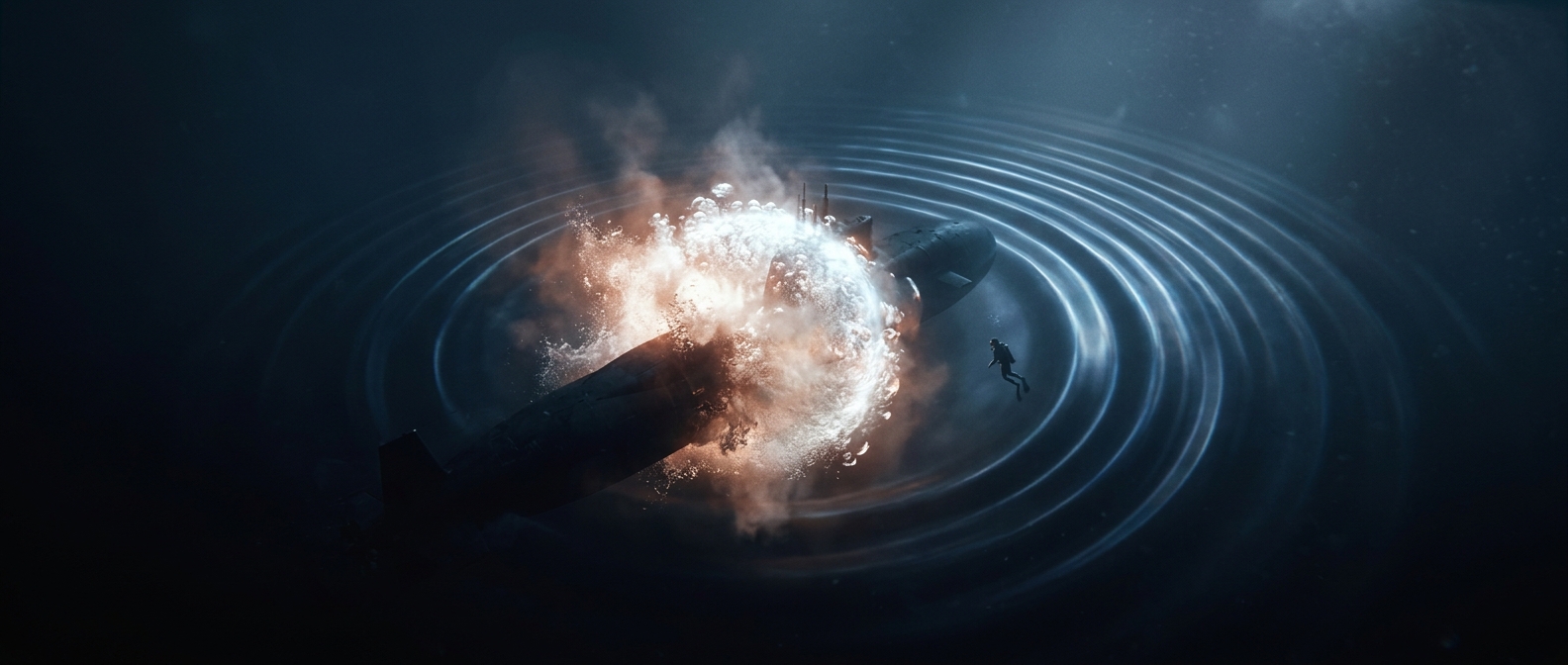
As the sound wave passes and pressure rises again, the bubbles shrink and collapse. That collapse can produce a small, forceful shock in the surrounding water. Repeated over many pulses, such impacts can pit nearby surfaces and create extra noise.
The same basic process occurs at propellers: fast-moving blades create low-pressure regions, bubbles form, then collapse against or near the metal. With sonar, it is the acoustic pressure swing—not a spinning blade—that can trigger the bubbles.
Why intensity and conditions matter
Cavitation is not an automatic consequence of sonar. It depends on how strong the pressure swings are and on local conditions, including the water’s ambient pressure and the presence of tiny bubble-forming sites. Greater depth means greater surrounding pressure, which makes it harder for a pulse to drive the local pressure low enough to form vapor bubbles.
So a powerful sonar pulse can do more than carry information through the sea: under the right conditions, it can make the water itself briefly unstable. The bubbles are tiny, but their sudden collapse is the same physical mechanism that can gradually roughen a propeller.