The cost of asking the ocean a question
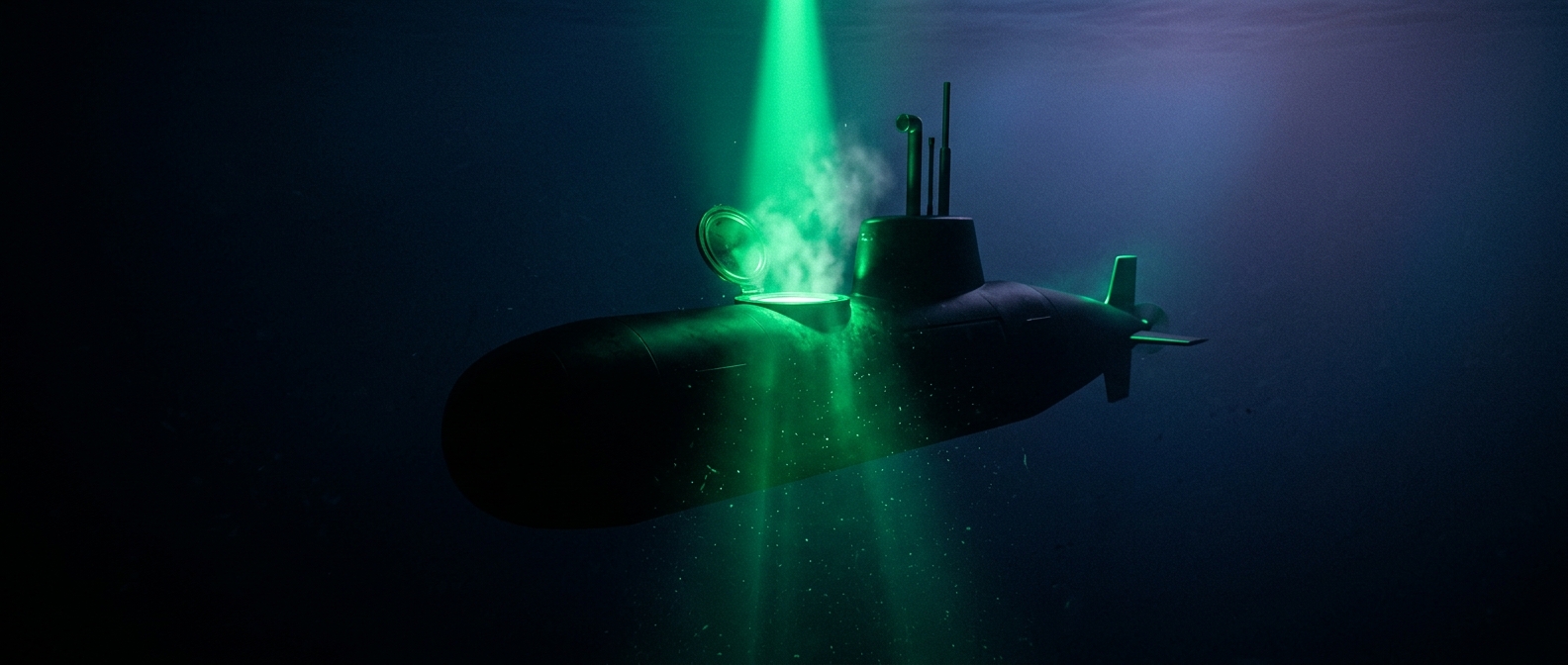
An active sonar system does more than make a sound: it sends a timed pulse and measures how long the echo takes to return. Because sound travels through water at a fairly predictable speed, that delay gives the submarine an estimate of how far away an object is. The pulse can reveal targets that are difficult to hear—but it also gives other listeners a signal to detect.
Sound carries efficiently through water, sometimes over long distances. An opposing vessel does not need to hear the echo meant for the submarine; it can listen for the original transmission. That can expose the submarine’s presence and offer clues about its direction or position, though the signal alone does not automatically pinpoint it.
Listening quietly takes patience
Passive sonar works in reverse: underwater microphones pick up sounds made by ships, such as machinery, propellers, and water moving around the hull. Analysts can compare those patterns with known sound signatures and track how they change over time. But passive sonar has a limitation: it may indicate the direction of a sound without immediately revealing how far away its source is. Distance can take time and observation to estimate.
That tradeoff shapes submarine operations. Crews reduce their own noise and listen, accepting that a quiet search may be slower or less certain than sending a pulse. Active sonar remains useful when the need for a clearer answer outweighs the risk of being heard. The choice is not simply between good and bad sonar: it is between learning more now and making the search itself detectable.