Keeping Two Airplanes in Step
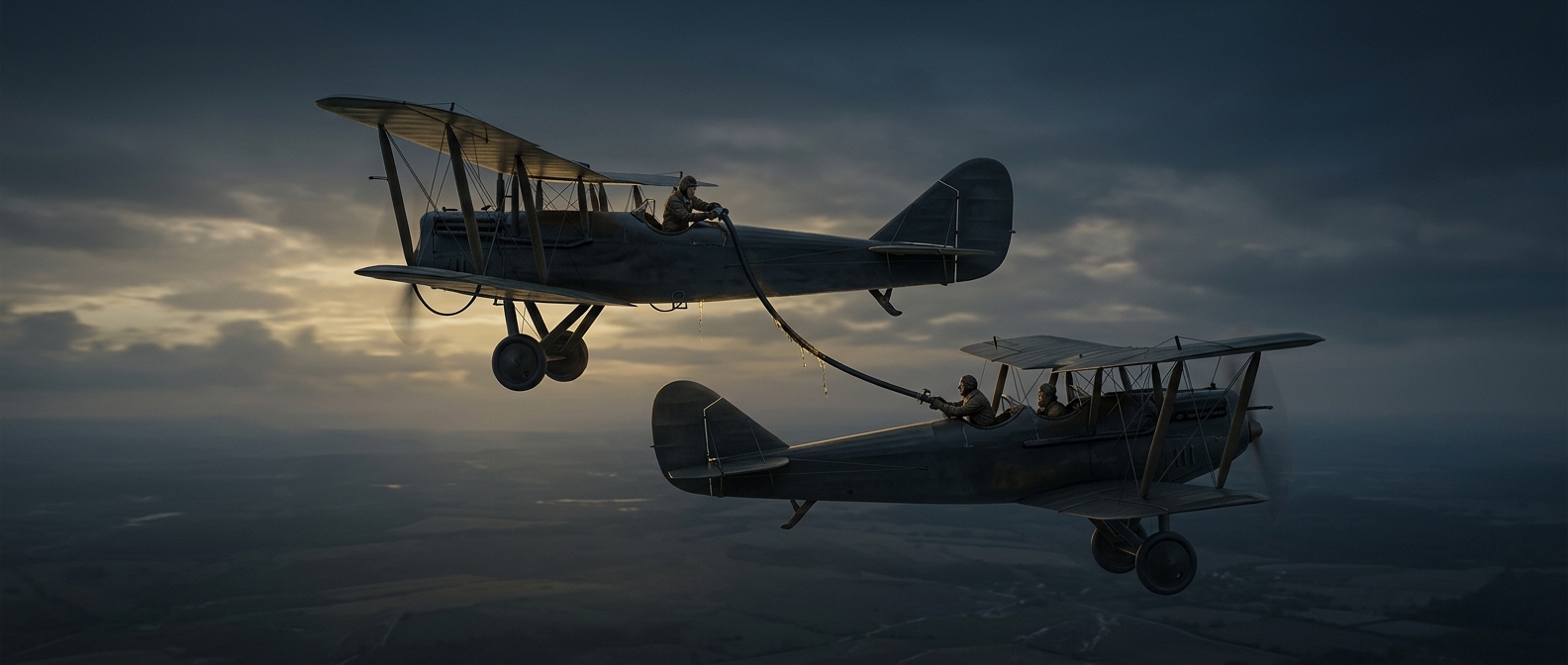
The difficult part was not simply getting fuel out of one aircraft. The donor and receiving planes had to fly at nearly the same speed and maintain a steady position relative to each other, close enough for the hose to reach but not so close that either aircraft’s movement could disrupt the transfer. Even small changes in speed or spacing could make the hose swing and the connection harder to manage.
The crew therefore had to coordinate two jobs at once: keep the aircraft in formation and guide the hose to the receiving plane’s fuel opening. The hose was a moving, exposed link between two machines, not a fixed pipe. Airflow tugged at it, and the people handling it had to work while both planes remained aloft.
Why the Effort Was Worth It
Refueling in the air let a plane continue a flight without landing to replenish its fuel. That could extend a journey, but it made endurance depend on a second aircraft and a demanding maneuver. The donor had to carry fuel to spare, and both crews had to complete the transfer safely enough to resume their separate flights.
Gravity made the system simple: fuel could flow from the donor toward the receiver without a pumping station between them. But simplicity shifted the burden to positioning and control. The first airborne fuel stop was less a piece of equipment than a temporary formation the crews had to build and hold in the sky.