A Flying Test Bed, Not a Nuclear-Powered Bomber
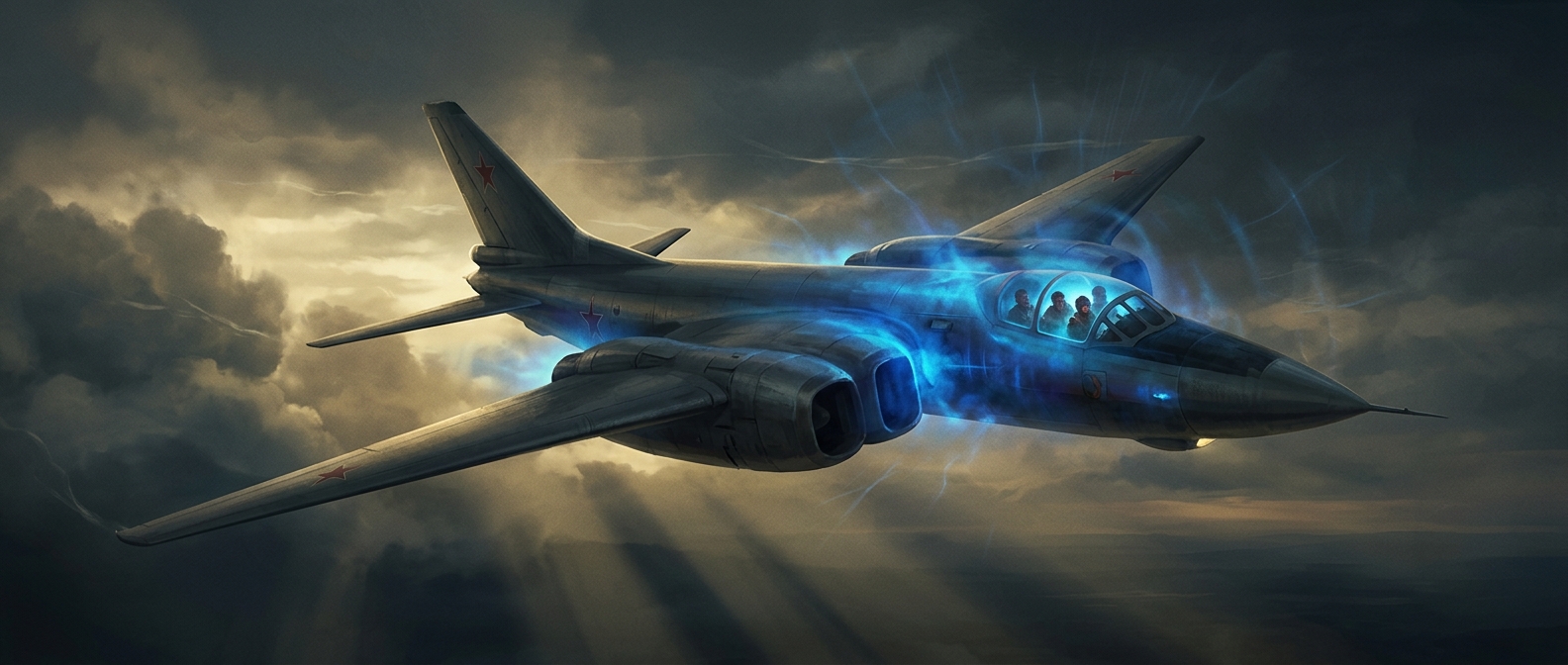
The NB-36H was built to answer a difficult engineering question: could an aircraft carry a working reactor without exposing its crew to dangerous radiation? The reactor was flown aboard the plane to test shielding in real flight conditions. It did not drive the propellers. Conventional engines supplied the thrust, while instruments recorded how much radiation reached different parts of the aircraft.
That distinction mattered because a shield that worked on a drawing might behave differently in the air. The reactor’s radiation could scatter through the fuselage and surrounding materials, so engineers needed measurements from an operating reactor—not just calculations—to assess how much protection the crew compartment required.
Protection Had to Fly, Too
Radiation shielding is not a single magic barrier. Dense materials can absorb penetrating radiation, but adding protection also adds weight. On an aircraft, every extra pound affects how much fuel and equipment it can carry and how it performs. The challenge was therefore to protect people without building a shield so heavy that a nuclear aircraft became impractical.
The NB-36H’s crew sat behind protective barriers while detectors measured radiation levels around the plane. Those readings helped engineers understand how shielding performed in flight and where radiation could travel. The crew was protected, but not removed from the experiment: their aircraft carried an active reactor, and monitoring was essential.
What the Flights Could—and Couldn’t—Prove
The flights demonstrated that engineers could operate a reactor aboard an aircraft and gather useful shielding data. They did not prove that a practical nuclear-powered bomber was ready to fly. A propulsion system would have required additional engineering to turn reactor heat into thrust, as well as shielding light enough for an operational aircraft.
The NB-36H thus carried the atom along as a test subject, not as its engine. Its most important cargo was the evidence gathered about a stubborn aviation tradeoff: protecting the crew meant carrying shielding, and carrying shielding made the aircraft heavier.