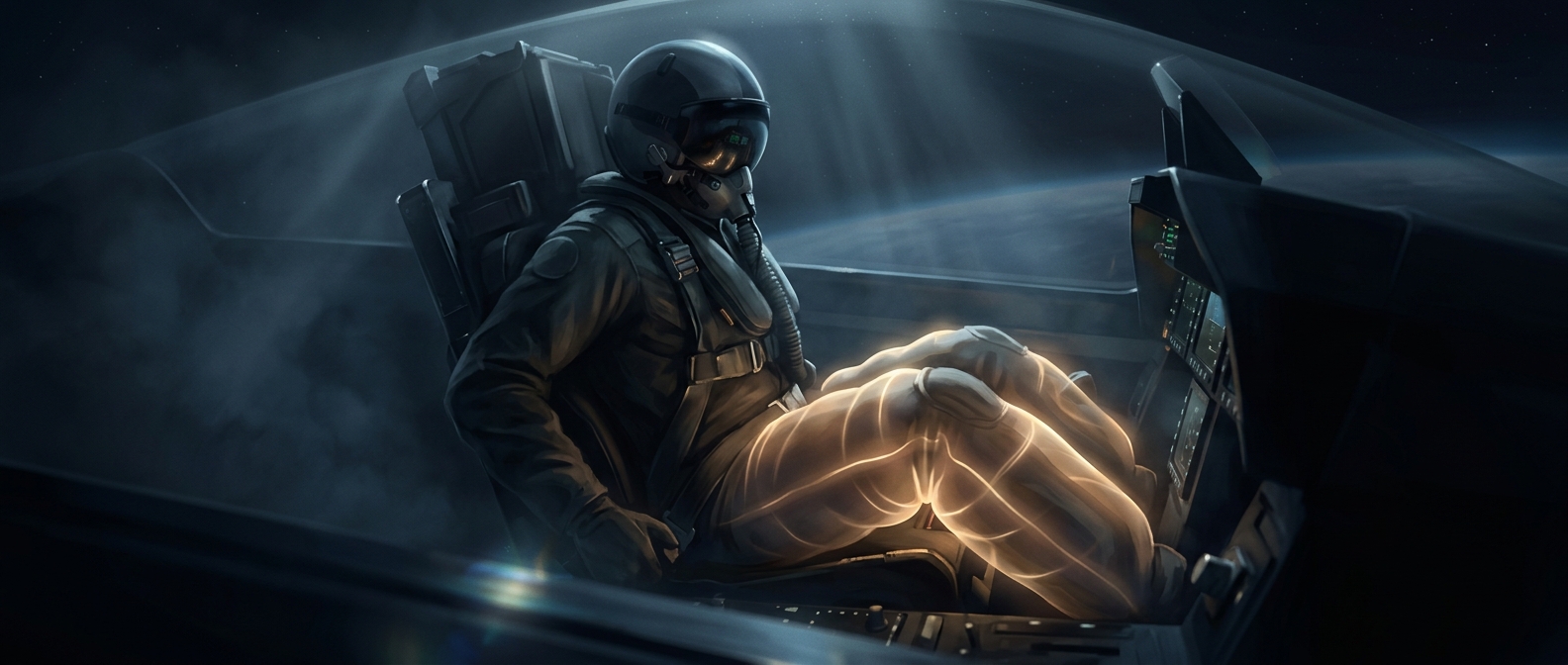
How a Shift in the Pilot’s Weight Became a Steering Command
A flying platform had no conventional cockpit controls for the pilot to turn. Instead, the pilot’s body helped operate the aircraft: leaning moved their weight relative to the platform, and the control system translated that shift into a change in the machine’s balance and thrust.
The key is that shifting weight does not, by itself, push an aircraft sideways through the air. To move laterally, the platform had to tilt or redirect its lift. Once its thrust angled off vertical, part of that force pushed it across the sky while the rest continued to support its weight. The pilot’s lean was therefore less like pushing a vehicle and more like asking it to tip its lift in a chosen direction.
Why the Pilot’s Body Was Part of the Control System
This arrangement made the aircraft unusually direct to operate, but also made control depend on a moving human. A pilot shifting position to stay comfortable or steady could unintentionally affect the machine; conversely, when the aircraft moved, the pilot had to keep their balance while making corrections. The person was not merely cargo but part of the platform’s steering mechanism.
That coupling was a striking engineering tradeoff. Removing familiar controls could simplify the interface, yet it left little separation between the pilot’s posture and the aircraft’s response. In a small, exposed craft, even an ordinary lean had consequences: it could become an input that changed where the platform’s lift was aimed.