Why Steamships Kept Their Masts
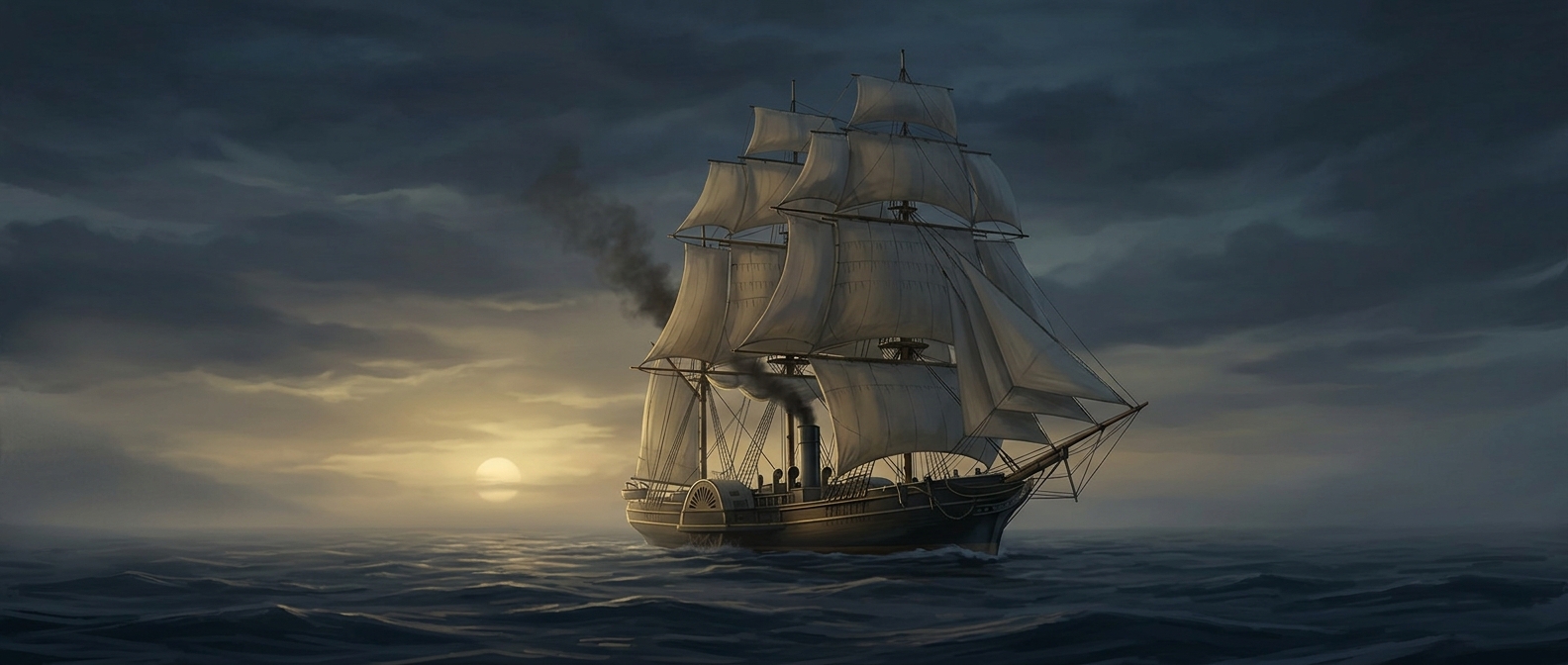
An early steam engine did not make a ship independent of the weather; it gave the crew another way to move. Boilers needed constant feeding, and engines could break down or perform poorly. Sails offered a separate source of thrust, using wind without consuming coal. Keeping them meant a ship could still make progress if its machinery failed or fuel ran short.
Two Propulsion Systems, One Voyage
The crew could use steam to hold a course when the wind was unfavorable, then set sails when the wind could help. That reduced the work demanded of the boiler and stretched the ship’s coal supply. This mattered especially on long routes, where carrying fuel took up valuable space and a ship could not count on finding coal whenever it needed more.
Sails were not a simple backup switch. Masts, rigging, and canvas added weight and required sailors to manage them, while wind was too changeable to guarantee speed. The engine provided more dependable control; the sails could supplement it when conditions allowed. Together, they let a ship trade some complexity for greater flexibility.
A Bridge Between Eras
As engines and fuel systems became more dependable, the case for carrying a full spread of sails weakened. But early steamships were built during a transition, not after steam had already solved every practical problem. Their tall rigs made that compromise visible: a ship could burn coal to push through calm or headwinds, yet still draw on the wind when it was useful. The old technology remained aboard because, at sea, a second way to keep moving could be worth the extra gear.