Why Put the Track Above the Road?
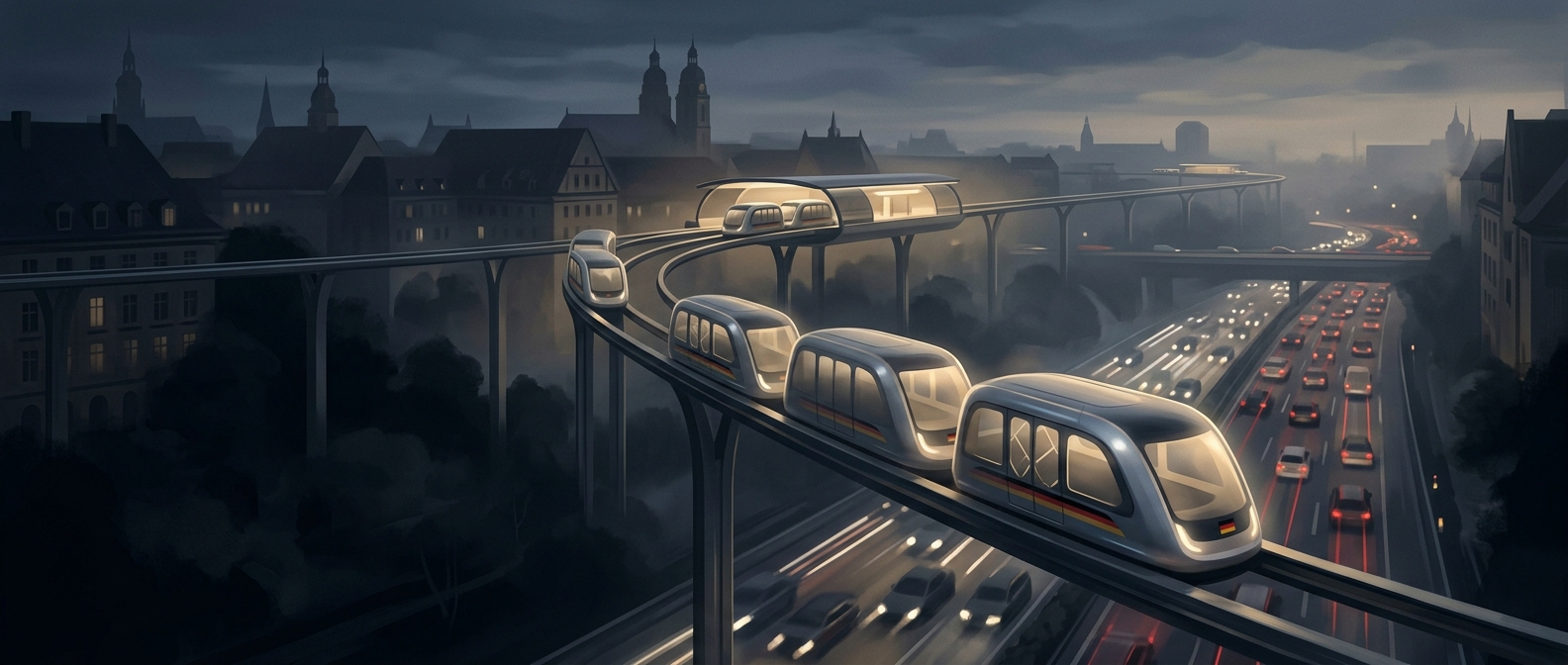
A driverless pod on an elevated guideway solves one problem by avoiding another: it does not need to steer around cars, cyclists, or pedestrians. The guideway fixes its path, while automated controls manage when it moves and how it keeps a safe distance from other vehicles on the same route. That makes the system less like a self-driving car and more like a small train whose cars can travel independently.
The separation is the key. A traffic jam below cannot directly block a pod above it, and the pods do not need to negotiate ordinary road intersections. But they can only go where the guideway goes. The route’s flexibility is traded for a controlled, predictable operating environment.
The Infrastructure Is the Catch
Avoiding road congestion does not make the journey infrastructure-free. An elevated line needs supports, stations, power and control equipment, and places where passengers can reach it. Those structures must fit into the streets and buildings around them, and the route has to be useful enough to justify the cost and disruption of construction.
Small cabins can suit trips between closely spaced stops, especially where a larger train would be excessive. Yet small vehicles also carry fewer people at a time. A system’s usefulness therefore depends on more than whether it can move without a driver: it must also handle demand, connect conveniently to other transport, and serve destinations people actually need.
That is why the image of pods gliding over a jam is both compelling and incomplete. They can bypass the congestion directly beneath them, but only on a route built in advance—and getting that route into a city is the harder part.