Why the engine’s shudder reaches the seat
A small combustion engine does not push continuously. Each firing stroke delivers a brief burst of force, followed by a pause while the next part of the cycle turns. At idle—the slow speed used while the vehicle waits—those pulses arrive less often, so they can be felt as separate jolts rather than blending into a steady hum.
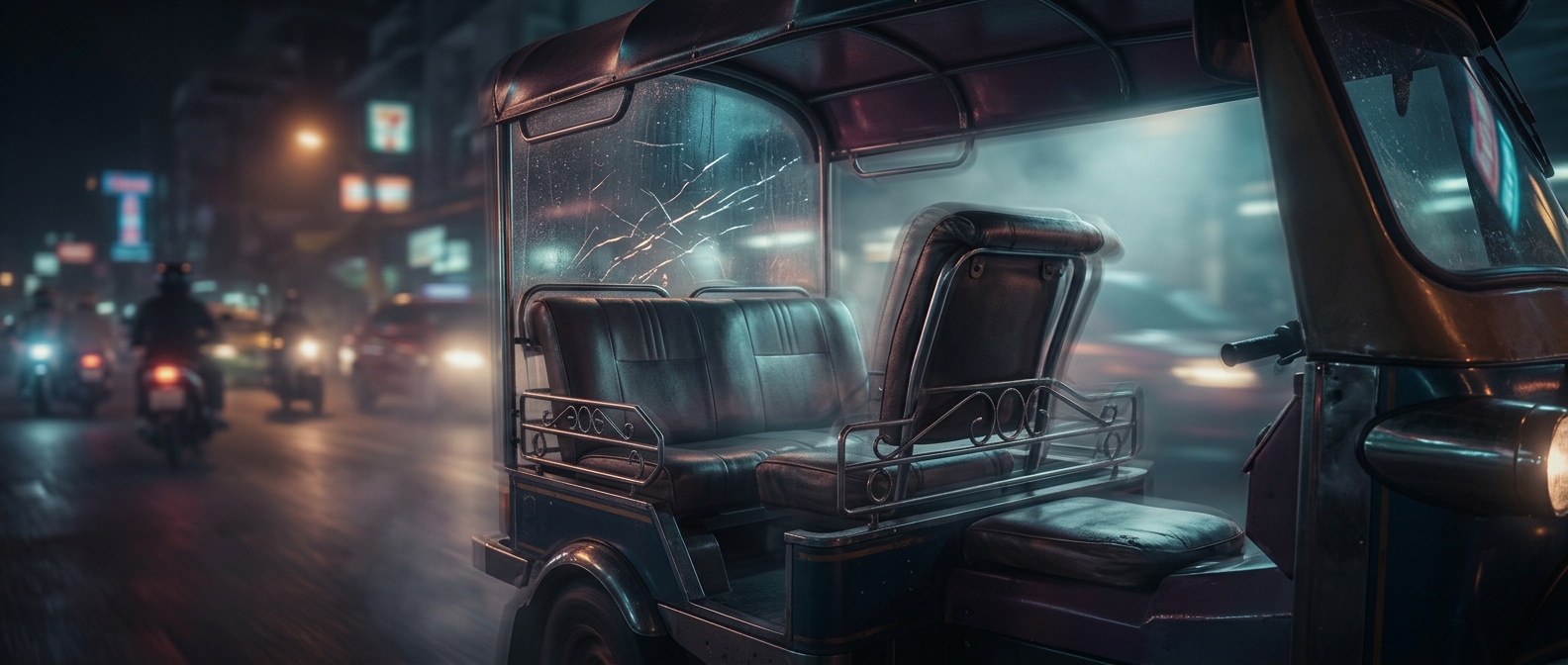
A tuk-tuk’s light structure gives those jolts an easy route to the passengers. The engine’s movement passes through its mounts into the frame, then through the floor and seat. A heavier vehicle can absorb more of that motion; a lightweight one may transmit it plainly.
Why the shaking stands out at a light
When the tuk-tuk is moving, road noise and the motion of the vehicle compete for attention. At a stop, the wheels are still and the surroundings may be quieter, leaving the engine’s low-speed pulses unusually noticeable. The driver keeps the engine running so it is ready to move when traffic opens up, and the idle continues to send small vibrations through the frame.
So the stoplight does not necessarily make the engine shake more. It removes the movement and noise that would otherwise hide the shudder—and gives passengers a direct reminder that the engine is still working.