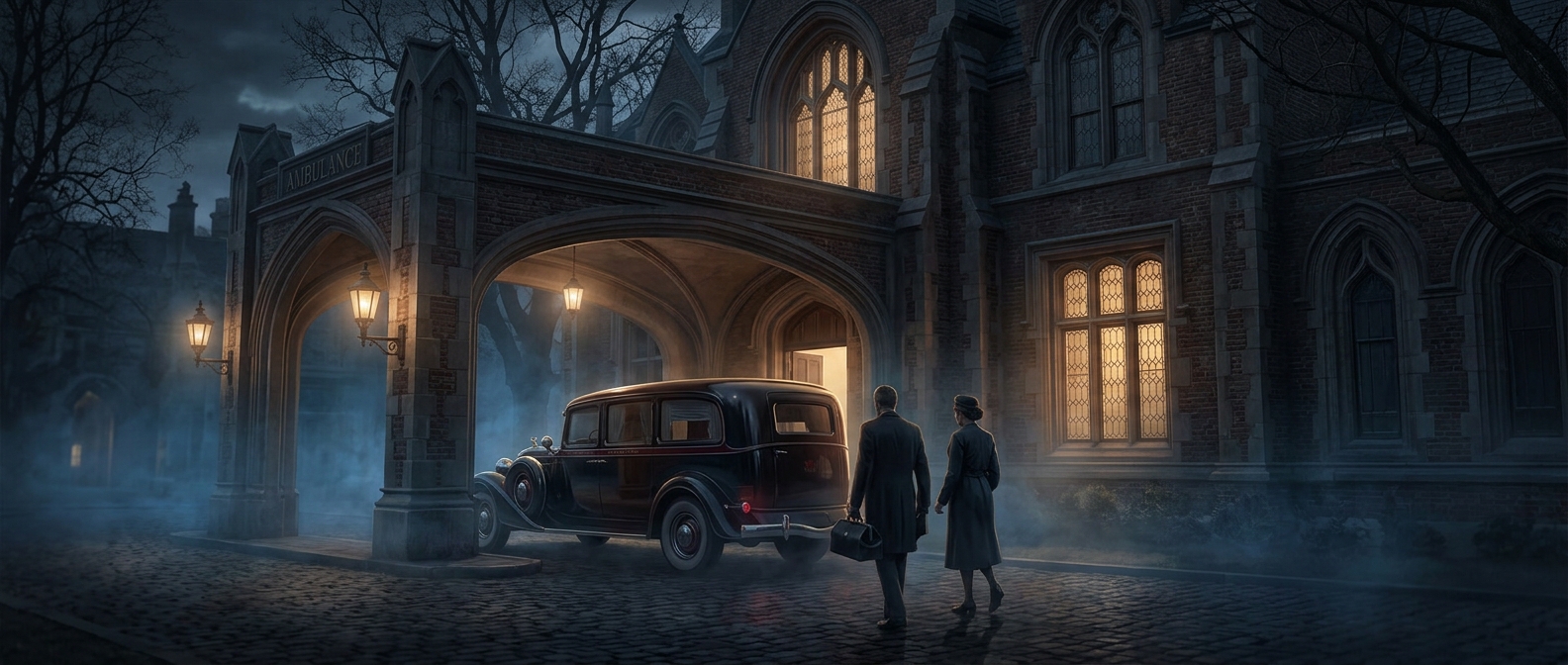
A hearse offered space when emergency transport was scarce
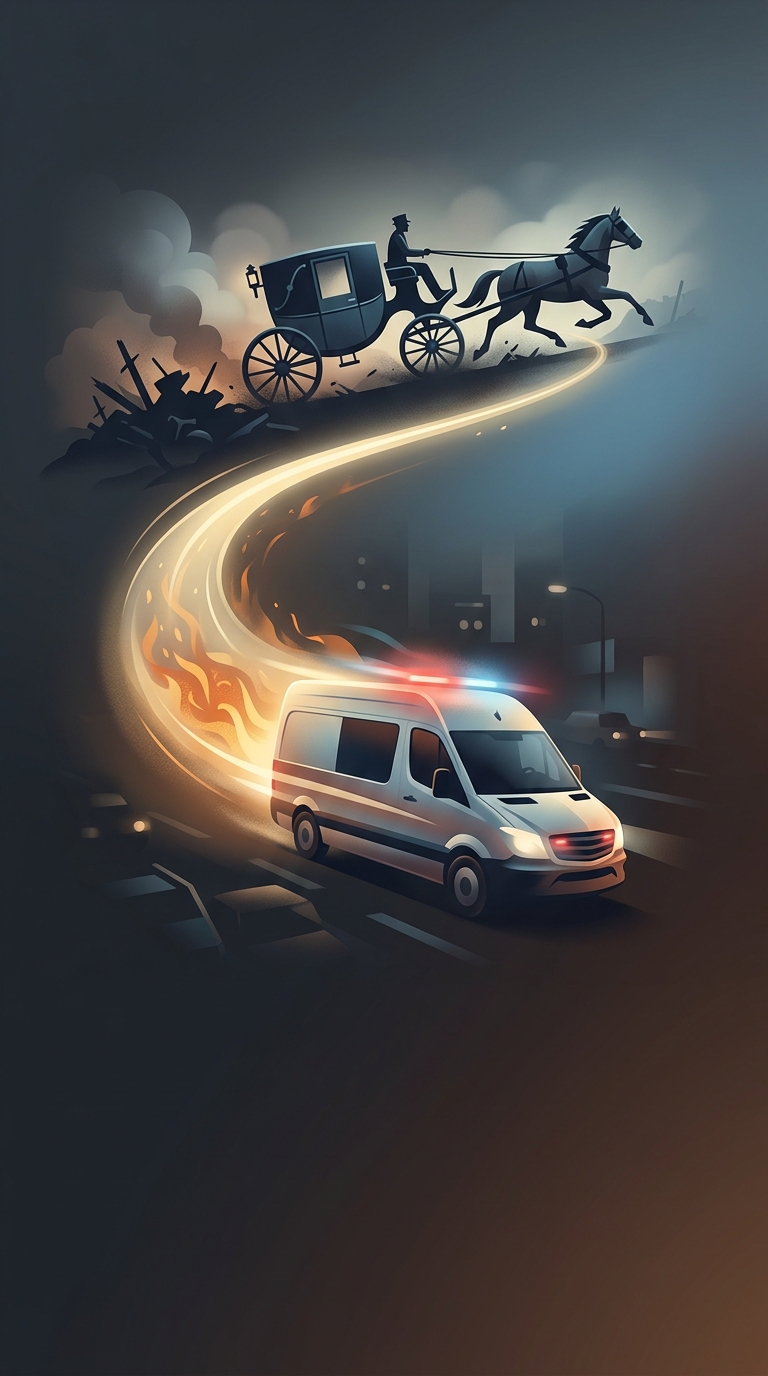
A horse-drawn hearse was built to carry a coffin, but its long, enclosed body could also accommodate a person lying down. That mattered when a patient could not simply walk or ride upright in an ordinary cart. In places without a dedicated ambulance service, adapting a vehicle already available could solve the immediate problem of getting someone to a doctor or hospital.
The arrangement was practical, not necessarily medically equipped. A hearse could move a patient, but the trip itself did not provide the coordinated care associated with a modern ambulance. Its value was in the vehicle’s room and availability: transport could begin without waiting for a specialized service to exist.
One vehicle, two very different journeys
Funeral homes had a reason to keep a horse-drawn vehicle ready for use, and that made their hearses a resource beyond funeral work. Repurposing them reflected a broader step in the development of emergency transport: communities first used what they had, then built services and vehicles around the needs of patients.
The contrast is striking. The same roomy carriage could carry a body after death—or carry a living person toward care, in hopes of changing what came next.