Why a lever mattered in a space capsule
Ham’s task tested more than whether a chimpanzee could learn a cue. It tested whether a living passenger could still perceive a signal and make a deliberate response while a rocket launch, changing forces and brief weightlessness disrupted ordinary movement.
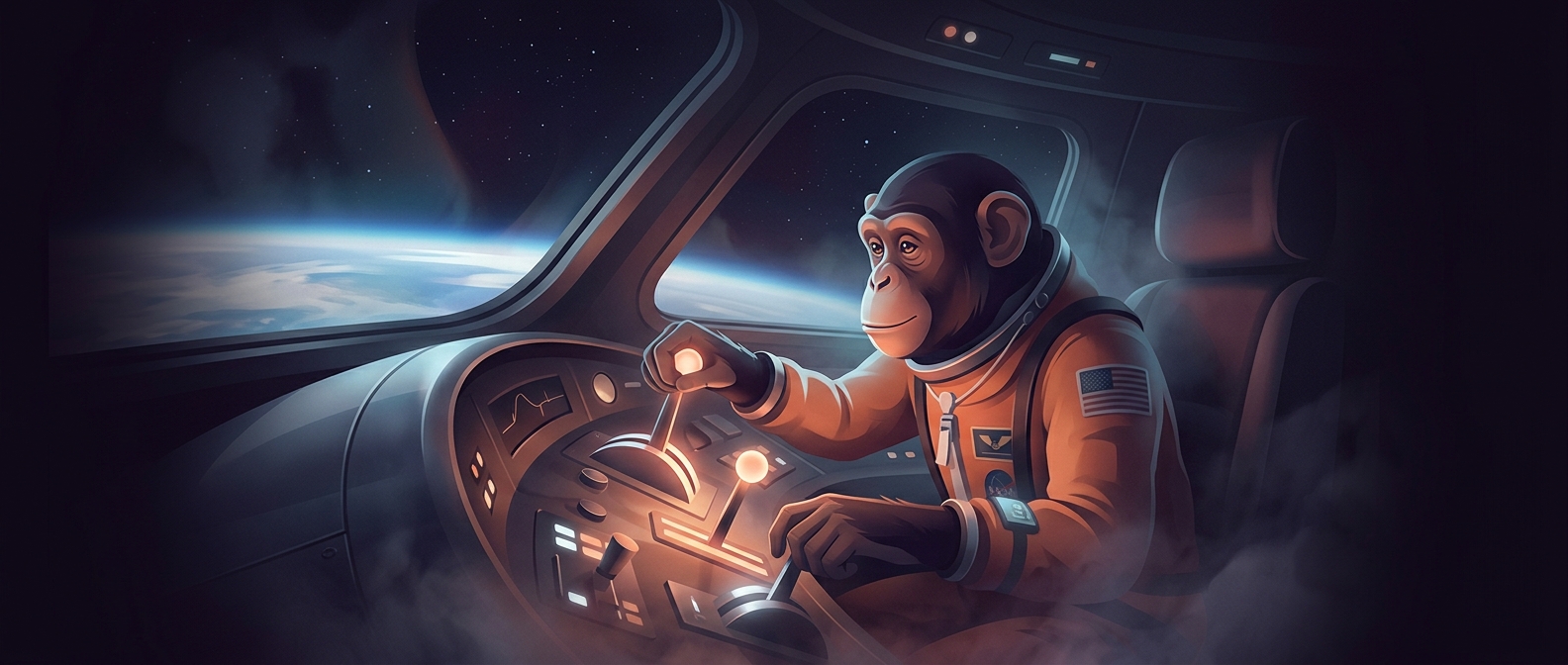
In training, a light told Ham when to pull a lever. A correct response earned a food reward; the setup made his performance observable and repeatable. Engineers could compare what he did in flight with what he had learned on the ground, rather than relying only on instruments to show how the capsule was behaving.
A small task inside a larger test
The flight was a suborbital test: the capsule rose into space and returned to Earth without circling the planet. It carried equipment to monitor the flight as well as systems intended to keep its passenger alive. Ham’s task added a different kind of evidence: could an animal follow a simple procedure amid the physical stresses of launch and the unfamiliar conditions after it?
That distinction mattered for planning human spaceflight. A capsule might function mechanically, yet a person would still need to notice information and act on it. A trained lever pull was a narrow measure—not a full test of human judgment—but it gave mission planners a concrete way to check whether purposeful behavior remained possible in flight. The job was tiny; the question behind it was whether a passenger could do anything at all when the ground was no longer underfoot.