Why zebras resisted becoming working animals
Domestication is not the same as training one animal. A trained zebra may learn to carry a rider or pull a vehicle; a domesticated species has been bred across generations so that its descendants are generally easier to handle, reproduce, and work with. Horses went through that long process. Zebras did not develop a comparable domesticated population.
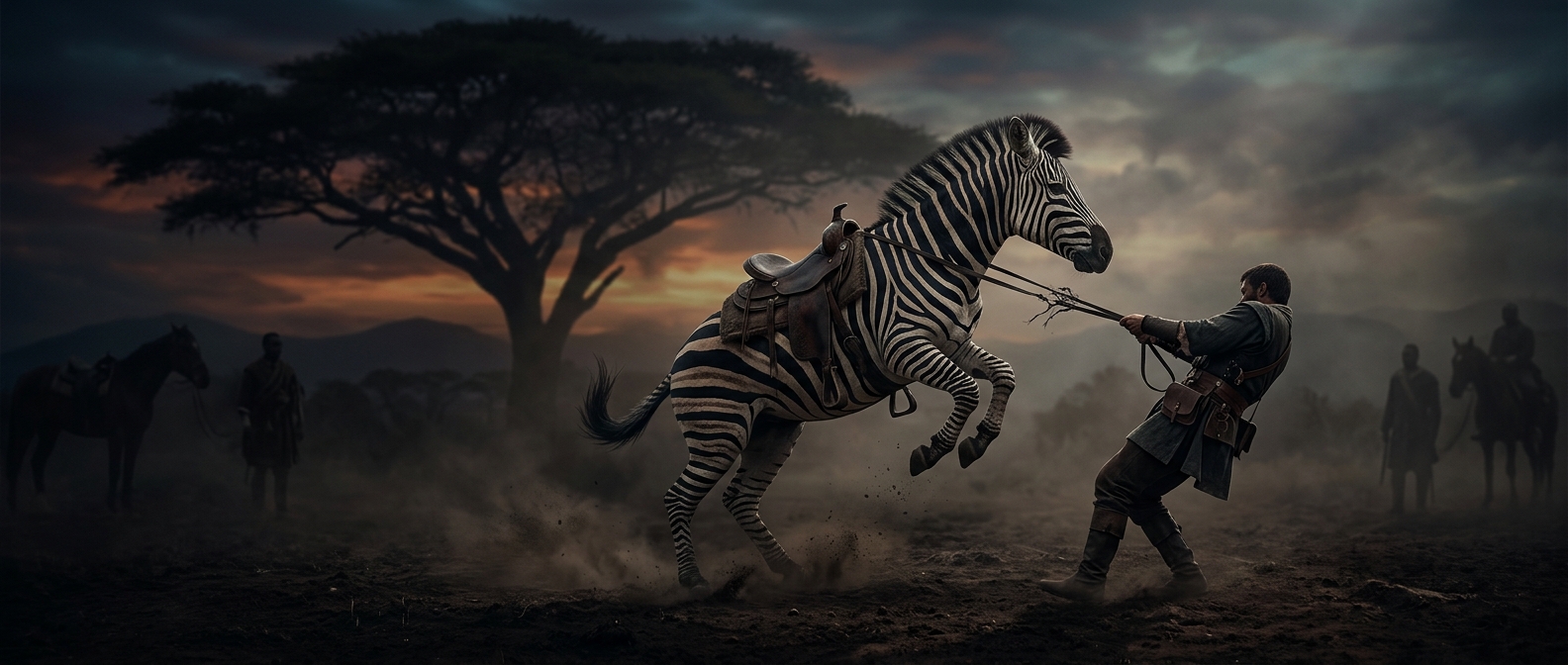
The obstacle is not simply that zebras are “untamable.” Like horses, they are social grazing animals, but they tend to react sharply to threats and can defend themselves with powerful kicks and bites. A zebra that panics around restraint or unfamiliar handling is dangerous not only to a handler but also to itself. That makes routine tasks—catching, harnessing, and transporting animals—harder to do safely and consistently.
Why selection mattered
Domestication depends on being able to breed animals reliably and choose which traits persist. If calmer individuals can be handled and bred, their offspring may be easier to manage, and repeated selection can gradually change a population. But a wild animal that is difficult to contain is also difficult to put through that process. Individual training does not automatically produce a calmer next generation.
Horses, too, can be flighty and strong-willed. The difference is that people built a breeding population around animals that could tolerate human control, then refined those traits over many generations. Zebras were captured and sometimes trained for human use, but those isolated successes did not create a dependable, widely domesticated workforce.
That distinction helps explain why the horse became a practical transport animal while the zebra remained primarily a wild one: the challenge was not getting a zebra to work once, but producing generations that could be handled safely and predictably.