Speed made the spectacle—not a practical ride
An ostrich’s long, powerful legs can carry it at a remarkable pace, but speed alone does not make an animal useful transportation. A reliable mount must respond predictably to its rider, hold a steady course, and tolerate repeated trips with a person on its back. Ostriches are built to run, not to be steered like horses, so a rider’s control is limited even when the bird is moving quickly.
That mismatch helps explain why ostrich riding remained an oddity rather than becoming a normal way to travel. The bird supplies the dash; people on the ground do much of the directing.
Why the handler matters
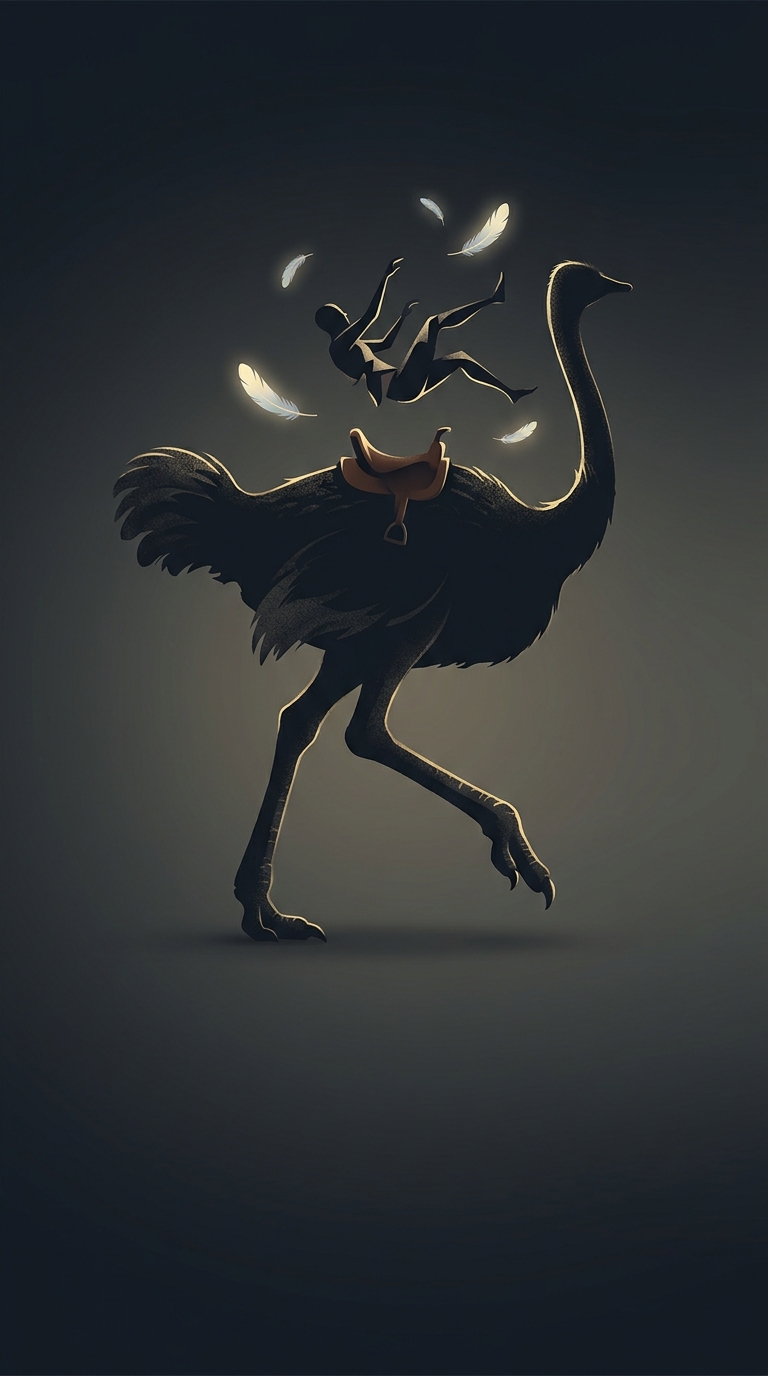
A rider perched on an ostrich has little leverage over its direction or pace. The bird’s balance and stride determine the ride, while handlers can help guide it along a short, chosen route. The result is less like navigating a road and more like staying aboard during a controlled burst of running.
That arrangement also limits what the ride can accomplish. A brief circuit can be staged for its novelty, but carrying passengers or cargo over distance would require dependable steering and control that the spectacle does not provide.
A striking mismatch
In South Africa, ostrich riding belongs to an unusual history of trying to turn an impressive runner into a mount. Its appeal lies in the contrast: a bird capable of startling speed, paired with a human who cannot simply direct that speed at will. The most memorable part is not getting somewhere—it is watching handlers shape the route while the rider hangs on.