How Larrey Turned Rescue Into a Mobile Service
On an 18th-century battlefield, a wounded soldier could be left where he fell until the fighting stopped and stretcher-bearers could safely reach him. Dominique-Jean Larrey, surgeon to Napoleon’s armies, saw the delay itself as a medical danger: severe bleeding and shock could kill before a casualty ever reached a surgeon.
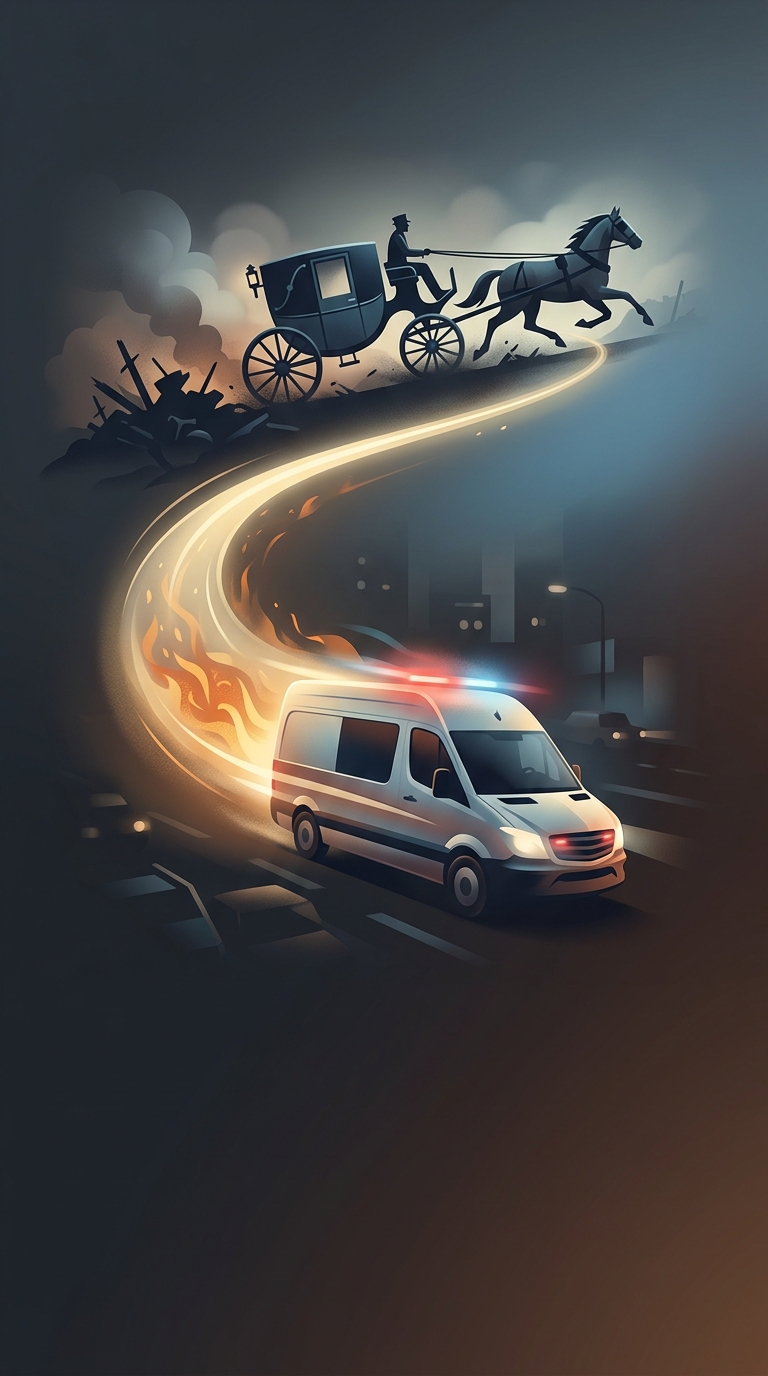
His answer was the ambulance volante, or “flying ambulance.” “Flying” meant fast-moving, not airborne. Lightweight horse-drawn wagons carried attendants and equipment close to the fighting, so the wounded could be collected and taken for treatment sooner. The key change was logistical: medical help went toward casualties instead of waiting for casualties to make their way back.
Triage Put Need Ahead of Rank
Larrey also helped make triage—a system for deciding who needs care most—part of the rescue process. Patients were sorted by the seriousness and urgency of their injuries, rather than by military status. That meant a badly wounded soldier could be treated before a less seriously injured officer.
The principle addressed a hard constraint: medical teams had limited time and supplies, and treating people in a useful order could save more lives. Triage did not guarantee survival, but it replaced rank and chance with a practical medical priority.
The Lasting Change Was the Whole Chain
A wagon alone was not an ambulance service. Larrey’s approach joined rapid collection, transport, and medical assessment into a coordinated system. Later civilian services developed in different settings, but the model helped establish a lasting idea: emergency care can begin before a patient reaches a hospital.
That is the striking legacy of the “flying ambulance.” Its most important feature was not simply speed; it was bringing organized rescue within reach while danger—and the clock—were still present.