Why Lunar Prospector Was Sent Into the Moon
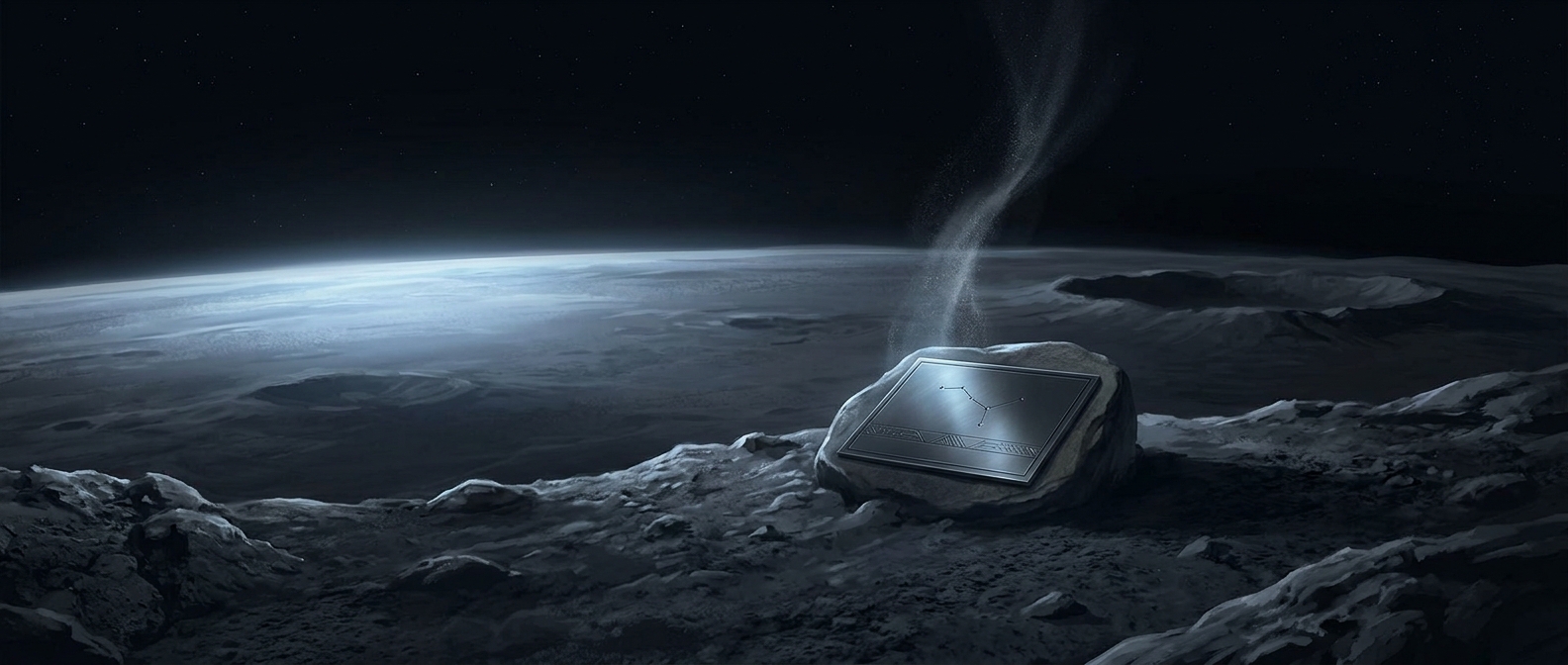
By the end of its mission, Lunar Prospector had spent more than a year orbiting the Moon and mapping its surface and composition. NASA deliberately aimed the spacecraft at the lunar south-polar region, where its impact could be watched by telescopes on Earth. The collision was not a landing attempt: it was a planned way to end the mission and test whether the crash might expose signs of water in the shadowed terrain nearby.
A Small Capsule on a High-Speed Impact
The spacecraft carried a tiny capsule containing some of the ashes of Eugene Shoemaker, a geologist whose research helped establish impact craters as evidence of violent collisions in the Solar System. His wife, astronomer Carolyn Shoemaker, and colleague David Levy arranged for the ashes to travel aboard. The capsule was attached to the probe, not released as a separate vehicle; it reached the Moon as part of the same deliberate impact.
That final journey depended on navigation rather than a braking system. Lunar Prospector was directed into a trajectory that would intersect the Moon, and gravity and orbital motion supplied the speed of impact. The spacecraft was destroyed on contact. Observers looked for a plume that might reveal water vapor, but the hoped-for signal was not detected.
The Mission’s Last Measurement
The crash therefore served two purposes: it disposed of a spacecraft that had completed its work and offered a final, limited experiment. It could not settle the question of lunar water by itself; a missing visible plume did not prove that no ice existed. But the trajectory gave the mission one last chance to gather evidence while carrying the remains of a scientist whose career had centered on the marks such impacts leave behind.