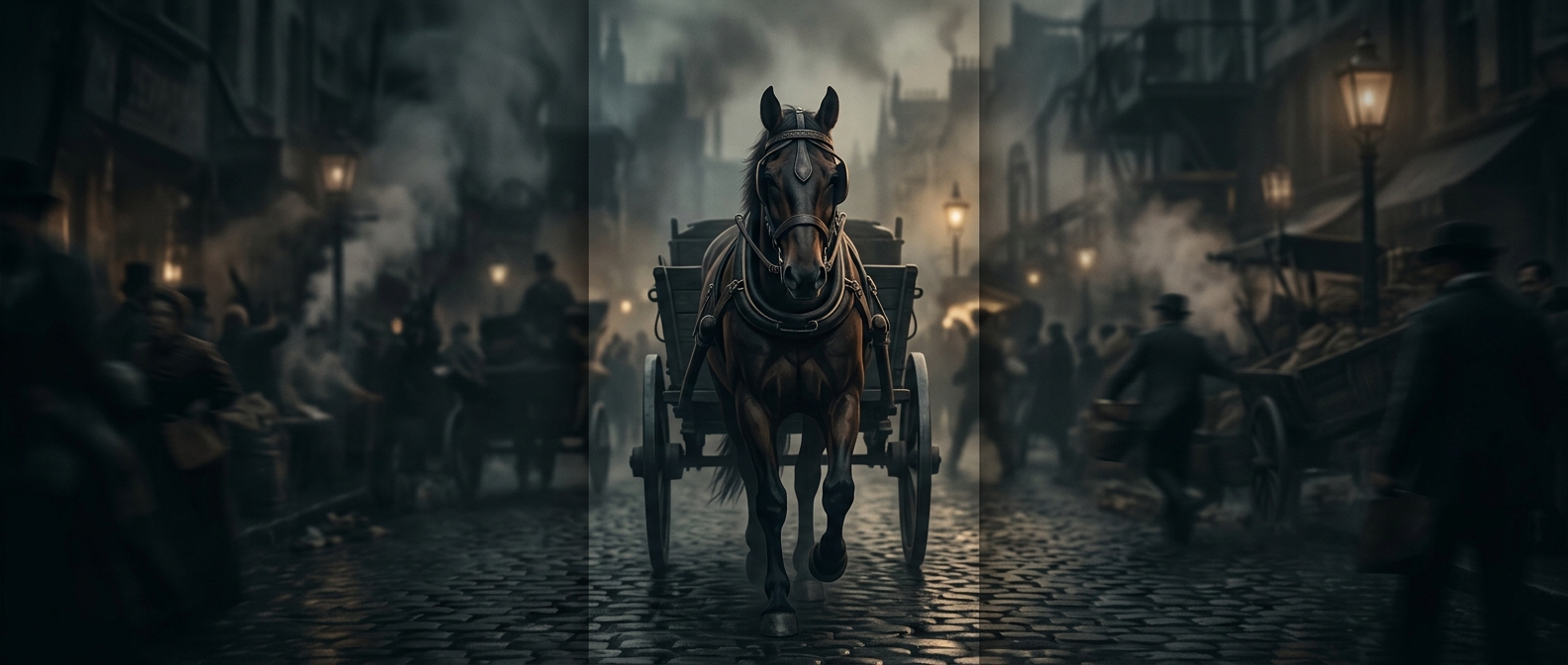
How blinders narrowed a horse’s view
A horse’s eyes sit on the sides of its head, giving it a wide field of view. That is useful for noticing activity around it, but it also means a moving object beside the horse can appear suddenly in its peripheral vision. In a busy street, a passing vehicle or a person stepping into view could trigger a startle while the animal was pulling a carriage.
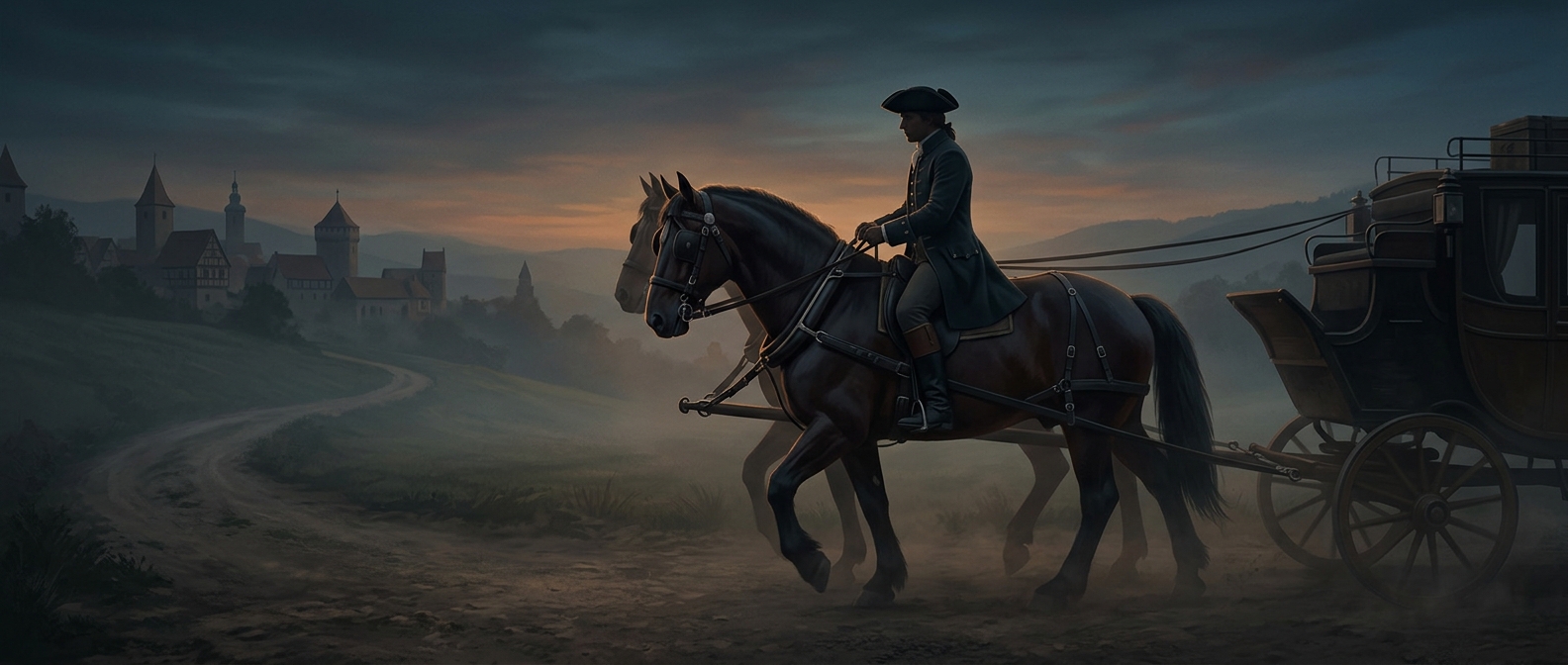
Blinders—also called blinkers—are small screens fixed to the bridle beside the eyes. They limit the horse’s view to the sides and rear, making the scene directly ahead more visually dominant. They do not make the horse see farther down the road; they reduce the visual distractions arriving from angles the driver cannot easily control.
A calmer view, with a tradeoff
The design manages what the horse can see, not everything it can sense. A horse can still hear nearby traffic and feel movement through the harness, so blinders are not a guarantee against panic. Their purpose is narrower: to keep sudden side-to-side motion from becoming an immediate visual surprise.
That restriction also reduces the horse’s awareness of what is happening around it. The driver must guide the animal and account for hazards the horse may not see. Blinders therefore make most sense as part of a working arrangement: they simplify the view ahead while shifting more responsibility for the surrounding street to the person holding the reins.