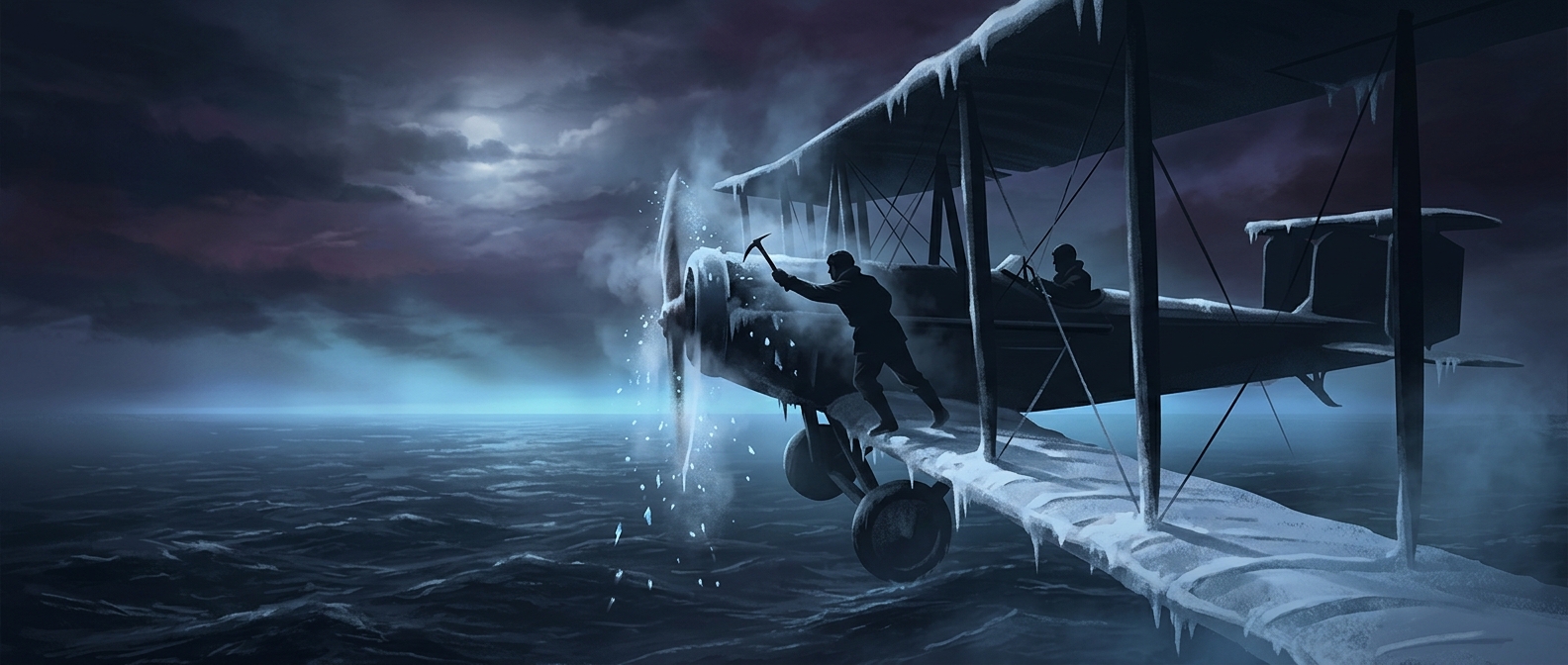
Why a Pilot Would Leave the Cockpit in Flight
In early aviation, some pilots climbed out onto an airplane’s wing to handle problems they could not reach from inside. A jammed control line, a balky engine, or damage to the aircraft could turn a flight into an urgent repair job. The open cockpit made getting out physically possible, though far from safe.
A biplane’s two wings were linked by struts—stiff supports that braced the wings and helped keep the structure rigid. Those struts could also serve as handholds and footholds. They offered a route from the cockpit onto the aircraft’s exterior, but they were not a walkway designed for a person. The pilot had to move carefully over fabric-covered surfaces while the plane continued flying.
The Airflow Made Every Move a Risk
Once outside, the pilot faced the slipstream: the fast-moving air flowing past the aircraft. It pushed against the body and clothing, making it difficult to move or keep a grip. The pilot’s weight could also affect the plane’s balance, so a repair or adjustment had to be made without losing control of the aircraft.
There was no cabin to shield the pilot and no easy way to pause. If the airplane changed direction or hit turbulence, the forces on someone standing on a wing could shift suddenly. A firm hold on a strut mattered because the wing itself was a broad surface exposed to the wind, not a safe platform.
A Workaround Built Into an Open-Airplane Era
This kind of maneuver belongs to a period when aircraft were simpler and more exposed, and when pilots sometimes had to improvise with the structure immediately around them. The same open design that made it possible to climb out also left the pilot vulnerable to the airflow and the consequences of a slip.
The struts were meant to hold the wings together. In an emergency, they could become the only handholds between a pilot and the rushing air.