Why a Hot-Water Bottle Worked in a Freezing Carriage
Heating an entire railway carriage meant warming not just its air but also its seats, walls, and other cold surfaces. Heat would then keep escaping through the carriage and its openings. A metal foot warmer took a more modest approach: it carried stored heat directly to the part of the passenger most likely to feel the cold.
Heat Where Passengers Felt It
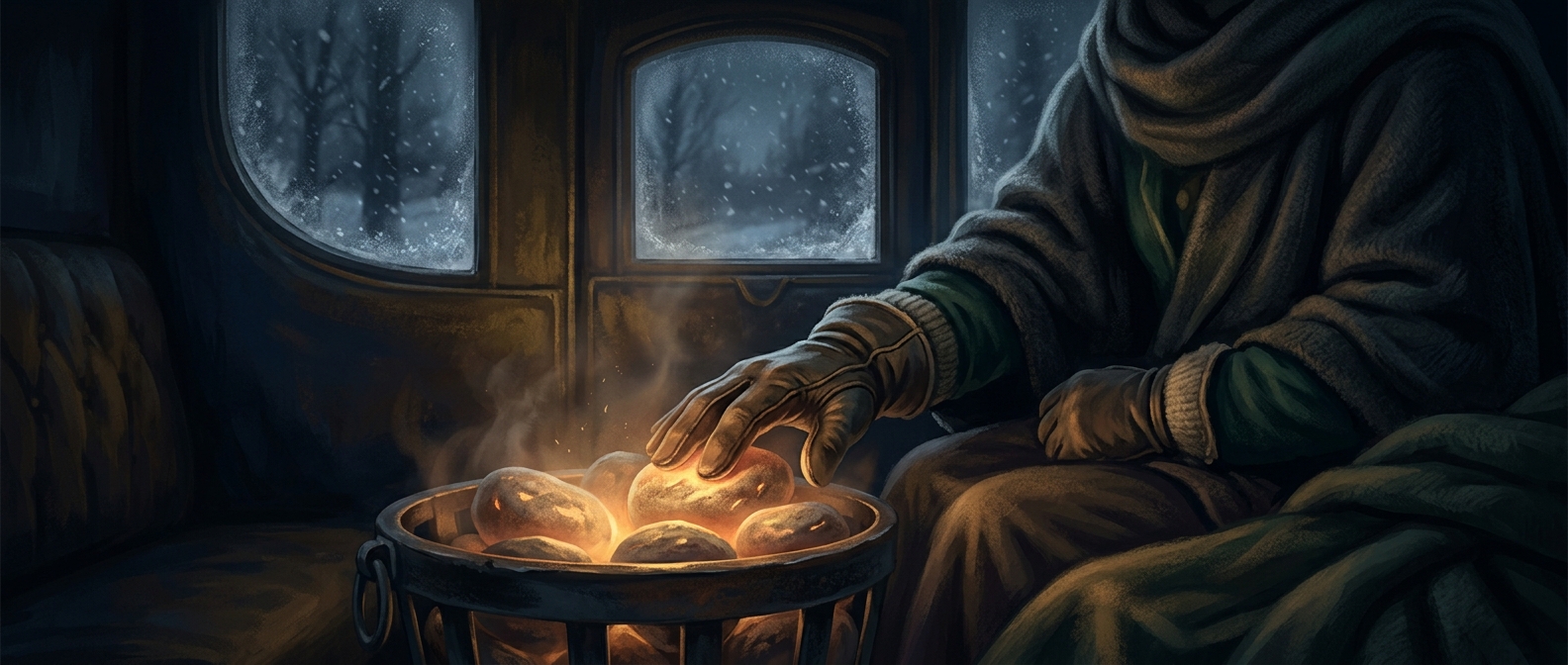
Hot water held a useful reserve of heat. The metal container transferred some of that heat to the air and nearby feet, making the space under a seat more comfortable without first bringing the whole carriage up to temperature. Passengers could also benefit from being close to the warmer, rather than relying on distant heat to travel through a cold, drafty interior.
The tradeoff was simple: a foot warmer could not make the carriage itself warm. Its benefit was local and temporary, depending on how much heat the water still held. But that was enough to change the experience of a journey: instead of trying to heat every cold surface, the railway warmed a small zone where passengers could feel it.