Turning a chase into a steady pull
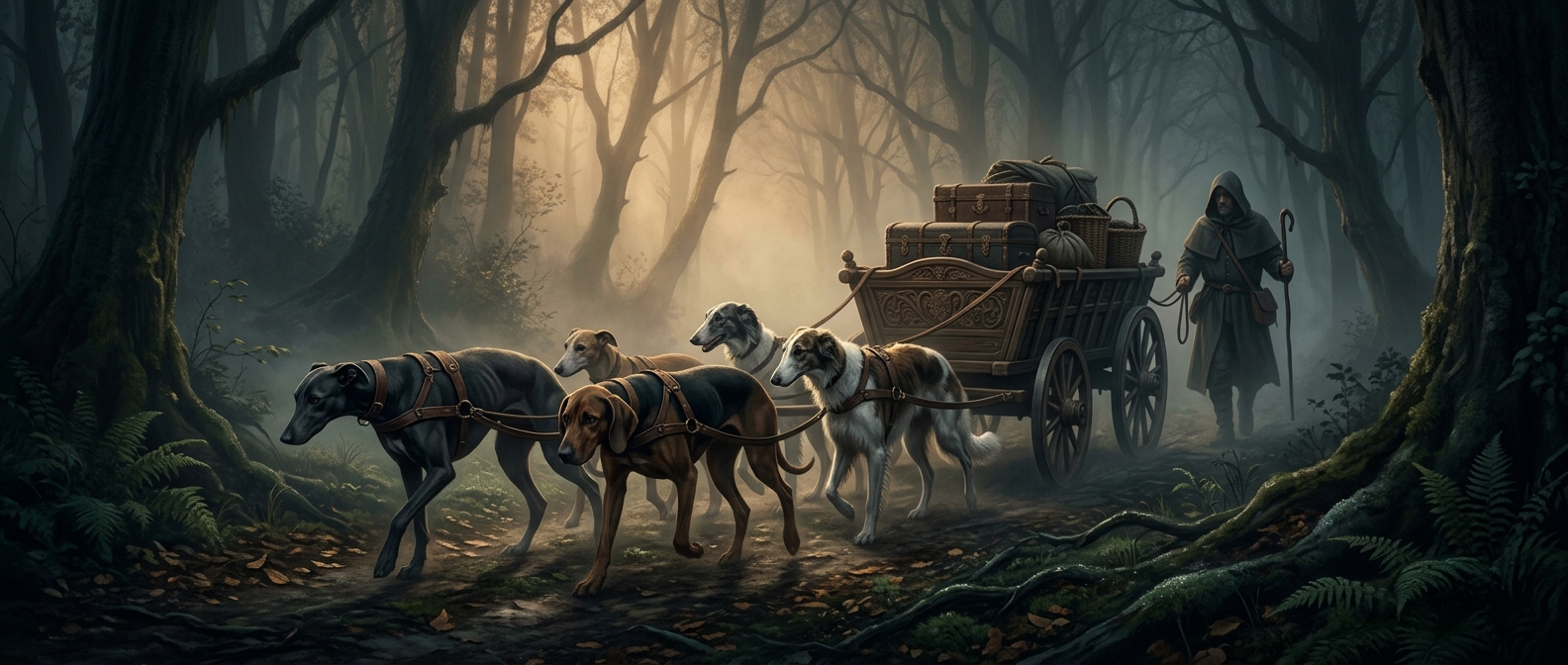
A hunting dog’s strength was useful in short bursts, but a cart demanded a different kind of work: sustained effort against rolling resistance. The harness made that change possible by spreading the pull across the dog’s body rather than concentrating it on the neck. Straps connected the dog to the cart, so each forward step transmitted force to the wheels.
The wheels mattered as much as the dog. They let a load roll instead of being dragged along the ground, reducing the force needed to move it. But a cart still had to suit its puller: too much weight, rough ground, or a poor fit could make the job exhausting or injure the animal.
A working partnership, not a miniature wagon team
Training for hunting could help a dog follow direction and keep working around people, but pulling a cart called for its own habits. The animal had to move at a controlled pace and respond while attached to a load. A handler could guide the dog and manage the cart’s route; the dog supplied the forward pull, not the steering or braking.
That made the arrangement useful for moving goods on a modest scale, while imposing clear limits on load and terrain. The practical shift was simple: a dog’s trained effort no longer had to end when the chase did. With a harness and wheels, it could carry on as transport.