Why a Slow Start Can Beat a Fast One
A stubborn load is hardest to move at the beginning. A wagon wheel must overcome friction before it rolls; a log may need to break free from mud or catch over a rough patch. What matters is not speed but a controlled pull that can be sustained without the team surging and losing its footing.
A yoke links a pair of oxen so their effort reaches the same load through one shared hitch. When they lean forward together, the team can build tension gradually. If one animal moves a little out of step, the yoke also helps keep the pull coordinated rather than letting each animal tug independently.
The Tool Matters as Much as the Animal
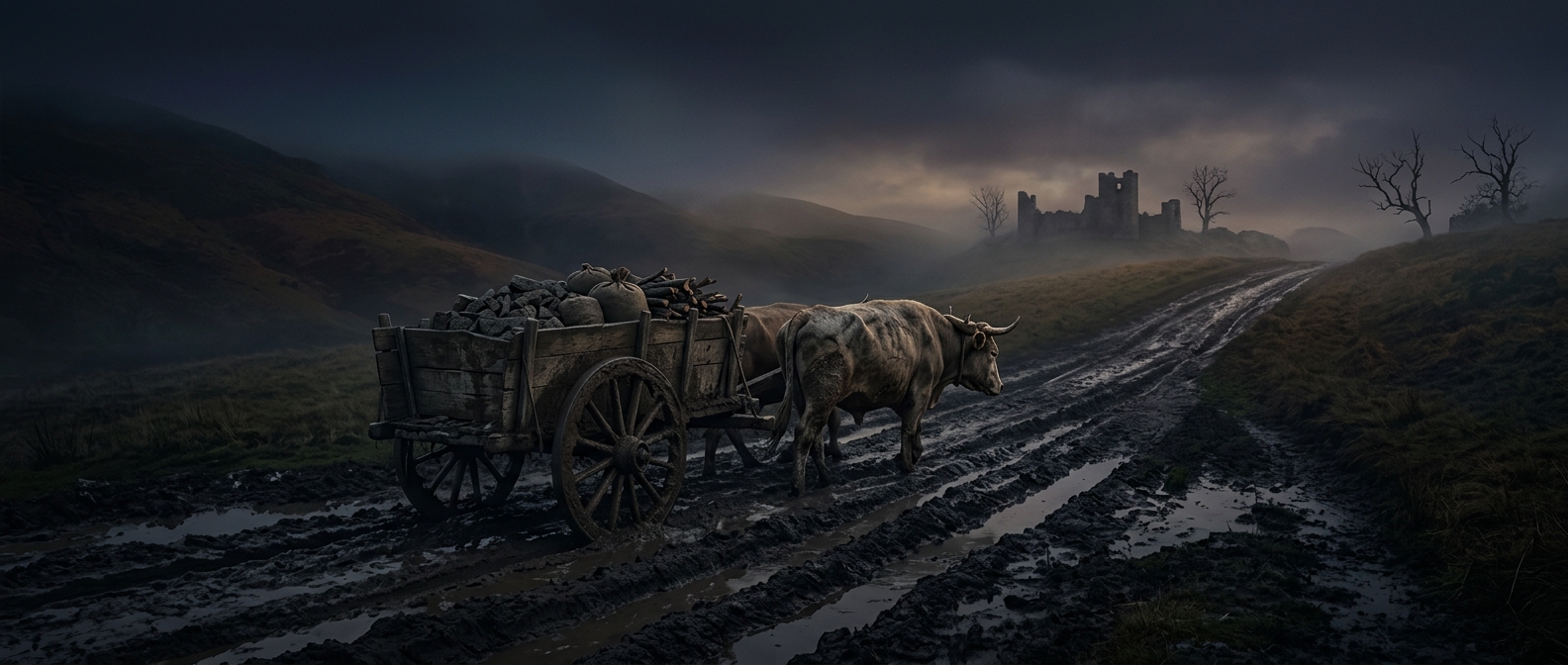
Oxen were commonly worked at a walk, with a yoke fitted across the neck and shoulders. That arrangement suited farm and hauling jobs where a team could take its time: plowing a field, moving a heavy cart, or dragging timber over uneven ground. The handler could ask for a steady effort and guide the animals through a difficult stretch instead of relying on a burst of speed.
Horses were often favored when quicker travel or more responsive movement mattered, and they could also do heavy draft work when properly harnessed. The difference is a matter of fit, not a simple rule that one animal can pull and the other cannot. For a load that needs patient, continuous force, the ox team's deliberate pace can be an advantage. A horse's greater speed is useful on the road; at the edge of a muddy field, the valuable skill may be getting the load moving one careful step at a time.