Why a Travois Worked Without a Road
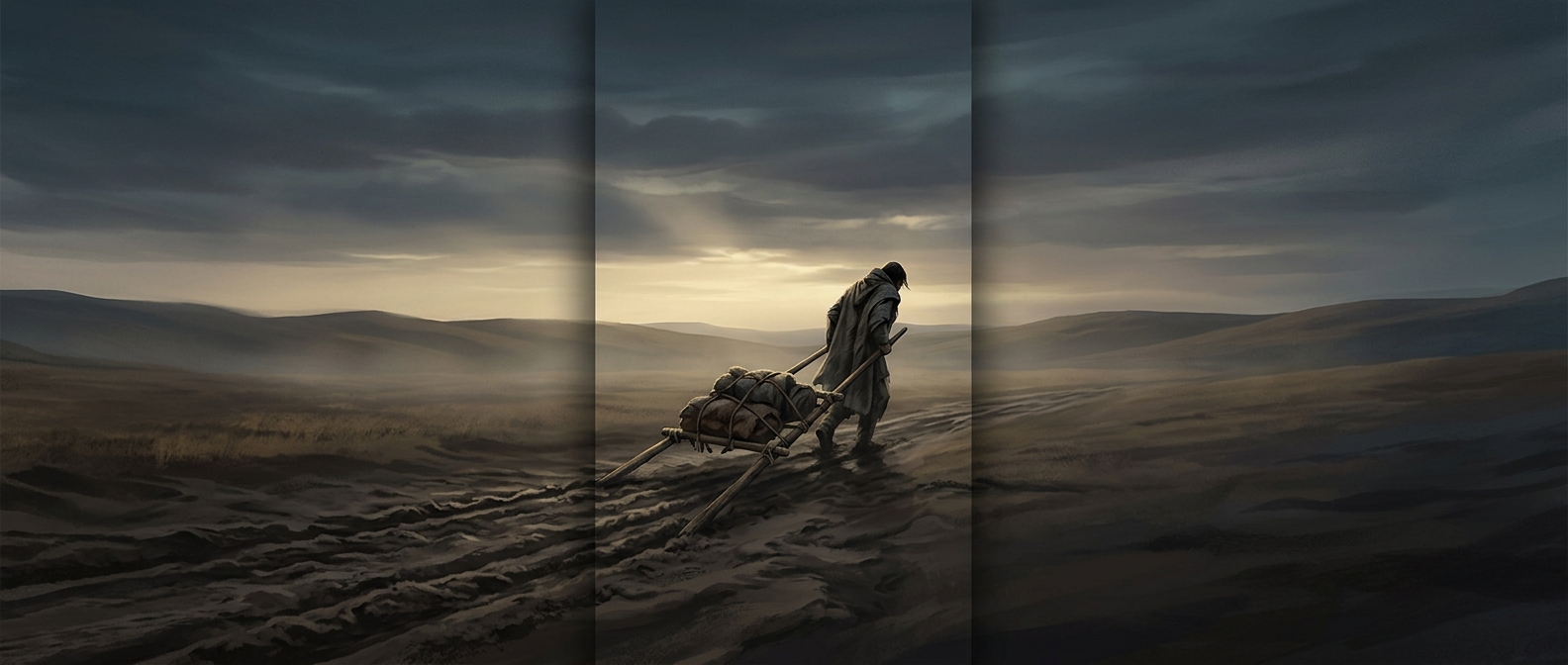
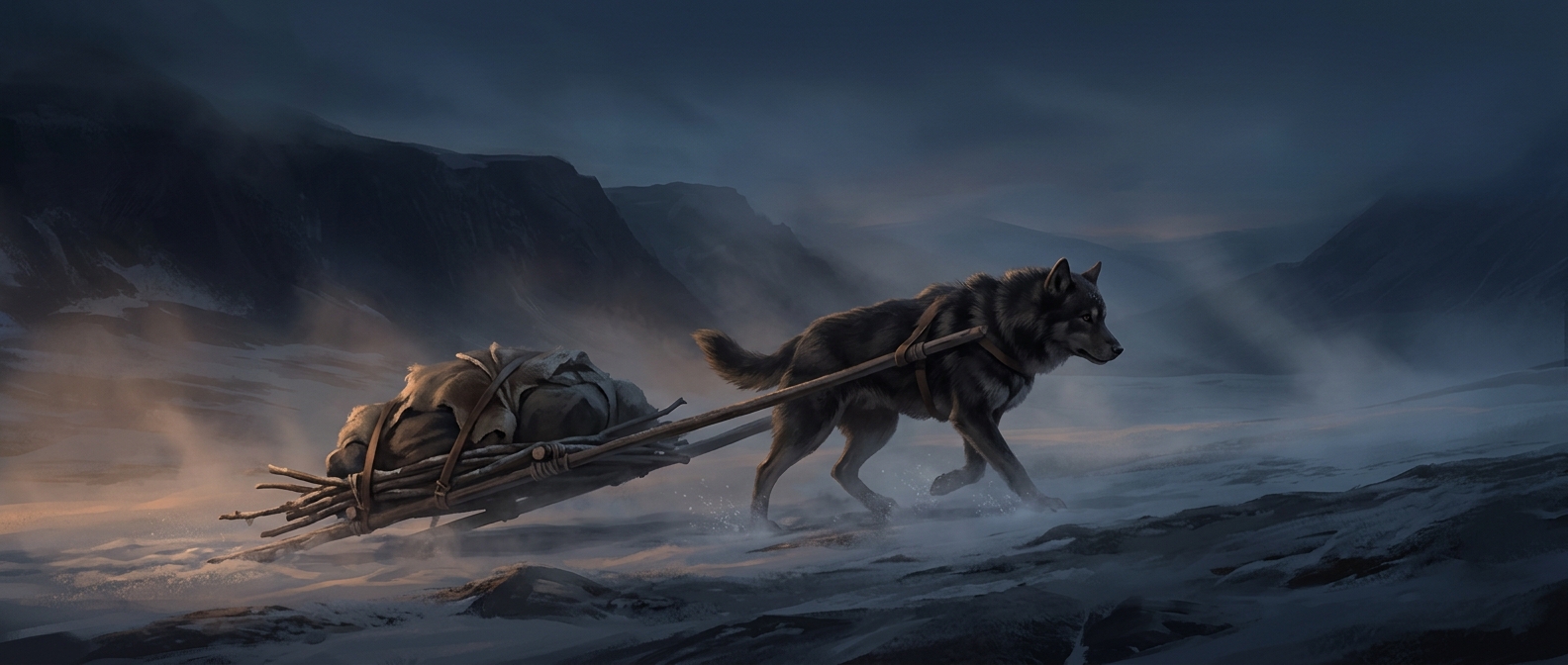
A travois turns two long poles into both frame and running gear. The poles extend forward to a harness and trail behind the load, while crosspieces hold the cargo in place. As a dog moves, the poles slide over the ground; the load is supported between them rather than carried on the animal’s back.
That arrangement solves a problem wheels handle poorly: a wheel needs a firm, relatively clear path and a strong axle, while a travois can scrape over open ground without either. Its long poles spread the load’s support and keep it from pressing all its weight onto one small point. The tradeoff is friction. Dragging takes more effort than rolling, especially over rough or soft ground, so the design favors simplicity and access to places without prepared tracks over speed or easy hauling.
The Landscape Becomes Part of the Design
The poles do not just carry cargo; they also meet the ground. On relatively open terrain, their length helps keep the load from bumping directly over every small irregularity. But rocks, brush, steep slopes, and deep mud can snag or slow the frame. The same simple construction that makes a travois possible without metal fittings or a road also leaves it exposed to the surface beneath it.
Its usefulness depended on matching the load to the animal and the route: a heavier load meant greater pulling resistance, and a difficult stretch could make dragging impractical. The key engineering choice was to accept that resistance in exchange for a transport frame that could be assembled from poles and moved across ground where a wheeled cart might not go.