The engineering choice behind the Beetle’s shape
Putting the engine behind the passengers changed what the rest of the car needed. With the engine and transmission grouped at the rear, the front could be kept relatively simple, while the passenger cabin sat between the axles. The layout helped create a small car with room for four people and no driveshaft running beneath the cabin.
An air-cooled engine sheds heat directly to moving air rather than circulating coolant through a radiator. That meant fewer cooling-system parts—and no radiator to freeze or leak—but it also made engine temperature harder to control. The design was a practical tradeoff, not a magic route to a maintenance-free car.
A people’s-car plan without a people’s-car payoff
The project was tied to a broader political promise: ordinary German families would be able to buy a car. A savings scheme let prospective buyers make regular payments toward one. But civilian production had barely begun when war redirected the factory’s work. Most savers did not receive the car they had been promised before the war.
The plant’s workforce also reflected the coercive system around it. Nazi Germany used forced labor there, including people deprived of freedom and brought to work under brutal conditions. The factory’s industrial capacity served wartime production rather than the mass civilian ownership the scheme had advertised.
The consequence of the original design
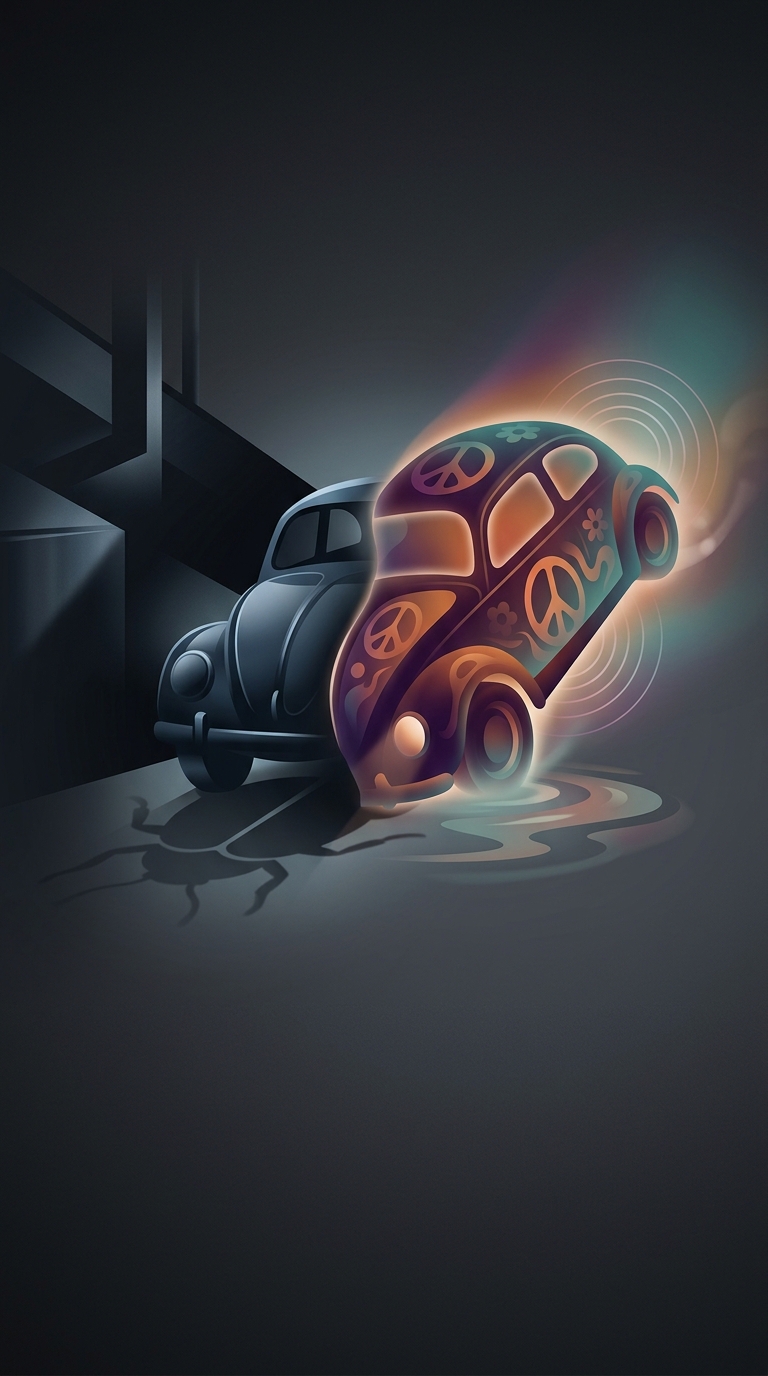
After the war, the factory eventually returned to making cars for civilian buyers, and the Beetle became an international success. Its familiar shape therefore carries two histories at once: a compact engineering solution that proved durable and adaptable, and an industrial project first built within a dictatorship that denied workers and consumers the choices its sales promise implied.