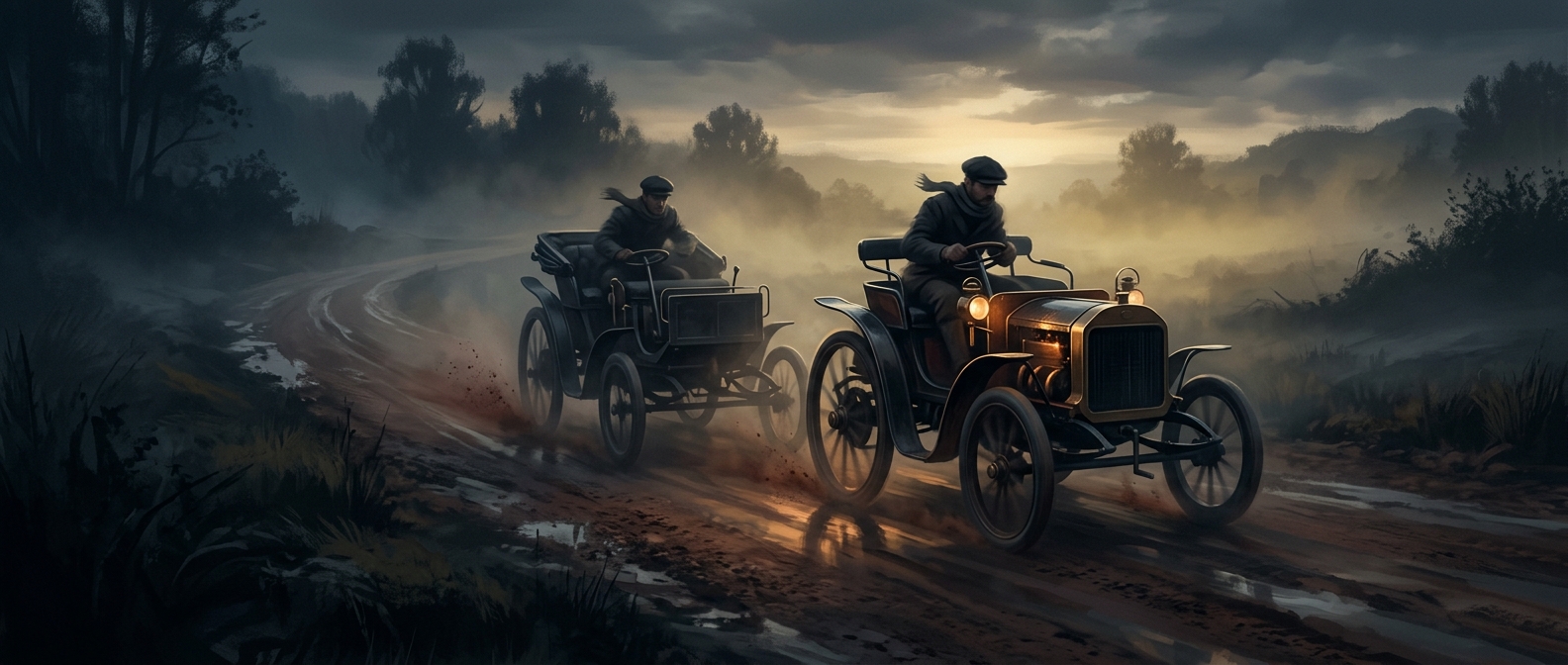
A car built for short demonstrations
In 1888, Karl Benz’s Patent-Motorwagen was not yet a practical touring car. It was a three-wheeled machine powered by a small, single-cylinder engine, with a tiller for steering and no network of garages or fuel pumps to support it. Its fuel, ligroin, was a volatile petroleum solvent sold in small quantities for household use—not a standardized motor fuel available at roadside stations.
That made a long journey a test of the whole system, not just the engine. Bertha Benz had to keep the motor running, manage supplies, and solve problems with what towns along the way could provide. Her improvised fixes mattered because early automobiles had no established repair trade behind them; a driver needed both mechanical judgment and resourcefulness.
The trip changed what the car could mean
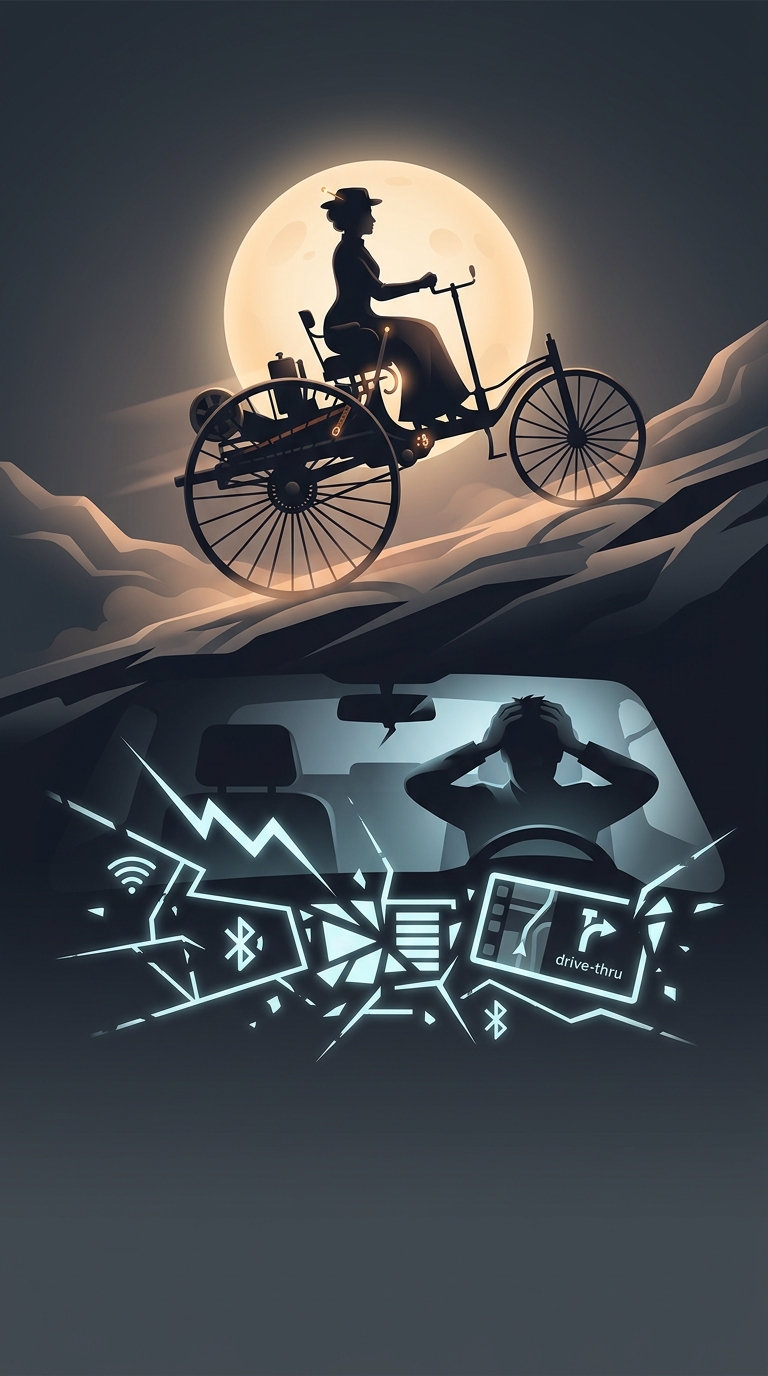
Bertha drove from Mannheim to Pforzheim and back, turning a vehicle usually seen close to home into evidence that it could cover a substantial intercity journey. The route exposed practical weaknesses that a short demonstration might hide, including the need for more effective braking on steep descents. Local repairs helped her finish, while the journey itself showed that an automobile’s usefulness depended on more than its inventor’s workshop.
The trip also functioned as a real-world demonstration. A machine that could make the journey—and return—was easier to imagine as transportation rather than a novelty. Its lesson was concrete: the automobile would need a support system as much as a working engine, from accessible fuel to people able to repair worn parts. In 1888, Bertha had to assemble that system one town at a time.