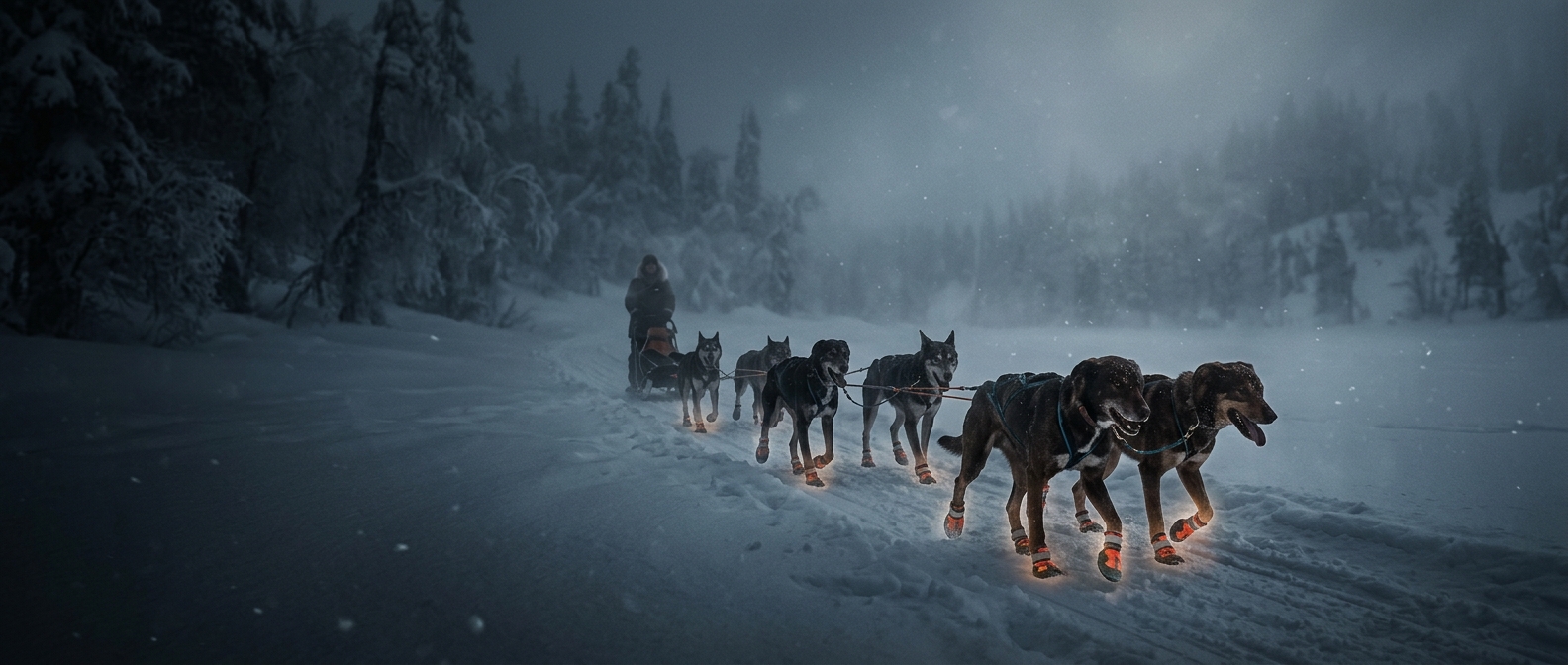
A hollow in the snow cuts the wind
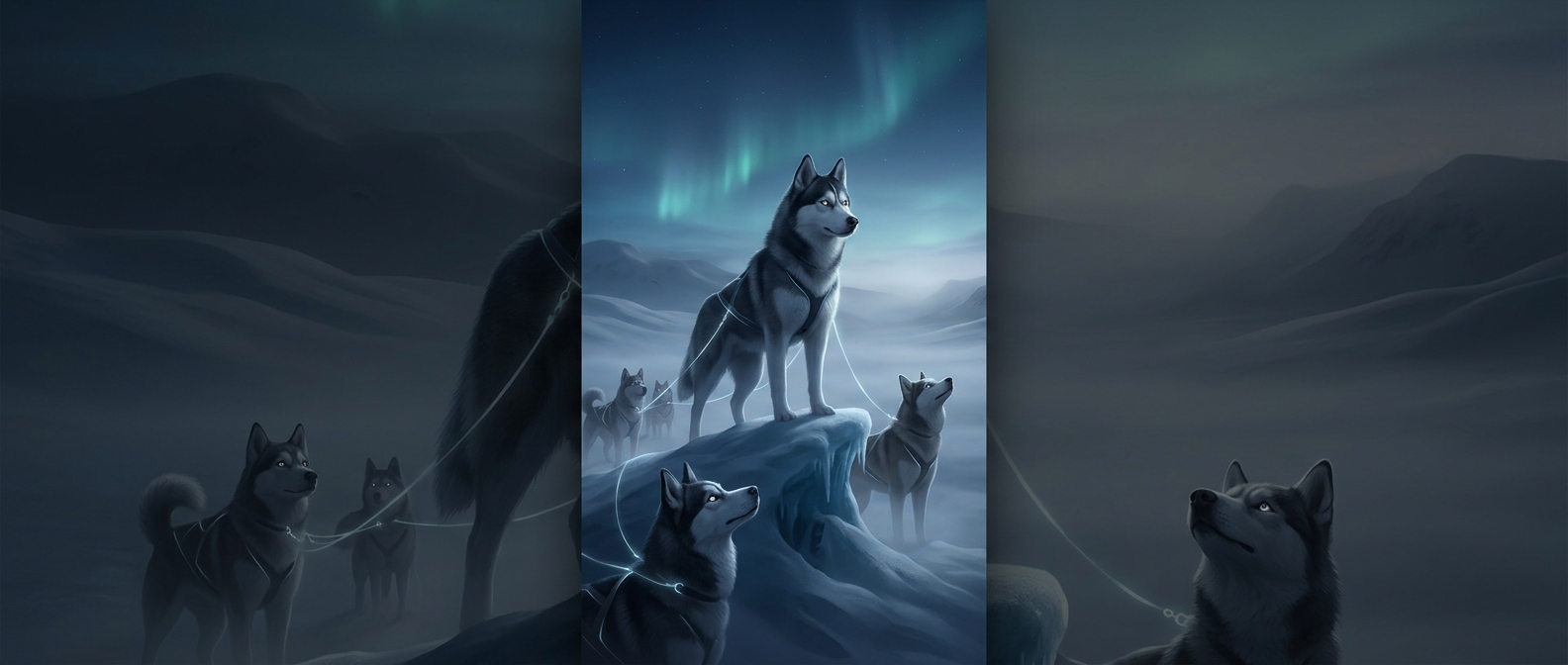
A sled dog settling into snow is not simply enduring the cold. By pawing out a shallow hollow and curling into it, the dog gets below the wind that would otherwise sweep heat away from its body. Snow around the hollow helps block that airflow, while tiny pockets of trapped air slow the movement of heat through the snow.
The key is insulation, not warmth generated by the snow itself. A snow bed can feel less exposed than open ground, much as a sheltered nook can feel calmer than a windy ridge. It does not make the cold disappear, but it reduces one of the ways the dog loses heat.
The dog makes the shelter work
Curling tight also limits the area exposed to the air. Thick winter fur traps insulating air close to the body, and tucking the nose and paws in reduces exposure at vulnerable spots. Together, posture, coat, and shelter help a resting dog conserve the heat its body produces.
That is why a snowbank can serve as a practical resting place rather than merely an obstacle on the trail. The dog’s small hollow changes the immediate conditions around it: less wind reaches the body, and the surrounding snow helps hold that calmer pocket in place. What looks like sleeping out in the weather is, in part, a simple bit of shelter-building.