A Paw Is Tough, but Not Tire-Proof
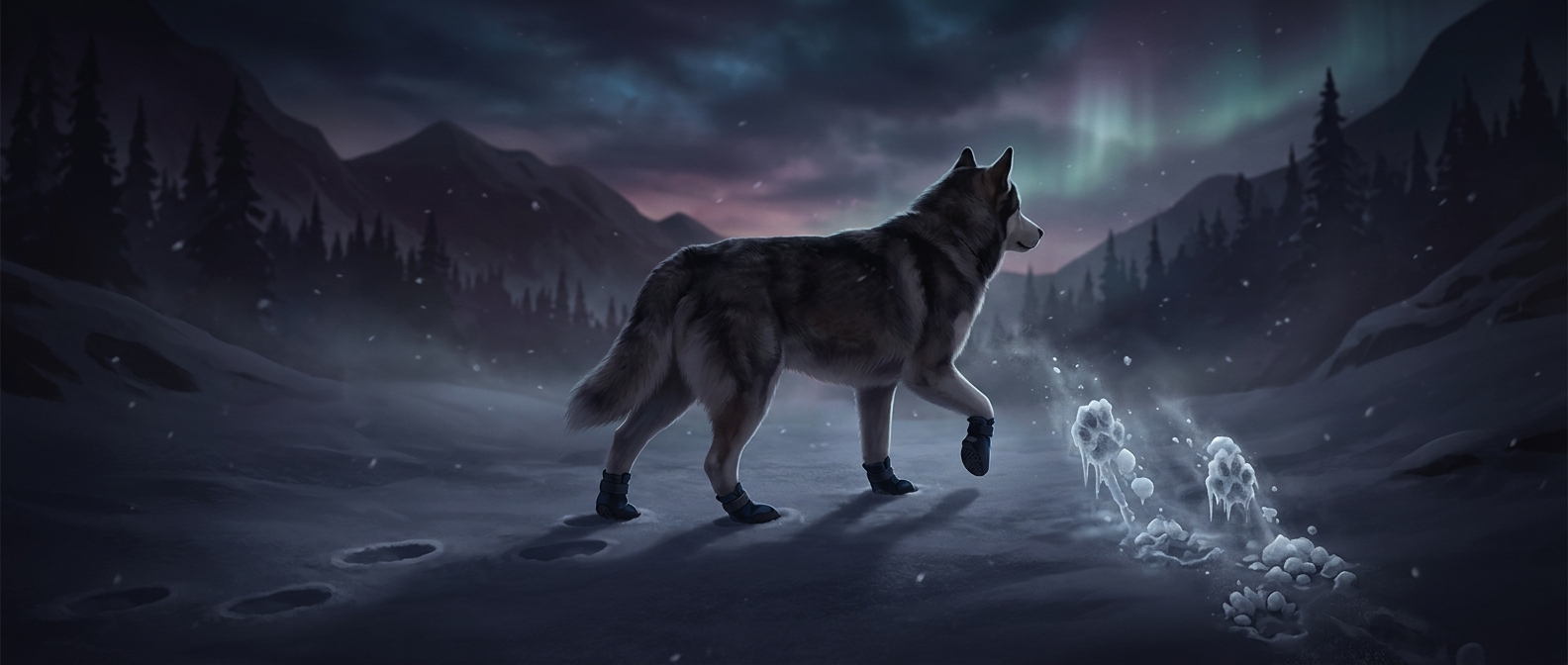
A sled dog’s paw pads are built for travel, but repeated impact on abrasive snow and ice can still scrape or crack them. Tiny cuts matter on a long run: every stride presses the injured spot against the trail again. Ice can also collect in the fur between the toes, where it rubs the skin with each step.
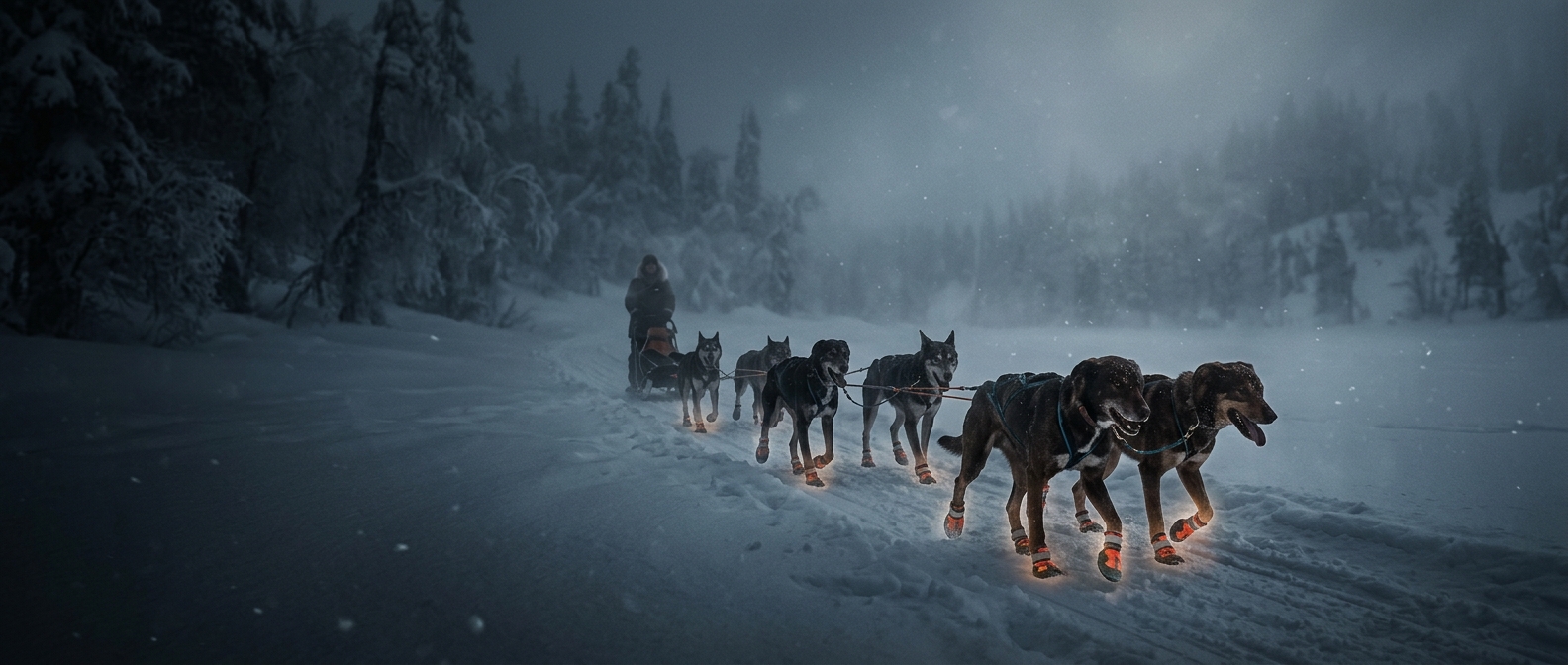
A bootie creates a flexible barrier between that rough surface and the paw. It is usually a lightweight fabric covering secured around the lower leg, rather than a rigid shoe. That lets the dog keep its natural foot movement while reducing direct contact with sharp or gritty snow.
Protection Has to Keep Working
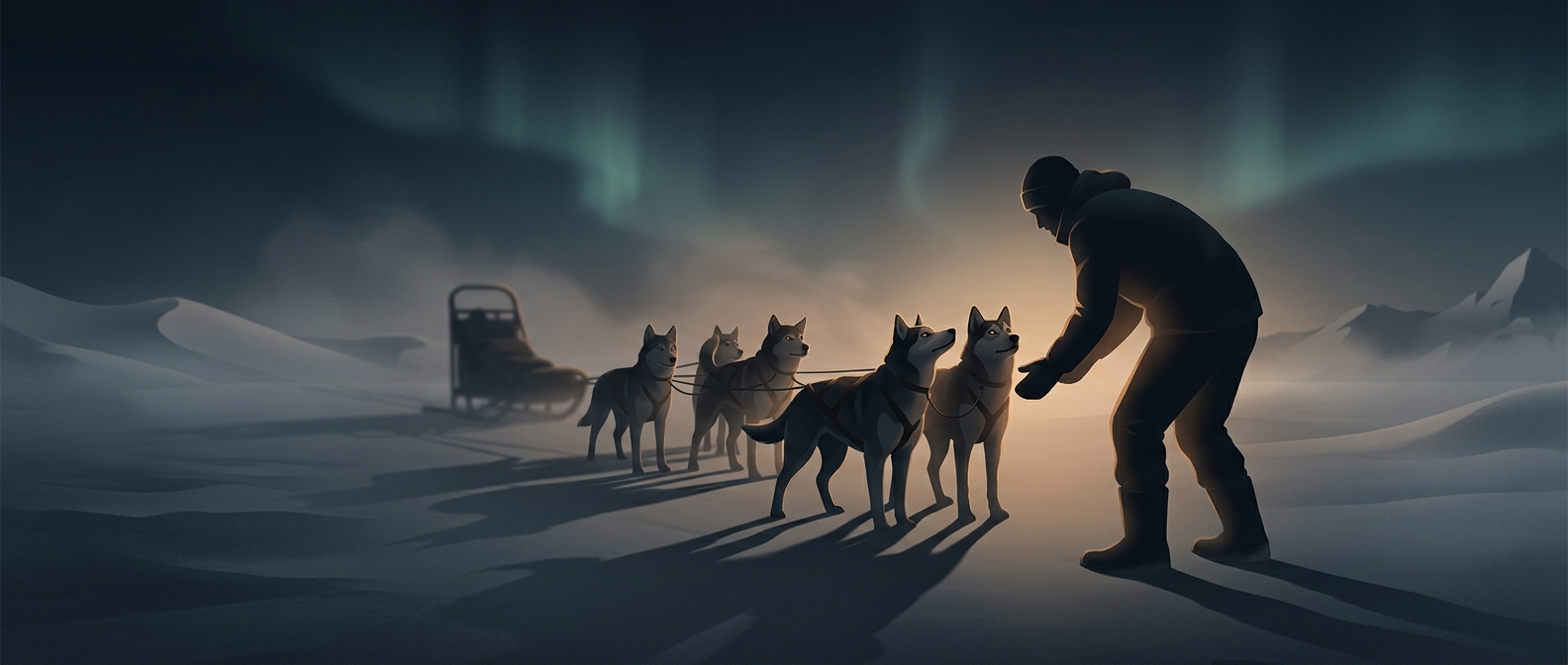
Booties are consumable gear. A covering can wear through, loosen, or shift, so mushers check paws and replace booties as needed during a run. Fit matters: a bootie that is too loose can twist or come off, while one that is too tight can restrict the foot. The aim is protection without changing how the dog places its paw.
That makes the bootie less like armor than a replaceable layer between a working foot and a punishing trail. The dogs still supply the power; the small piece of fabric helps keep each stride from turning trail wear into a paw injury.