A familiar voice is part of the team’s control system
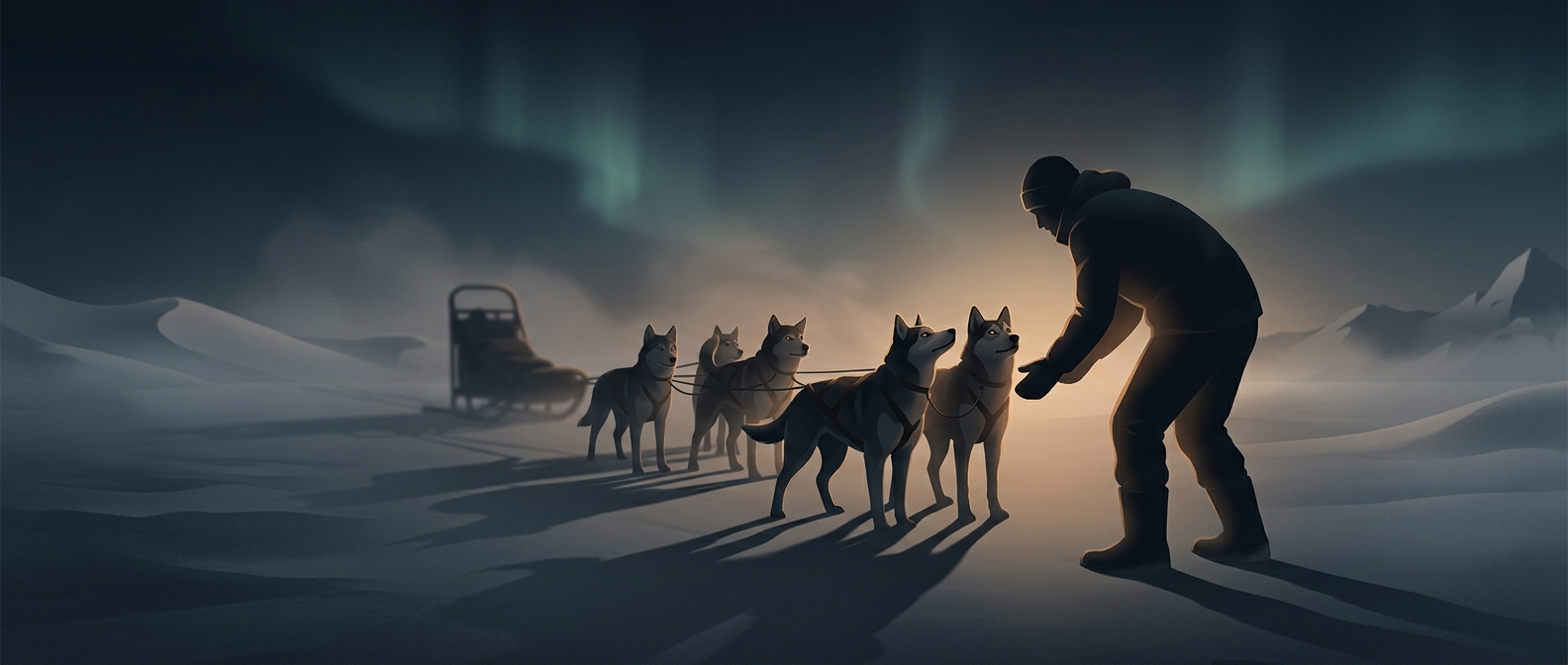
A sled team cannot be steered with reins the way a horse can. The musher—the person who drives the sled—relies heavily on spoken cues, especially when the dogs are moving ahead and the trail bends out of sight. Common commands such as “gee” for right and “haw” for left are useful only if the dogs have learned what those sounds mean in practice.
That learning comes from repetition. A cue is followed by a turn, a change of pace, or another familiar action; over time, dogs connect the sound with the response expected of them. They also learn the voice delivering it. Pitch, rhythm, and pronunciation give a call a recognizable sound, while the routine of working together helps the team interpret it in context.
Why the speaker matters on the trail
The dogs are not simply reacting to noise. They are responding to a known handler whose commands have repeatedly predicted what happens next. A strange voice may sound different and may not match the team’s learned cues, making it harder to know which direction to take—particularly when the trail is difficult or conditions change quickly.
Voice is only one part of communication. The musher’s timing and consistency matter: a clear command delivered at the right moment is easier to act on than a confusing or changing signal. The dogs’ arrangement in the team also matters, because the leaders at the front must respond first and the others follow their movement.
Familiarity therefore has a practical payoff. It reduces uncertainty between the person on the sled and the dogs doing the pulling and navigating. In a place where a wrong turn can matter, recognizing the musher is not just affection or obedience; it helps make a spoken instruction usable.