How a Two-Dog Hitch Shares the Pull
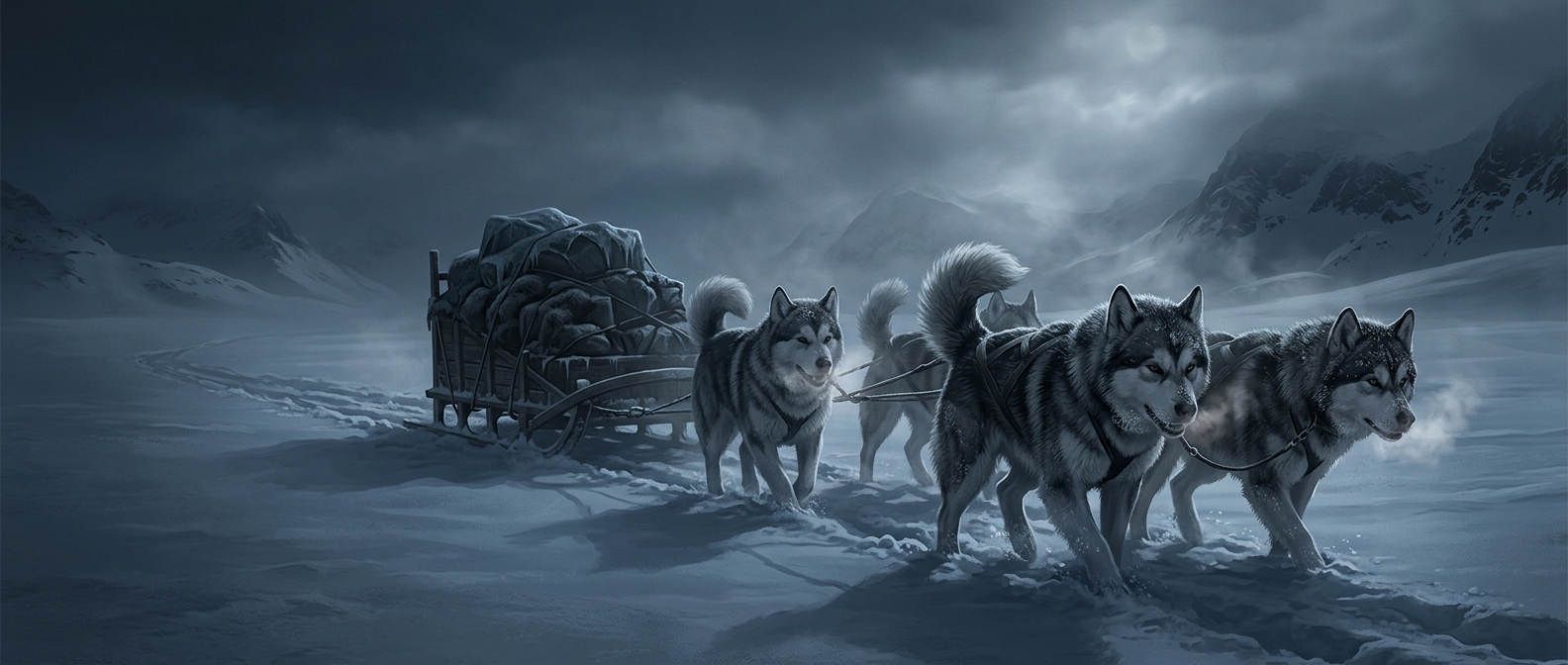
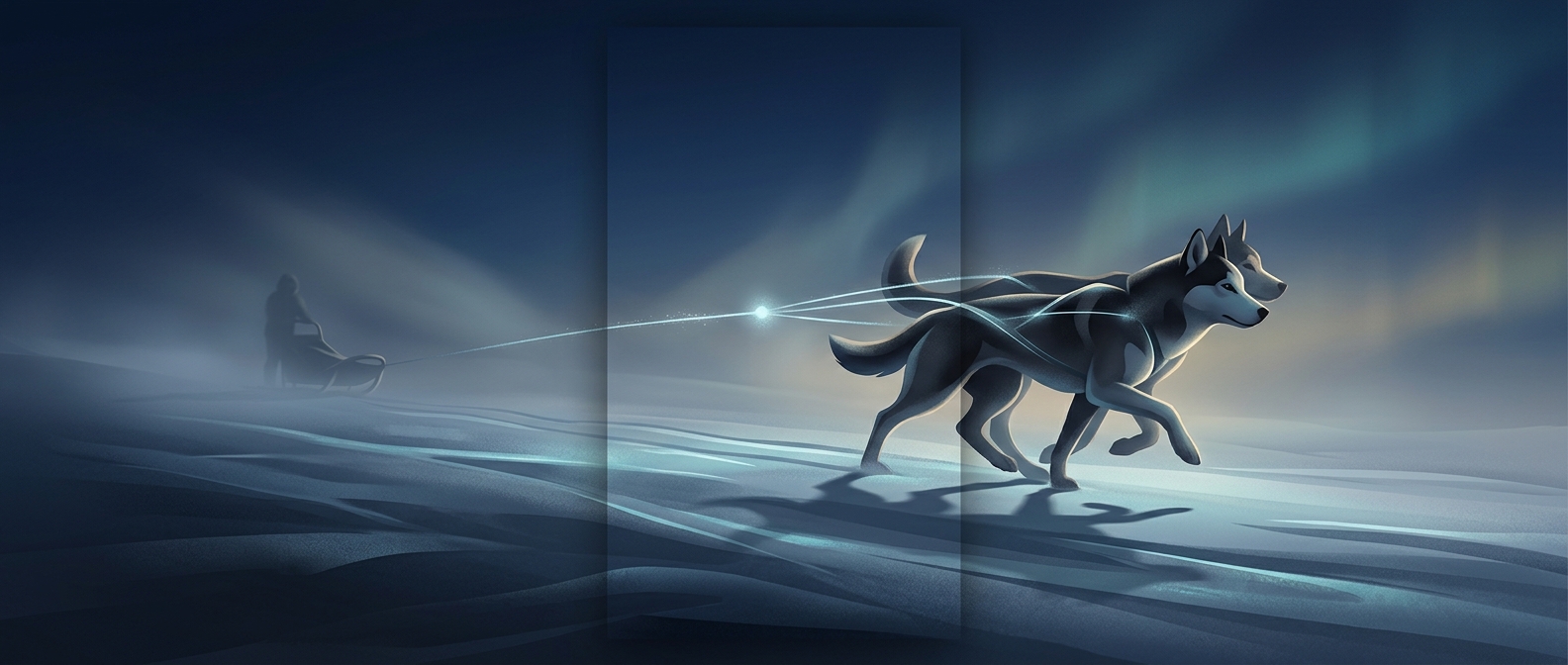
Each dog wears a harness connected by a short trace—a strap that carries the dog’s effort—to a longer central line called the gangline. With one dog on either side, their traces meet the gangline near the sled’s center. When both dogs pull forward, their forces feed into that shared line rather than tugging directly at opposite edges of the sled.
The geometry helps keep the pull centered. If one dog surges or lags, the gangline can shift slightly toward that side, but the pair’s placement gives the musher a more balanced starting point than a single off-center pull. Dogs still vary in strength and pace, so the harness does not guarantee perfectly equal effort; experienced mushers match dogs and manage the team’s pace.
Why the Pair Matters
A centered pull reduces unwanted sideways drag, which can make a loaded sled harder to guide and waste effort in the snow. The line also links the pair to the rest of the team, carrying their combined pull back toward the sled. In a larger team, several pairs can contribute along the same system, while dogs at the front help set direction and pace.
The practical advantage is not that two dogs become identical workers. It is that their effort is organized around one central line—so small differences between them need not become a constant sideways yank on the sled.