The Lead Dog Turns a Command Into a Route
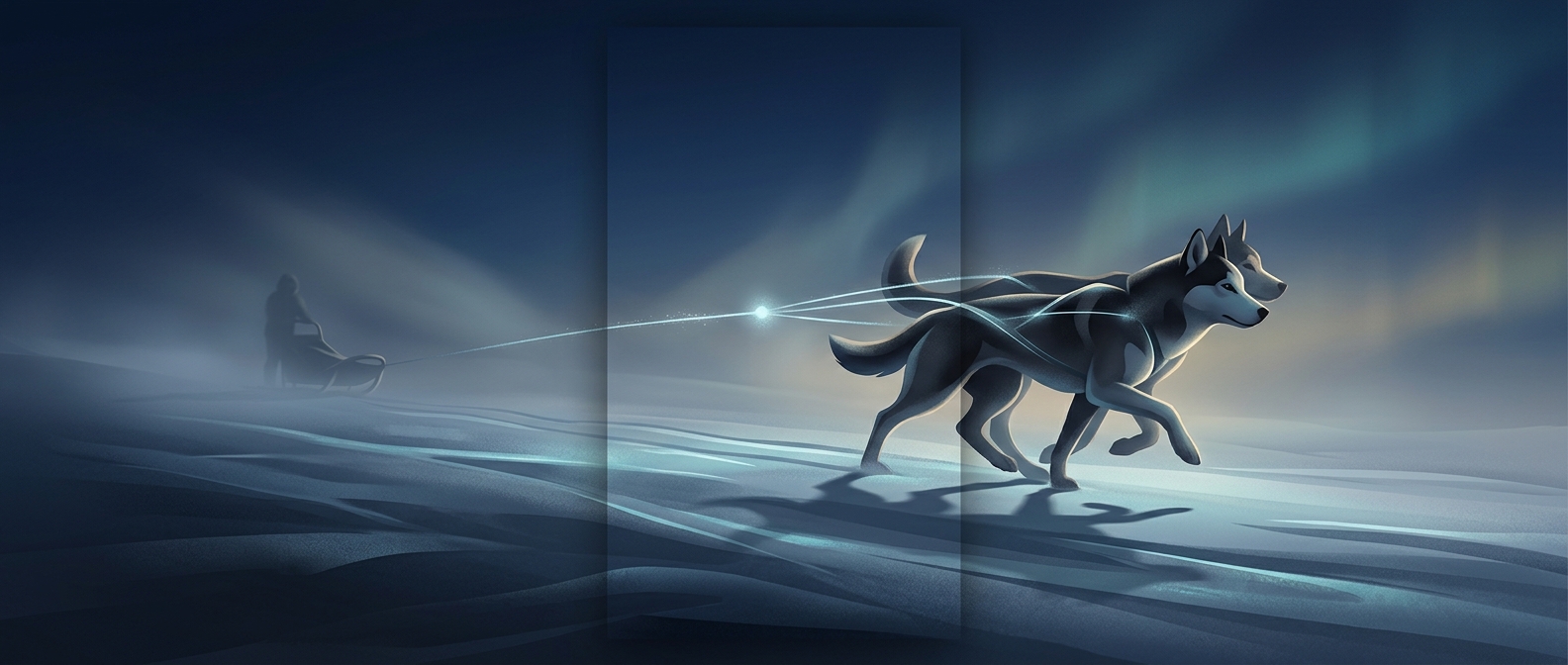
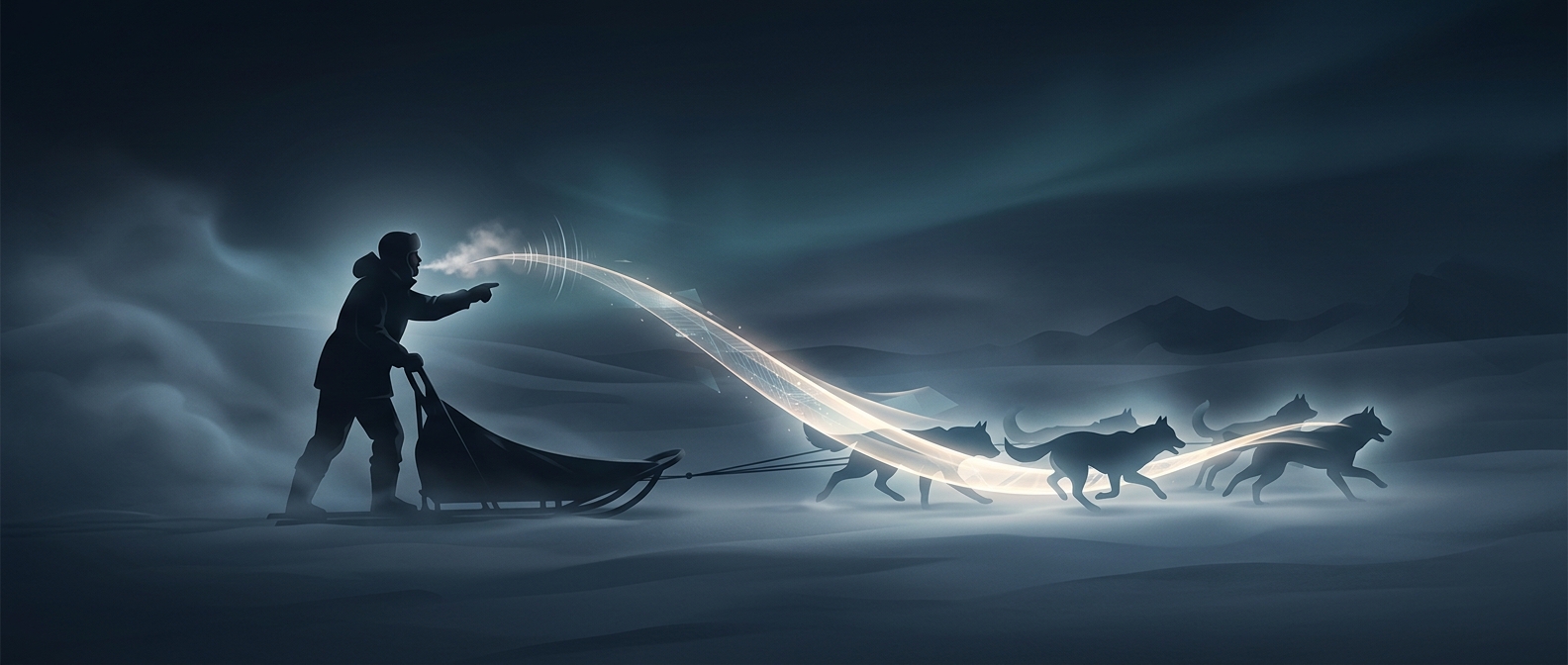
A sled driver, or musher, can call a direction, but the dog at the front has to help make that instruction happen on the trail. A command such as “gee” for right or “haw” for left is useful only if the lead dogs respond and guide the team around a bend, a drift, or an obstacle. The musher steers mainly through voice, reins, and control of the sled—not by directly steering each dog.
That makes the front position a job of attention and judgment. Lead dogs need to notice changes in the trail, keep the team moving in the intended direction, and respond reliably when the musher calls. On an unfamiliar or rough route, a safe line may matter more than the shortest one: a team that charges onto weak ice or into a deep drift can lose far more time than it gains.
Power Is Distributed; Decisions Are Concentrated
The dogs are connected to the sled through a line and individual harnesses. Dogs behind the leaders provide much of the pulling force, while the front dogs influence where that force goes. A strong team still needs both: without pulling, it cannot move the sled; without responsive leaders, its strength may carry it off course.
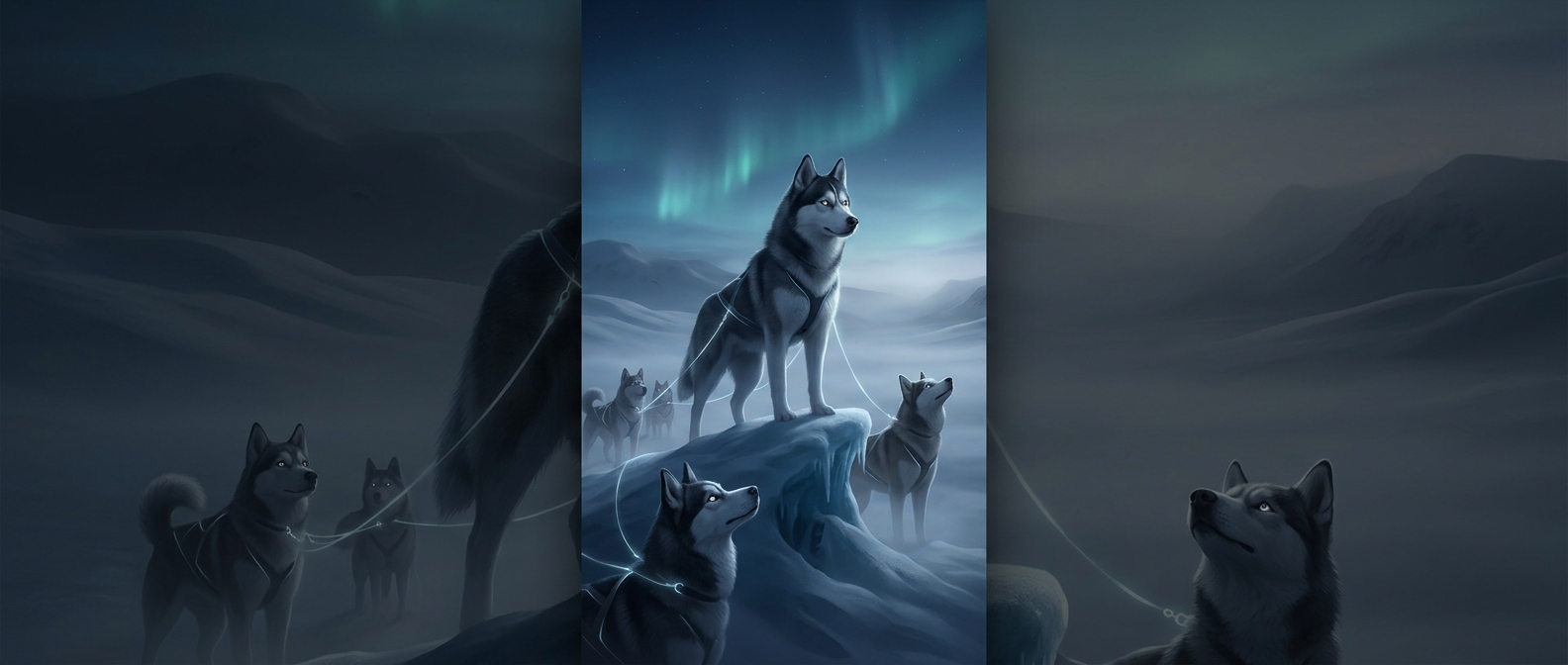
The leader is not necessarily the biggest dog, nor does the role belong to a single dog in every team. Two dogs often run at the front, and mushers choose dogs that can work together and follow commands. The practical payoff is easy to picture: when the trail narrows or turns, the dogs in front can redirect the effort of the entire team before a wrong move becomes a pileup.