A French command became a sled-driving term
The word mushing grew out of a practical command: French marche, meaning “walk” or “go.” In French, the word begins with a sound closer to “marsh” than to the English pronunciation of “march.” English-speaking sled drivers adopted and reshaped the command as “mush,” an order to get moving.
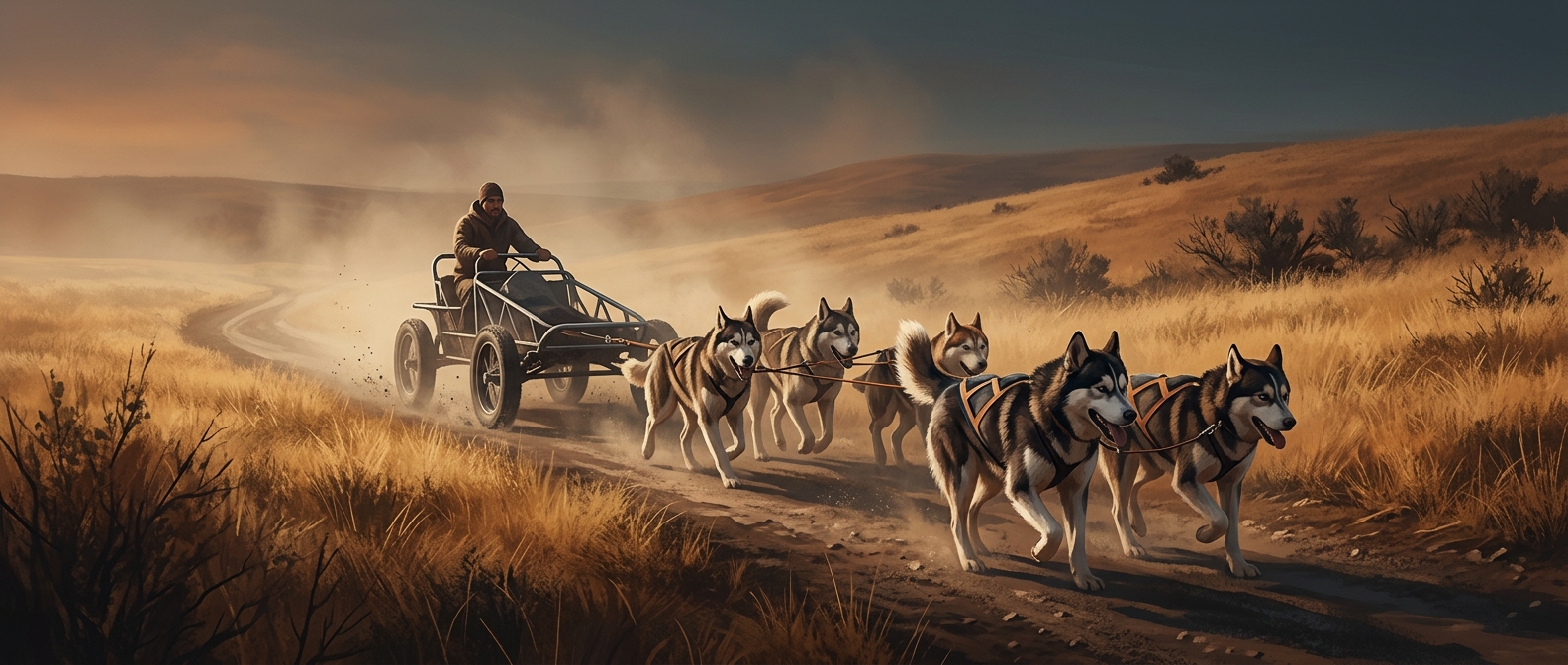
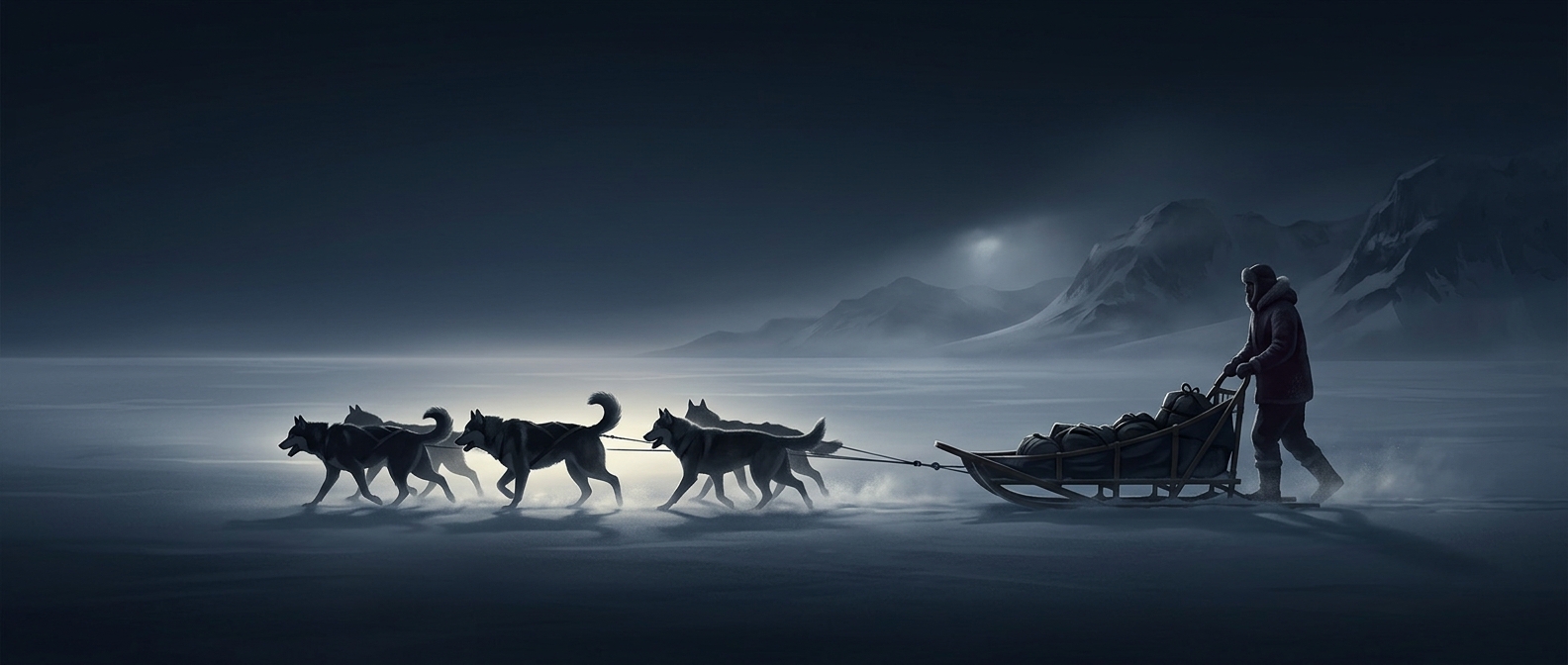
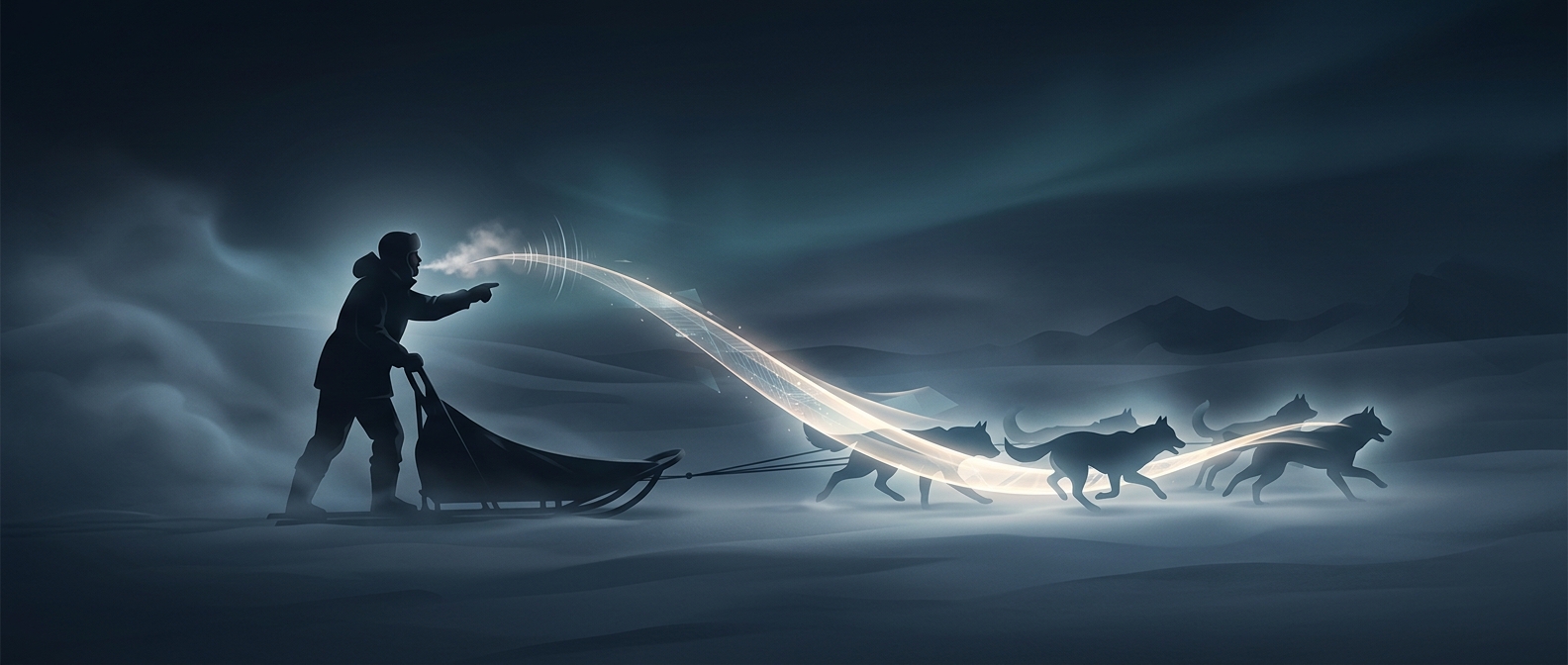
That change makes sense in the setting where the word was used. A driver standing behind a sled needed a short, audible cue that could carry across snow and prompt the team to start. As English speakers used “mush” in that role, the word came to name not just the command but the activity itself. A person driving a dog team became a musher; the sport became mushing.
The word outlasted the order
A sled team moves through a system of learned cues: dogs respond to consistent commands and routines, while the driver steers and controls the sled. “Mush” is now more familiar as a name for the sport than as a universal command used by every driver. The vocabulary can vary, but the old word remains attached to the whole practice.
That is why the name sounds less like a description of sledding than like a noise someone might make at dinnertime. It preserves the history of a borrowed working command, transformed from an instruction to move into the label for a way of traveling by dog team.