A summer workout on wheels
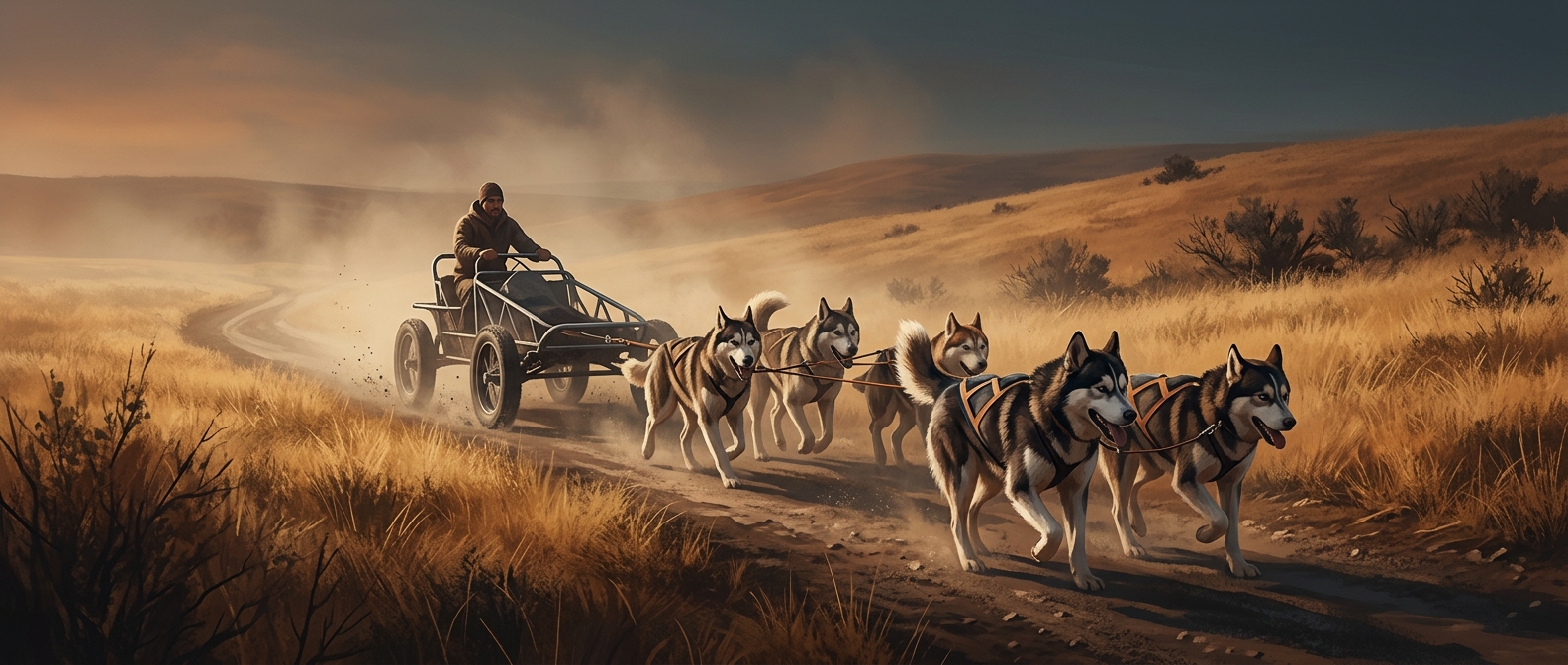
A sled-dog team is not practicing only for the feel of snow beneath a sled. Training also builds the dogs’ shared rhythm and keeps familiar commands and harness routines sharp. A wheeled rig lets a musher work with the team on dry ground, but it changes the mechanics: wheels roll over dirt rather than runners sliding over snow, and the driver has to steer and brake a moving vehicle while the dogs pull.
That makes the rig more than a sled with tires. The musher must manage the team’s pace and the load so the dogs can work together without being asked to pull harder than conditions allow. Dirt can also be uneven, so the route and speed matter to the people controlling the rig as well as to the dogs.
Heat sets the real limit
The difficult part of summer training is not simply the lack of snow. Dogs shed heat less efficiently than people do: they rely heavily on panting, and intense exertion can make their body temperature rise quickly. Warm air leaves less room for the body to lose that heat, so a workout that is manageable in cool conditions can become unsafe as the day heats up.
Cool-hour scheduling is therefore part of the training method, not just a comfort measure. The wheels let the team keep practicing on land, while the thermometer determines when—and how much—it is sensible to ask of them. In summer, the rig makes training possible; the weather decides whether it should happen.