Breeding for a demanding landscape
For the Nez Perce, a horse was more than a striking animal: it expanded how people could travel, hunt, trade, and move through the rugged country of the inland Northwest. A useful mount had to keep going over long distances and stay balanced on uneven ground. Those practical demands shaped which horses were kept and bred.
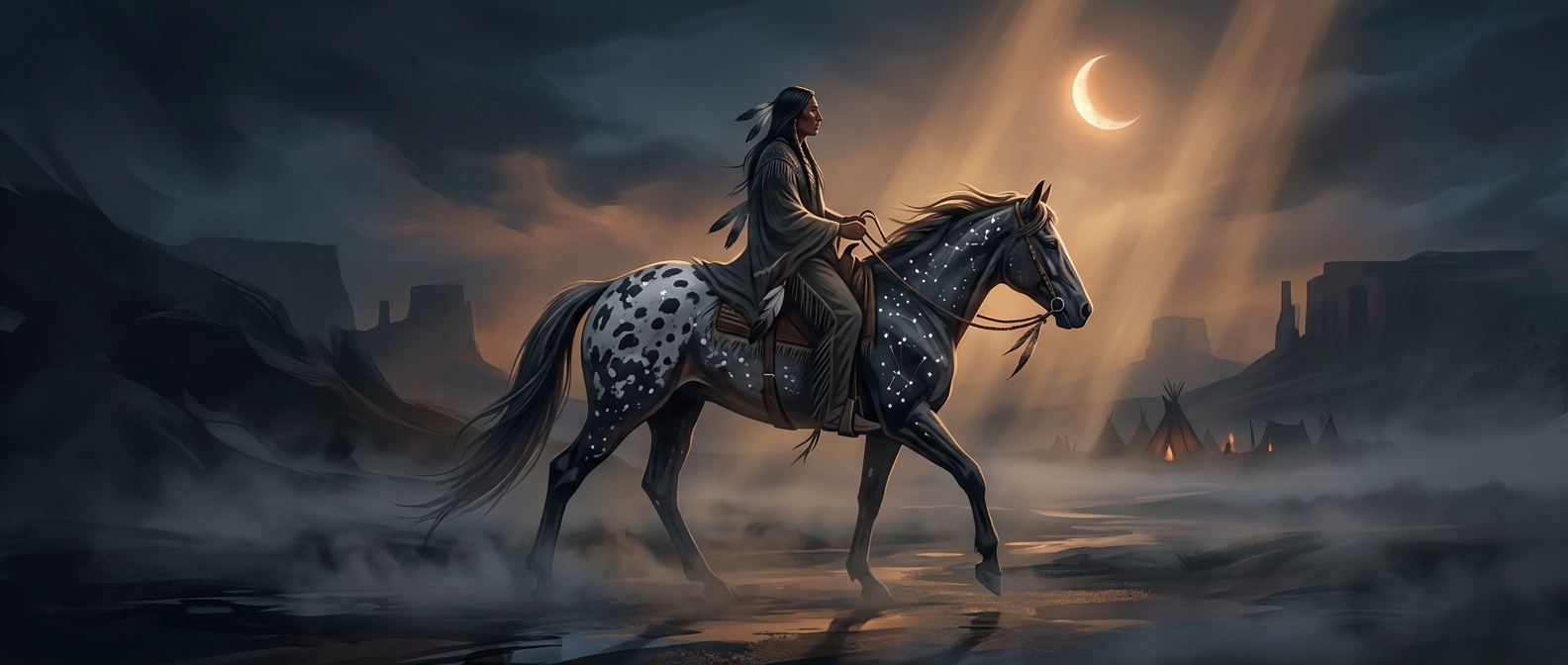
Horses reached the region through Spanish colonial routes and trade networks. Nez Perce breeders built herds over generations, favoring animals that performed well as well as those with conspicuous coat patterns. This was selective breeding in a practical sense: keeping and mating horses with valued traits made those traits more likely to appear in later generations.
A recognizable coat, not a riding feature
The Appaloosa’s spots and other coat patterns made individual horses easy to recognize, but the pattern itself did not make a horse faster or surer-footed. The breed’s reputation rested on the combination of appearance and working ability. Its name is commonly linked to the Palouse region, where Nez Perce communities lived and raised horses.
That balance matters: the Appaloosa was not simply a spotted horse chosen for looks. It emerged from decisions about which animals were useful in a particular place, with coat pattern among the traits people valued.
A breeding tradition disrupted
The Nez Perce horse culture was badly disrupted after the 1877 conflict with the United States, when the community was forced from its homeland and many horses were lost or taken. The modern Appaloosa breed was organized much later, drawing on the surviving legacy of those horses and subsequent breeding.
The lasting result is visible at a glance—but the more consequential inheritance is a horse shaped by generations of selection for life and travel across demanding terrain.