A harness built around different gaits
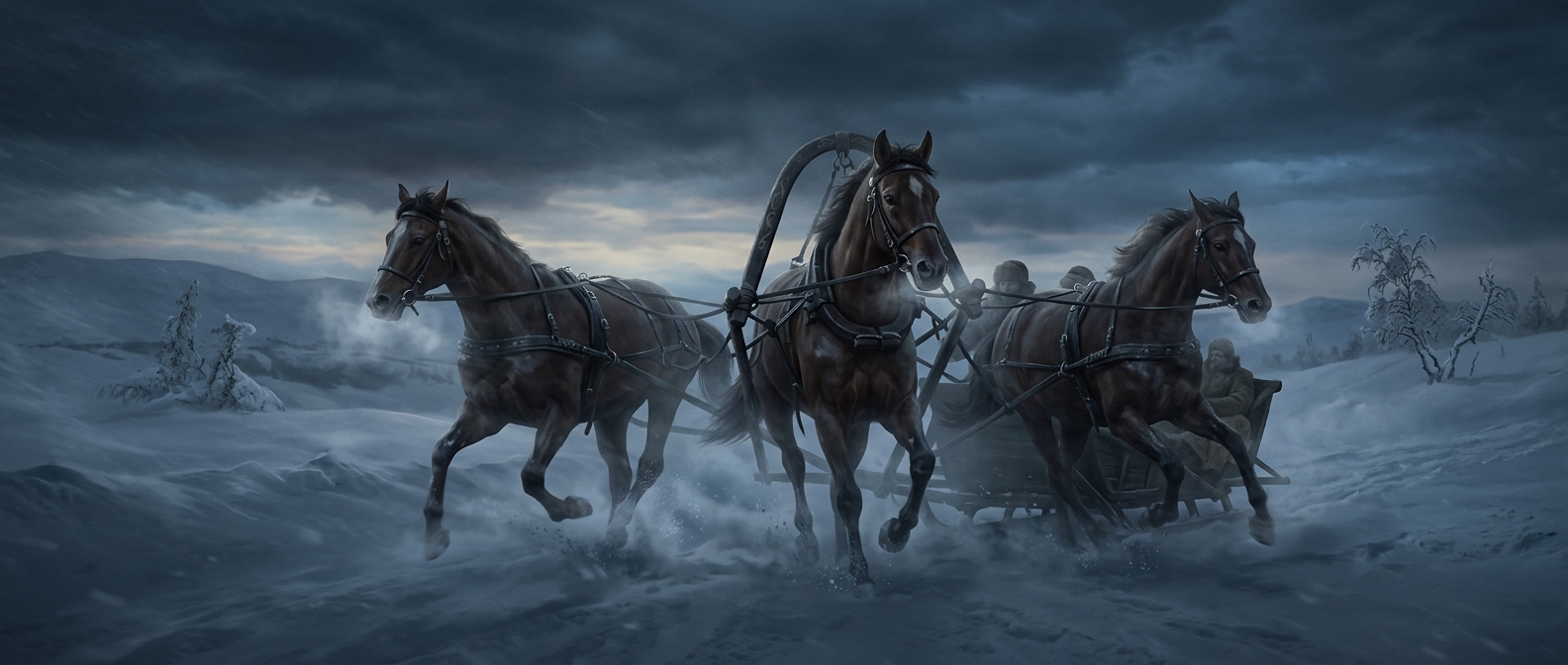
A troika is arranged with one horse between the shafts—the long poles connecting the vehicle to the harness—and two horses running on either side. The middle horse, called the shaft horse, trots straight ahead. Each outer horse is harnessed to pull from the side and can gallop with its body turned slightly outward, rather than crowding the center horse or the vehicle.
That split lets the team combine a steady central pull with the stronger, faster strides of the flank horses. The horses are not simply three animals pulling in parallel: their positions and harnesses give each a distinct job.
Why the formation matters
The middle horse provides a straight line of traction and helps keep the vehicle aligned behind it. The outward-angled flankers add pulling force while staying clear of the shafts and one another. Their gallop creates the troika’s characteristic fan-shaped motion; the center horse’s trot gives the moving team a more regular axis.
The arrangement was especially suited to fast travel by sleigh, where a broad formation could move across open, snow-covered routes. It also required a driver to manage horses with different gaits and positions as one team. The memorable sight is a practical compromise: three horses could pull together at speed without all having to run in the same way.