The cable is both engine and track
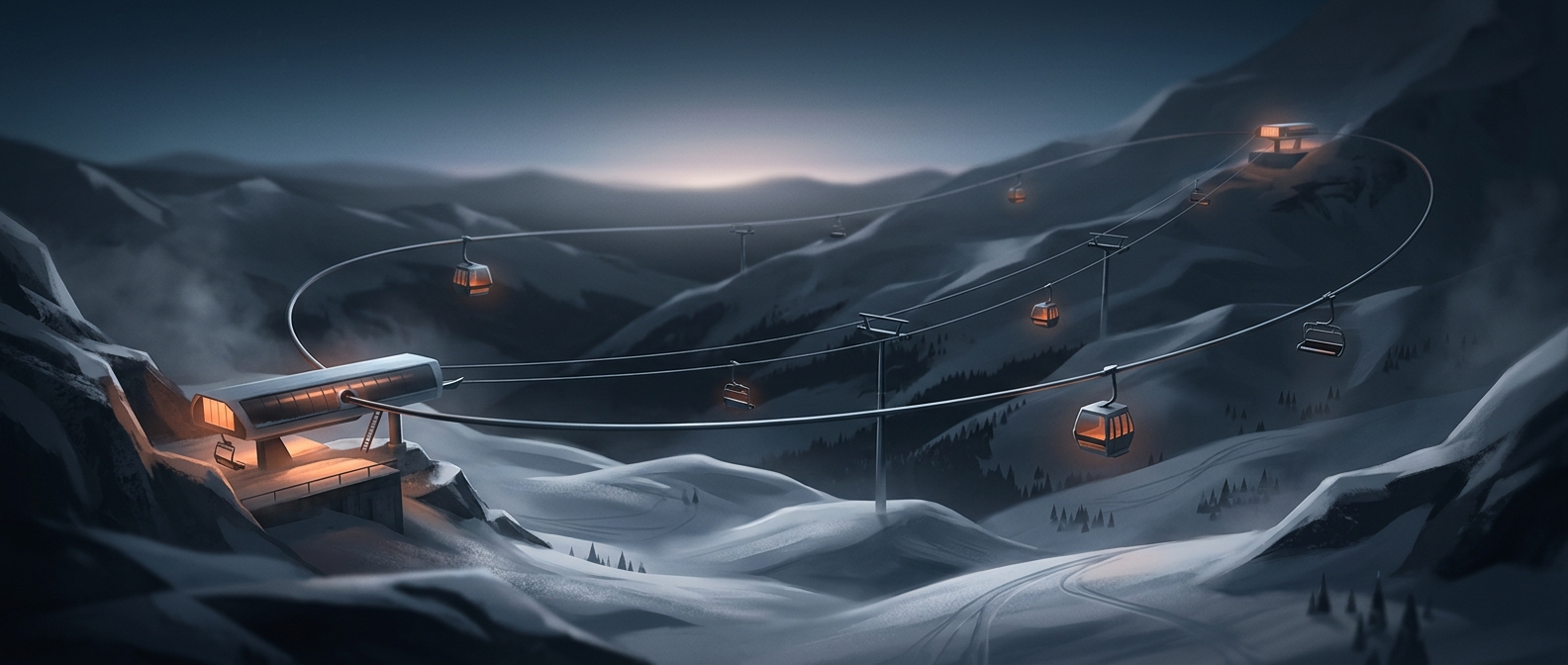
A ski lift’s cable, often called a haul rope, is a steel rope that circulates around large wheels at the two ends of the line. One wheel is driven by a motor; the other turns as the rope moves. Along the slope, smaller wheels on towers support and guide the cable over changing terrain.
Chairs are clamped to the moving rope. On a fixed-grip lift, each chair stays attached for the entire journey, so it moves slowly through the loading area. On a detachable lift, the clamp releases at the terminals: chairs slow down for boarding, then reattach to the faster-moving rope before heading up the mountain.
Keeping the loop taut
The rope must stay tight enough to grip the wheels and carry a changing load of passengers, but it also lengthens and contracts with temperature and use. A tensioning system—often a movable wheel assembly driven by hydraulic equipment or a counterweight—shifts to take up slack and maintain the needed tension. This lets the motor keep the same rope circulating even as conditions change.
Because the chairs travel on one continuous circuit, the uphill and downhill sides are linked: loaded chairs climb while empty ones return. That arrangement turns a single moving rope into a steady stream of seats, rather than requiring a separate mechanism to send each chair up and bring it back.