A sleigh made Santa’s journey easy to picture
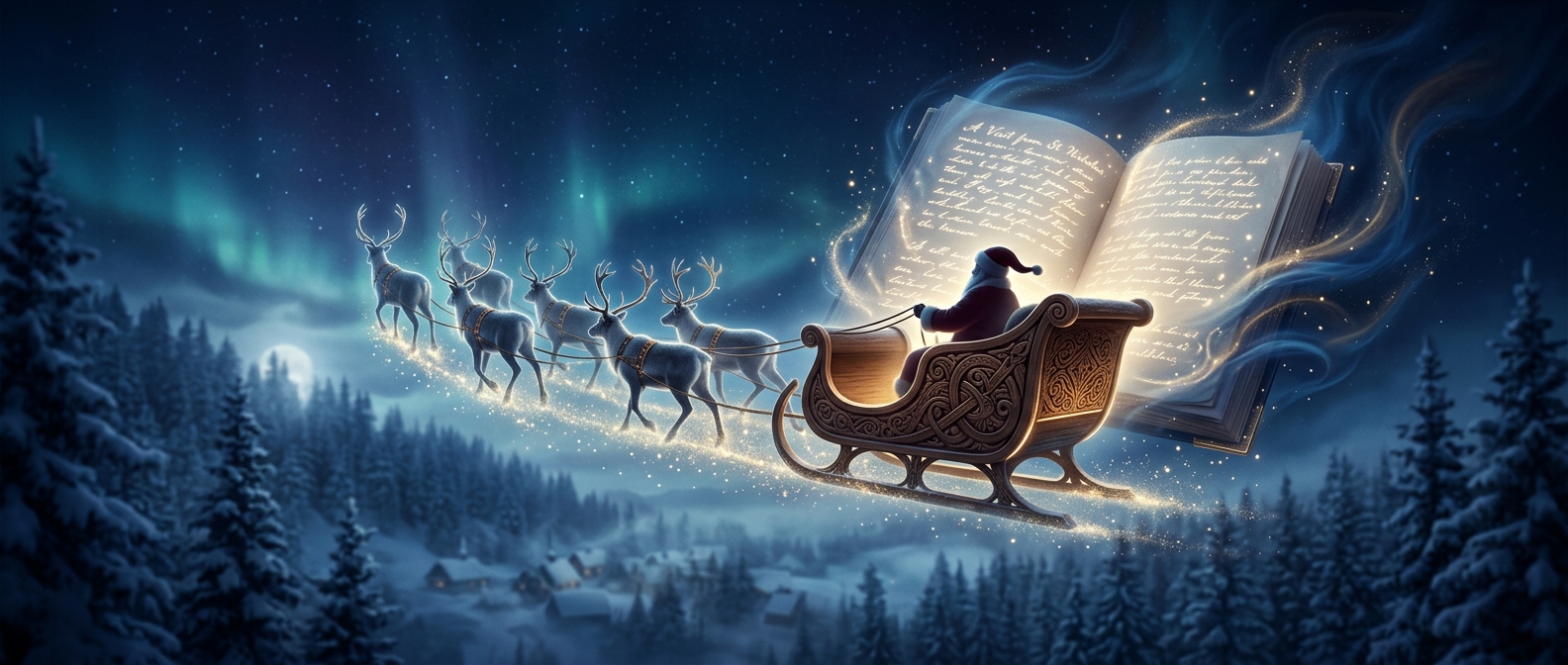
Before the poem appeared in 1823, American Christmas traditions did not yet share one settled picture of Santa. The poem supplied a compact scene readers could remember: a small sleigh, reindeer, a rooftop landing, and a visitor who slipped down the chimney. Its details turned an abstract gift-giver into someone with a recognizable vehicle and route.
That route also solved a storytelling problem. A sleigh and reindeer could carry Santa from house to house in a single night, while the chimney explained how he reached families indoors. The poem did not describe practical transport; it made an impossible journey feel orderly enough to imagine.
Repetition carried the design from home to home
The poem’s steady rhythm and vivid sequence made it natural to read aloud at Christmas. As copies circulated in newspapers and books, families encountered the same names, sounds, and actions—and could pass them on by retelling the scene. Each reading reinforced a shared version of Santa, rather than leaving every household to invent its own.
The lasting shift was not just the addition of a sleigh. It was a repeatable travel story: one vehicle, a team of reindeer, and a route that connected every home in the tale. That simple setup gave later pictures and stories a common template to build on.