A meal with one crucial rule
The goats’ double role comes into focus in a story about Thor staying with a poor farm family. He kills one goat for supper and tells the household to put the bones on the goatskins, not break them. The meal is therefore not an ordinary hunt: Thor expects the animals to return.
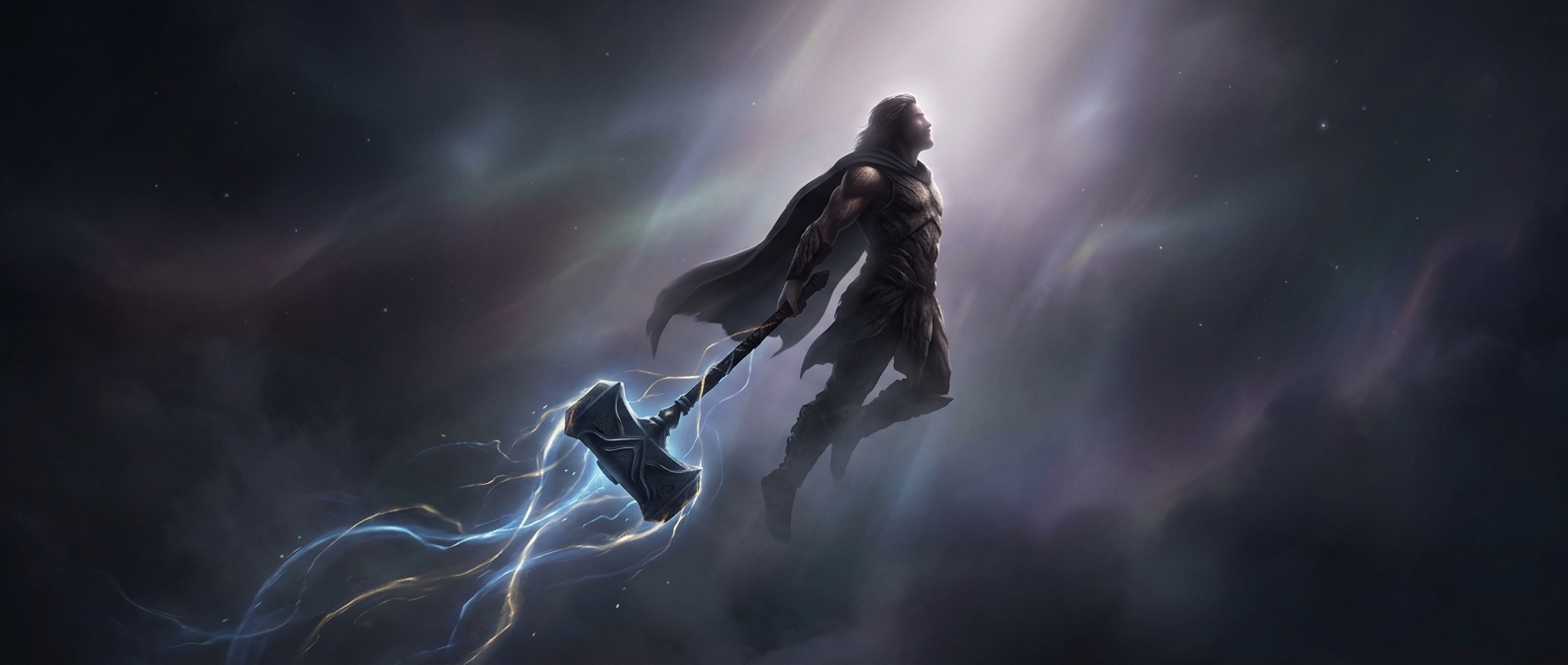
One child breaks a thigh bone to get at the marrow. The next morning, Thor lays his hammer over the skins and restores the goats—but the one with the damaged bone is left lame. The story makes the condition literal: the body can be renewed, but damage to its bones carries over.
A chariot that travels with its provisions
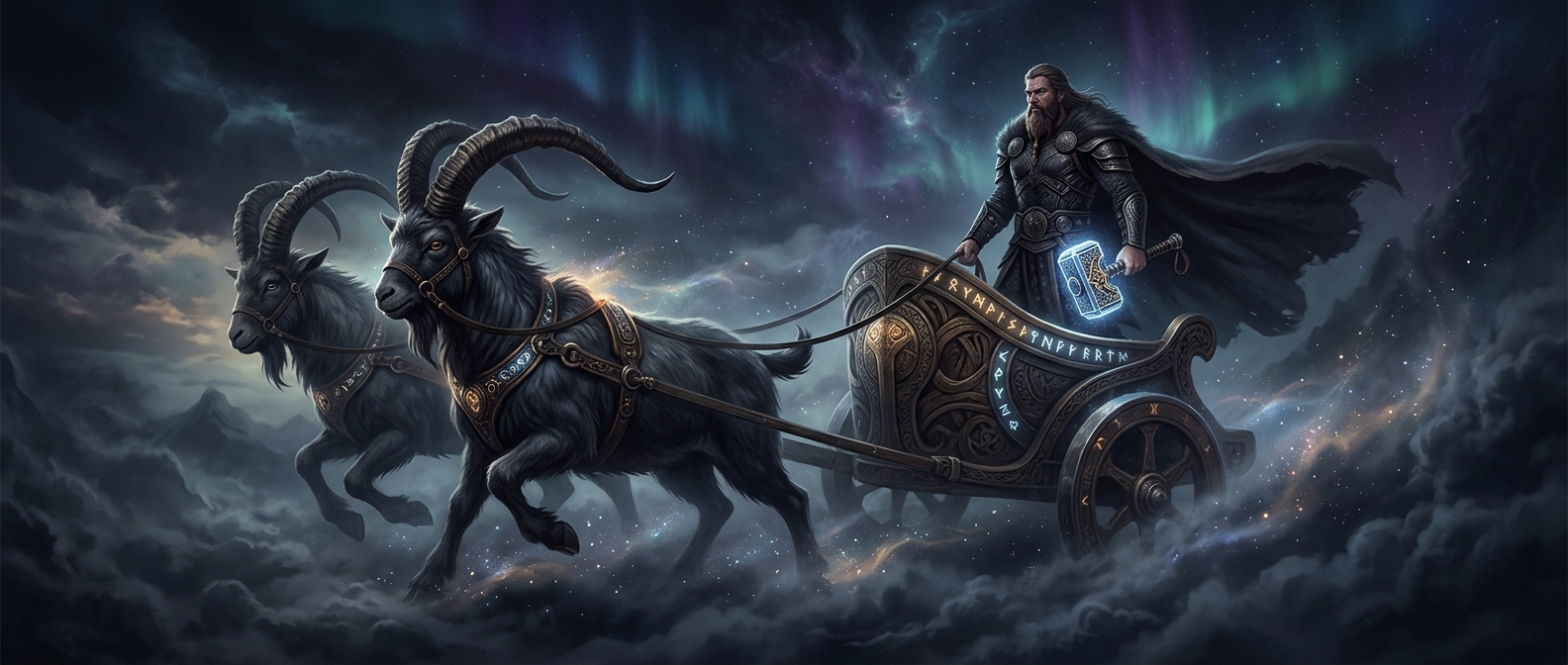
That arrangement gives Thor’s transport an unusual logic. His goats are not merely draft animals waiting at the end of a journey; they can also feed him and his companions along the way. Their revival makes the sacrifice temporary, while the broken bone shows how easily that dependable cycle can be disrupted.
The detail also gives the tale a practical source of tension. The family receives a rare meal, but must follow an unfamiliar rule; a small act of curiosity changes the animal’s condition. Thor’s chariot can be both vehicle and pantry, but only because its passengers know how to put the meal back together.