The route is a logistical puzzle
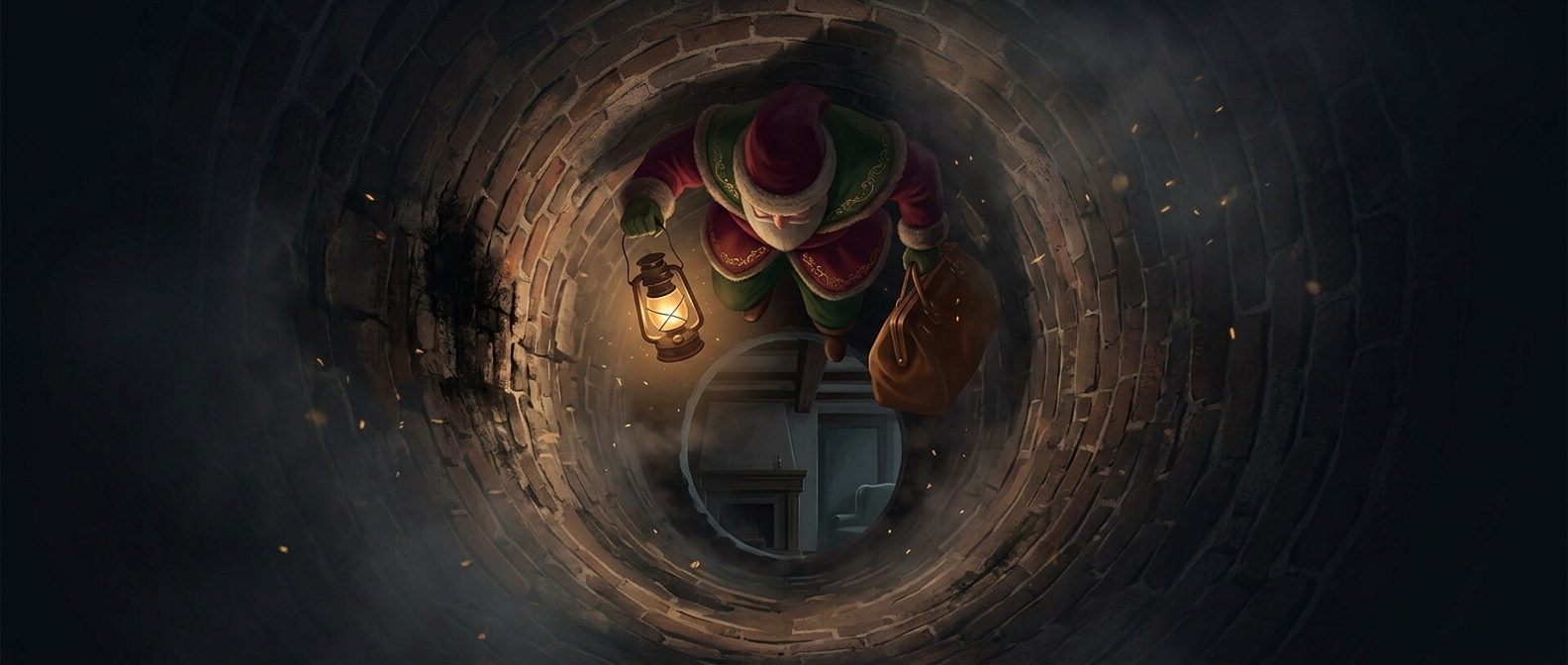
A chimney is not a continuous open shaft from roof to living room. Its flue—the passage that carries smoke outdoors—may narrow, bend, or connect to a fireplace through a damper, a movable plate that controls airflow. A real traveler would have to negotiate each change in shape, while a bulky sack would catch on edges and leave little room to turn. Soot would be the least of the problems: a working fireplace can also expose the route to heat and smoke.
Even where the flue is broad and inactive, getting down it is only half the journey. The visitor would still need to emerge into the room without upsetting the hearth, then somehow repeat the feat at every other home. As a transport plan, the chimney trades the obvious obstacle of a locked door for a series of tighter ones.
Why the impossible entrance works
That mismatch is part of the tale’s appeal. A door is ordinary and expected; a roof and chimney make arrival feel secret, as if Santa can reach a household without disturbing its nighttime routines. The route also gives the story a memorable image: an enormous visitor and his sack passing through a passage built for smoke.
The chimney is less a practical access point than a piece of narrative engineering. Its physical impossibility signals that ordinary limits do not apply—and makes the moment of arrival easier to picture than any explanation of how a visitor could quietly enter every house.