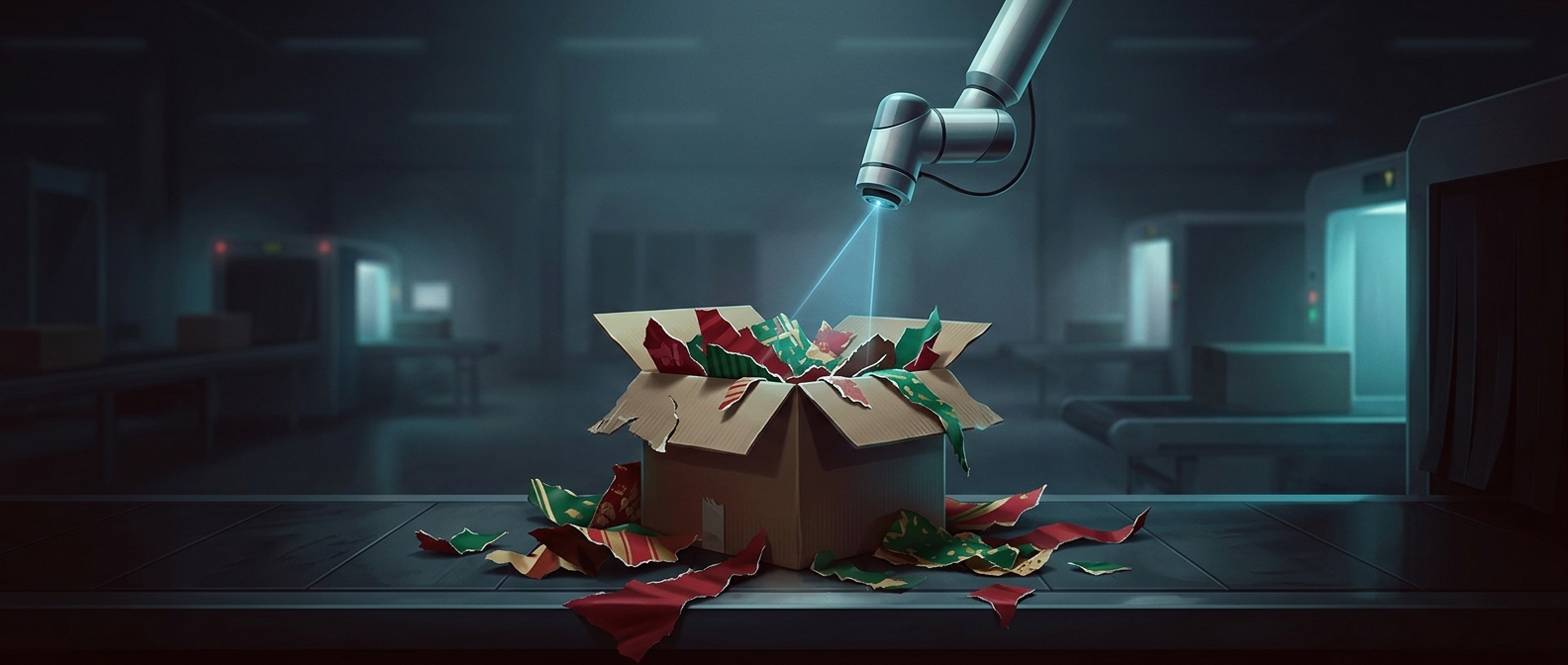
Why a wrapped gift can become a screening problem
Wrapping paper hides an object from a person looking at it, but it does not necessarily hide it from an airport X-ray. The difficulty is that screening staff must be able to judge what is inside. Dense layers, elaborate folds, bows, and tightly packed contents can make an image harder to interpret—or prevent a closer inspection without opening the package.
What happens when the image is unclear
Airport screening combines tools, such as X-ray imaging, with human review. If an image raises a question, staff may need to examine the item more closely. That can mean asking the traveler to unwrap it, opening it during a physical inspection, or using another screening method available at that checkpoint. The goal is to resolve uncertainty about the contents, not to spoil the surprise.
A wrapped box is especially inconvenient because the wrapping is not a removable cover designed for inspection: tape and folded paper can conceal seams, while decorative material may obscure the outline of what is packed inside. Even when the contents are harmless, the screener cannot simply take that on trust.
Keep the surprise—and make inspection easier
For a gift that may need extra scrutiny, placing it in a gift bag or carrying the wrapping materials separately makes it easier to inspect and rewrap. Travelers can also wait to wrap presents until after flying. The practical tradeoff is simple: the more easily a package can be opened, the less likely inspection is to turn a finished bow into evidence of a closer look.