The armor is built into the car’s structure
Protective glass is not simply a thicker version of an ordinary window. It is made in layers so the outer surface can resist an impact while inner layers help keep fragments from flying into the cabin. Armor panels are added around the passenger compartment, and doors need strong frames and secure edges so protection does not stop at the window or door seam.
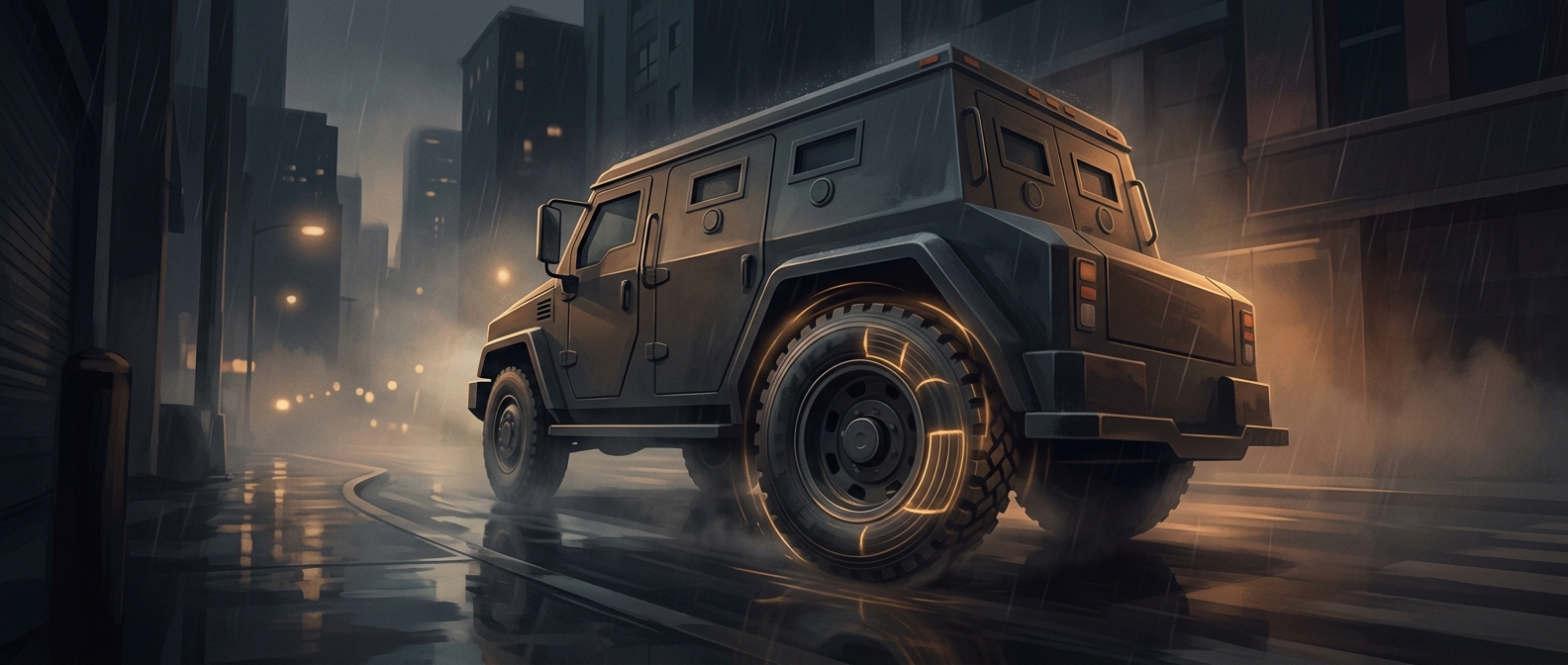
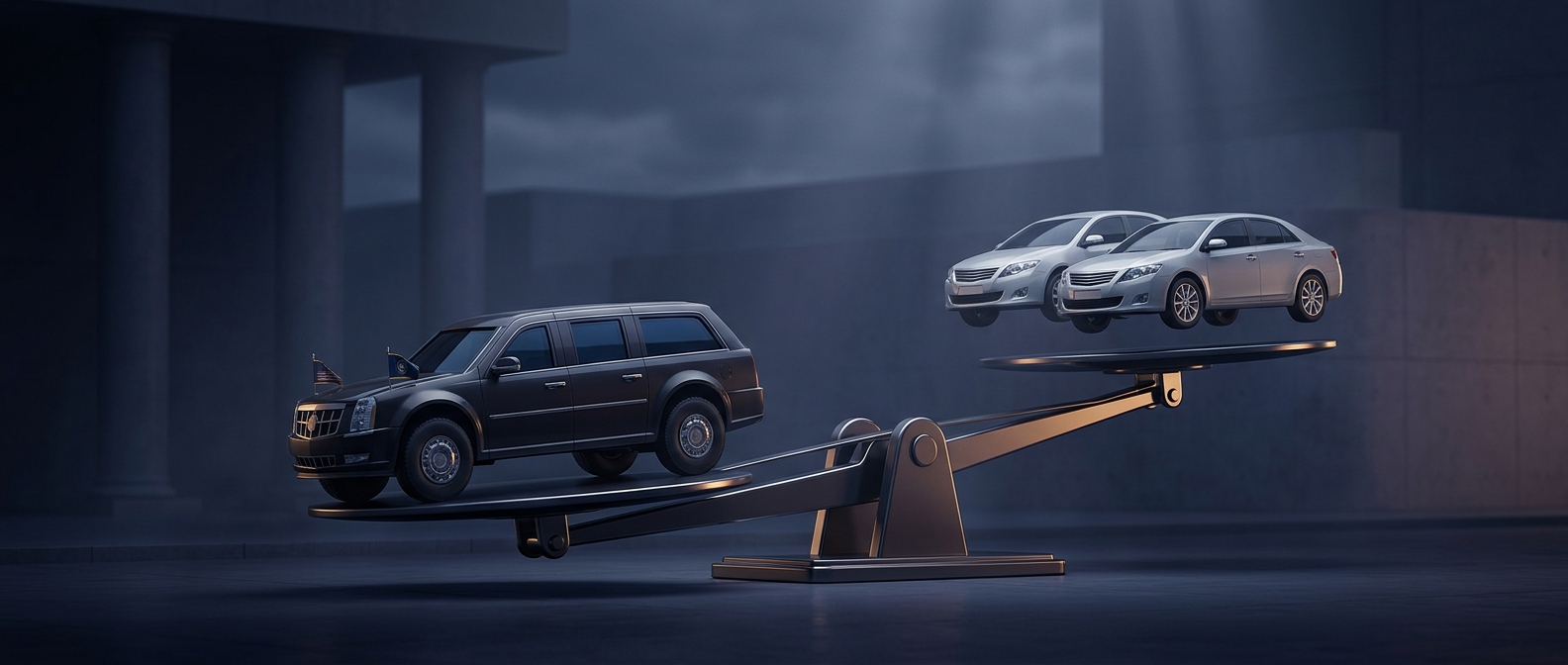
Those layers and reinforcements add mass throughout the vehicle. The protection also has to remain attached when the car moves or takes a hit, so the body and its mounting points may need strengthening too. The result is not just a heavier cabin, but a heavier vehicle whose load is concentrated in places an ordinary car was not designed to carry.
Extra weight changes how the car behaves
A heavier car needs more force to accelerate and more energy to slow down. Its brakes therefore have to manage greater heat during hard stops, while reinforced suspension components help support the load and keep the tires in contact with the road. Engineers also have to preserve usable handling: armor high in the doors and windows can affect how the vehicle responds in a turn.
There is a tradeoff in every added layer. More protection can mean more weight, which can reduce agility and increase strain on mechanical parts. The practical goal is to protect the occupied space without making the vehicle difficult to control. That is why a diplomatic car’s armor is an engineering package, not merely a set of heavy panels: the suspension, brakes, and structure must all cope with carrying the added protection at speed.