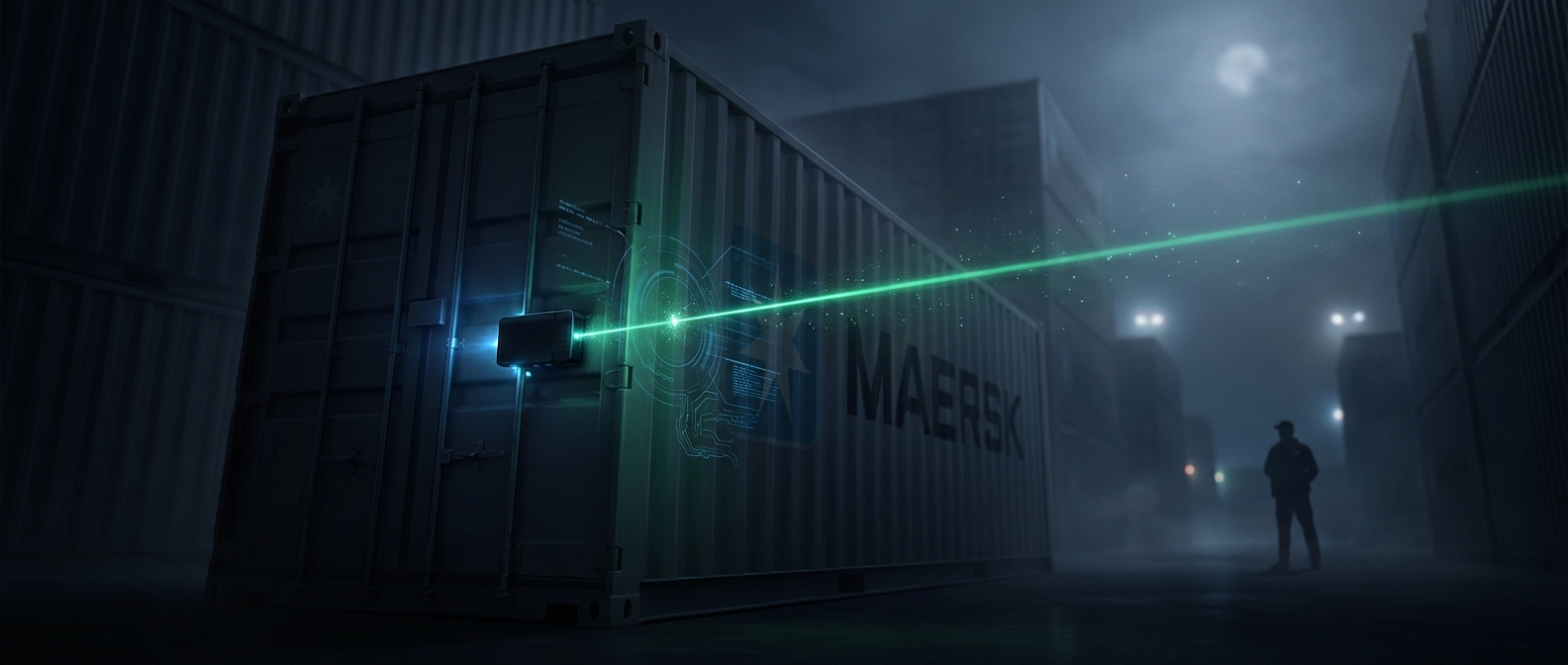
How a Light-Sensing Seal Notices an Opening
A closed freight container is normally dark inside. A light-sensing seal uses that darkness as a baseline: when its sensor registers a change in illumination, it can flag that light has entered the space. The sensor’s detector converts incoming light into an electrical signal, which the device can compare with its dark-state reading.
That makes the seal more than a physical barrier. A conventional seal shows whether its fastening has been disturbed; a light sensor can provide a separate clue that the container’s interior was exposed. Depending on the device, that clue may be recorded or sent onward, giving people handling the shipment a reason to check the load or investigate the journey.
A Clue, Not a Complete Account
The signal is useful because opening the doors usually changes the interior from dark to lit. But it does not, by itself, explain why light appeared or what happened to the cargo. The sensor detects a condition—not a motive, a person, or a missing item. Its reading is best understood alongside the seal’s physical condition and other shipment records.
In practice, the idea turns an ordinary feature of a closed container—its darkness—into something a seal can monitor. If the doors are opened, the change can leave a trace even after the container is shut again.