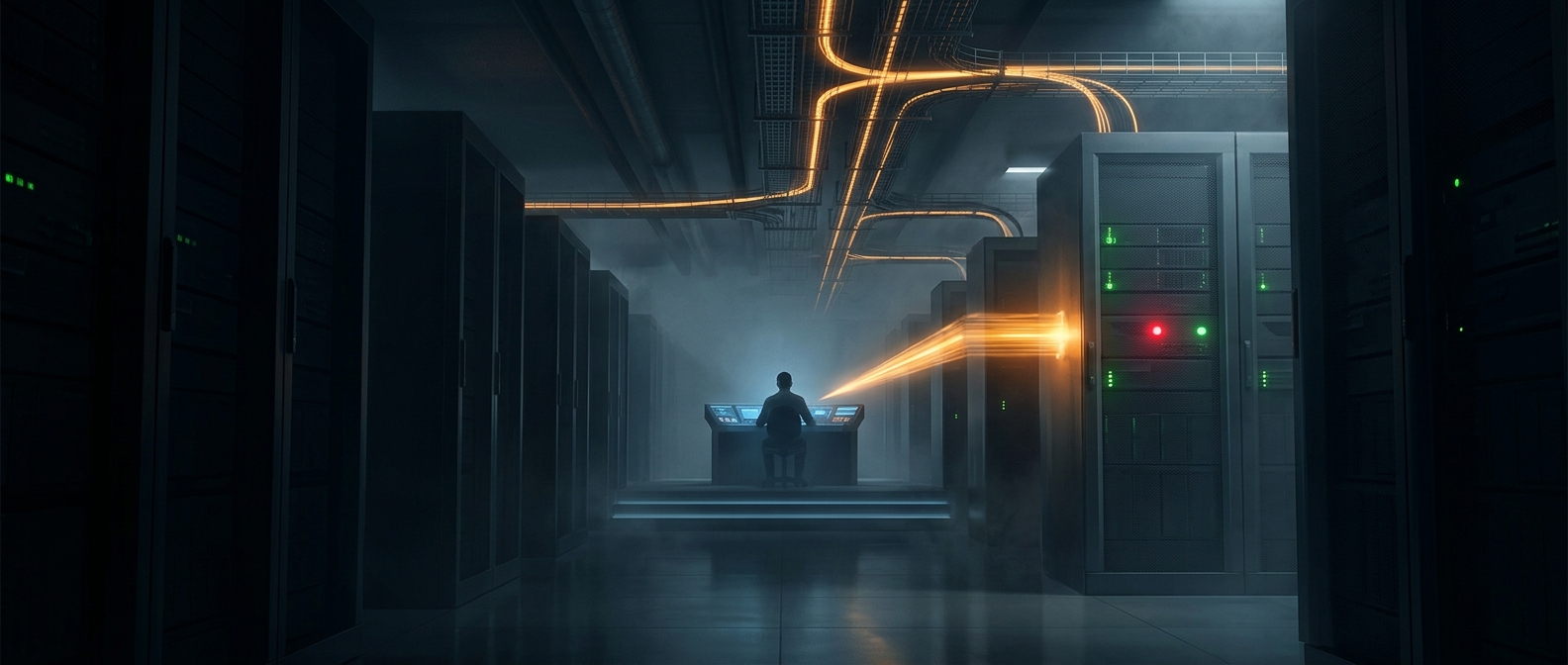
How a Network Can Restart Its Own Equipment
A router or other network device can sometimes be rebooted without anyone touching its power switch. The key is that the device has a separate management function: it can remain reachable over the network even when its ordinary job—forwarding traffic, for example—is failing.
SNMP, or Simple Network Management Protocol, is a standard way for management software to ask network equipment for information and, when configured to permit it, send commands. A compatible device may expose a control for restarting itself. The administrator’s request travels across the management connection, and the device’s own software initiates the reboot.
Why the Management Path Matters
This is useful when a device is misbehaving but still responsive enough to receive management commands. A technician can restart it from another location, avoiding a trip to a server room or a remote site. That can restore service faster, especially when equipment is spread across offices or other hard-to-reach locations.
The management connection is not magic, however. If the device has lost power, its management processor is unresponsive, or the network path to it is down, a remote command cannot reach it. In those cases, recovery may require a separate management network or physical access.
A Reboot Is a Tool, Not a Repair
Power-cycling clears the device’s current operating state and gives it a fresh start, which can resolve some temporary faults. But it does not fix a damaged component, a bad configuration, or the underlying cause of a recurring failure. Administrators also need permission controls: a restart interrupts whatever traffic the device carries, so the command should be limited to authorized operators and used with awareness of its impact.
The practical advantage is simple: when the management path survives, a restart can be issued from wherever the administrator is—not from beside the equipment.