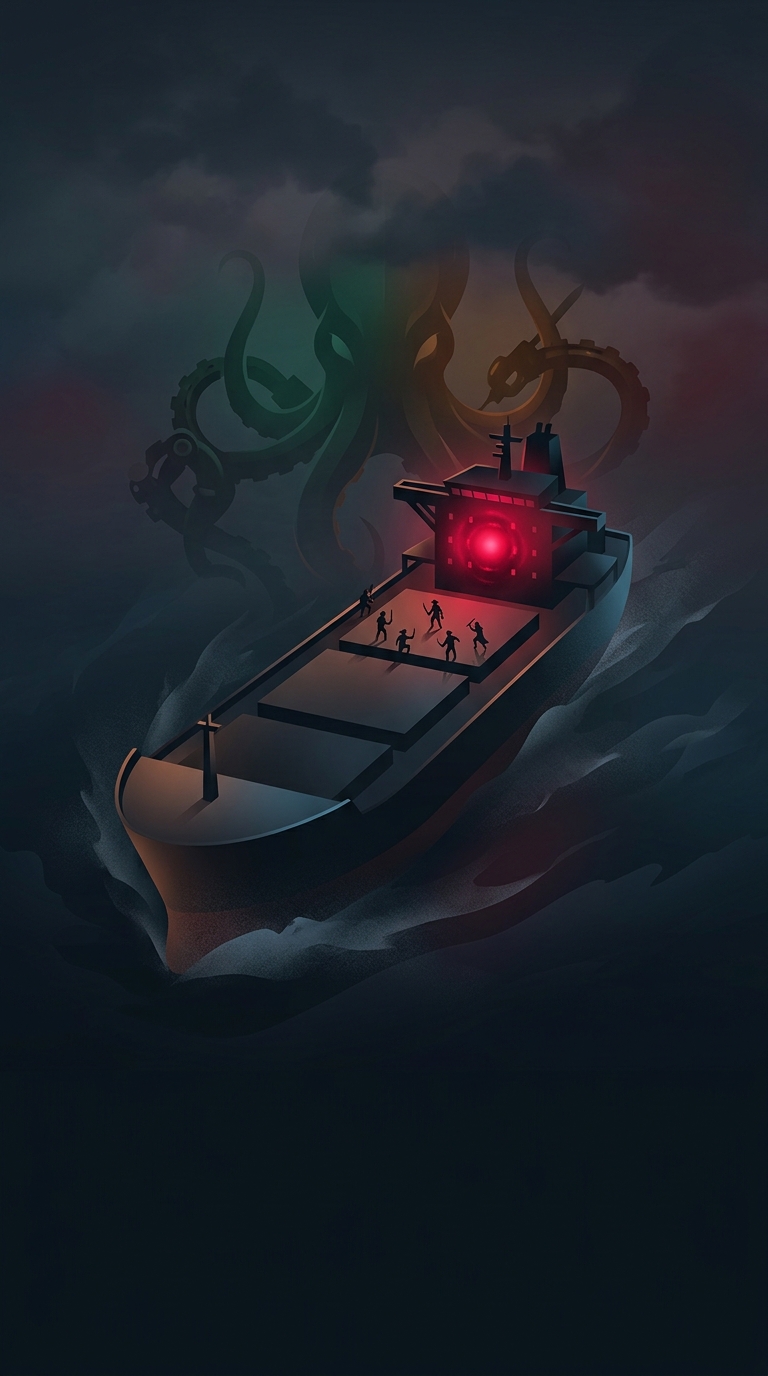
The Ship’s Last Line of Defense: A Crew Citadel
On some vessels operating in piracy-prone waters, the crew’s fallback is a citadel: a secured room where they can retreat if pirates get aboard. It is not a weapons room or a trap. Its purpose is to put the crew behind a locked barrier and make it harder for attackers to seize people as hostages or use them to control the ship.
Why the Room Matters
A boarding party may gain access to the deck or bridge, but that does not automatically give it control of the crew. If the crew can reach the citadel before being intercepted, they can lock themselves inside and use communications equipment to alert authorities and report their location. Some citadel arrangements are designed to let crew members remain sheltered while help is coordinated.
The tactic changes the pirates’ leverage. A ship is far harder to operate or hold for ransom when its crew is together, out of reach, and able to call for assistance. The room’s security depends on its design and on the crew reaching it in time; it is not a guarantee that a boarding attempt will fail.
A Defense Built Around Denial
The citadel’s central idea is simple: deny attackers access to the people they need to control the vessel. Rather than trying to overpower pirates on deck, the crew withdraws to a protected space and gives responders time to act. For a merchant ship with no practical way to fight off a boarding party, that can turn a successful entry into a much more difficult—and less useful—seizure.