Why a Skeleton Prop Can Cloud an X-Ray Image
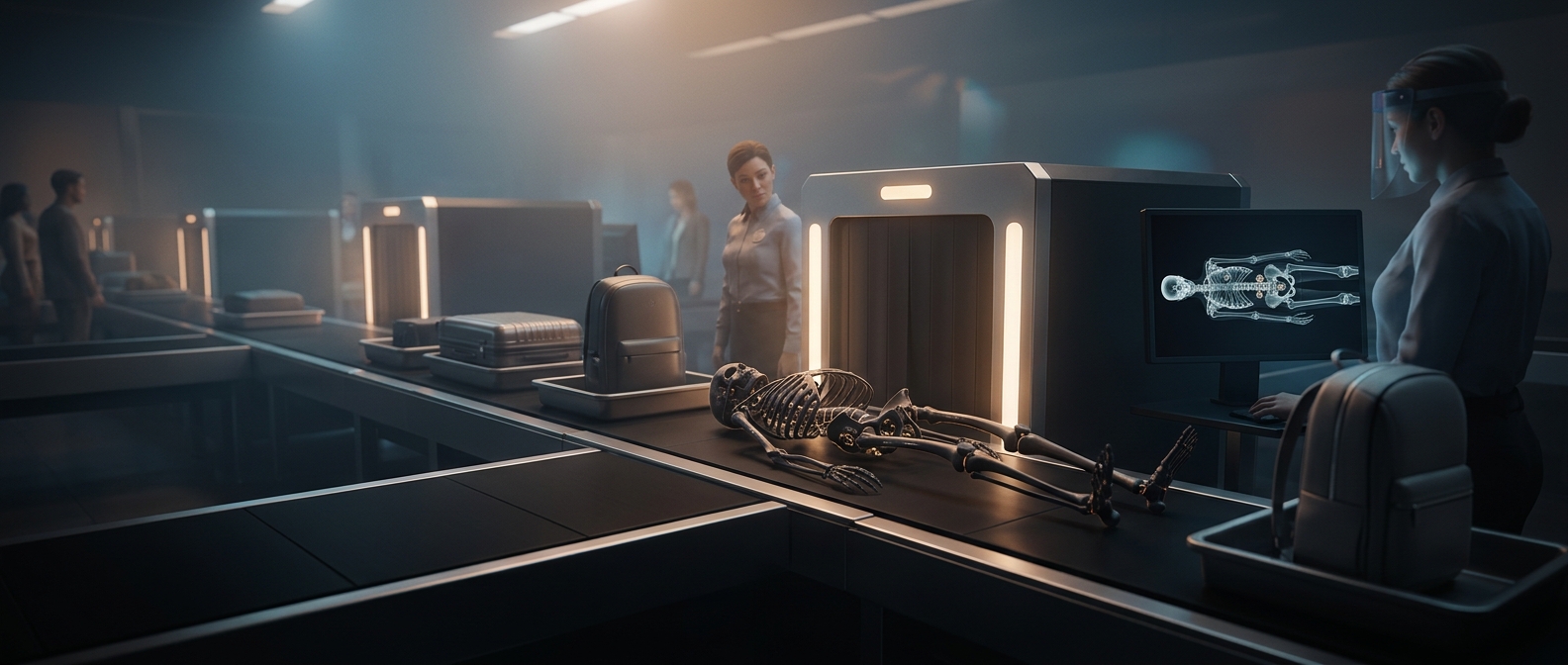
An airport X-ray scanner does not produce a neat photograph of each item in a bag. It maps how objects absorb X-rays, with everything along the beam’s path layered into one image. A skeleton prop can add a dense network of shapes—especially when its pieces overlap clothing, chargers, and cables—making it harder to tell where one object ends and another begins.
The issue is not that a plastic or decorative skeleton is automatically dangerous. It is that a crowded image can hide details or leave screeners unsure what they are seeing. Separating the prop reduces that visual clutter and makes its shape easier to assess.
A Clearer View Helps Resolve Ambiguity
Screeners may ask a traveler to take an unusual or bulky item out for a closer look. With the prop apart from the rest of the bag, its outlines are less entangled with other objects, and staff can decide whether the image is clear or whether additional inspection is needed. The exact handling depends on the item and the screening process; removing it does not mean it has failed screening.
For travelers, the practical lesson is simple: if a costume skeleton is packed tightly among cords and other gear, it may be easier to inspect when accessible. A little space around the prop can turn a confusing tangle on the screen into an identifiable object.