Why a cello may need a seat of its own
A cello is too large for most overhead bins, yet too fragile and valuable to treat like an ordinary suitcase. Its thin wooden body can be damaged by a hard impact, and pressure from other bags can put stress on the instrument or its case. In the cargo hold, it also passes through more handling steps than a passenger sitting beside it.
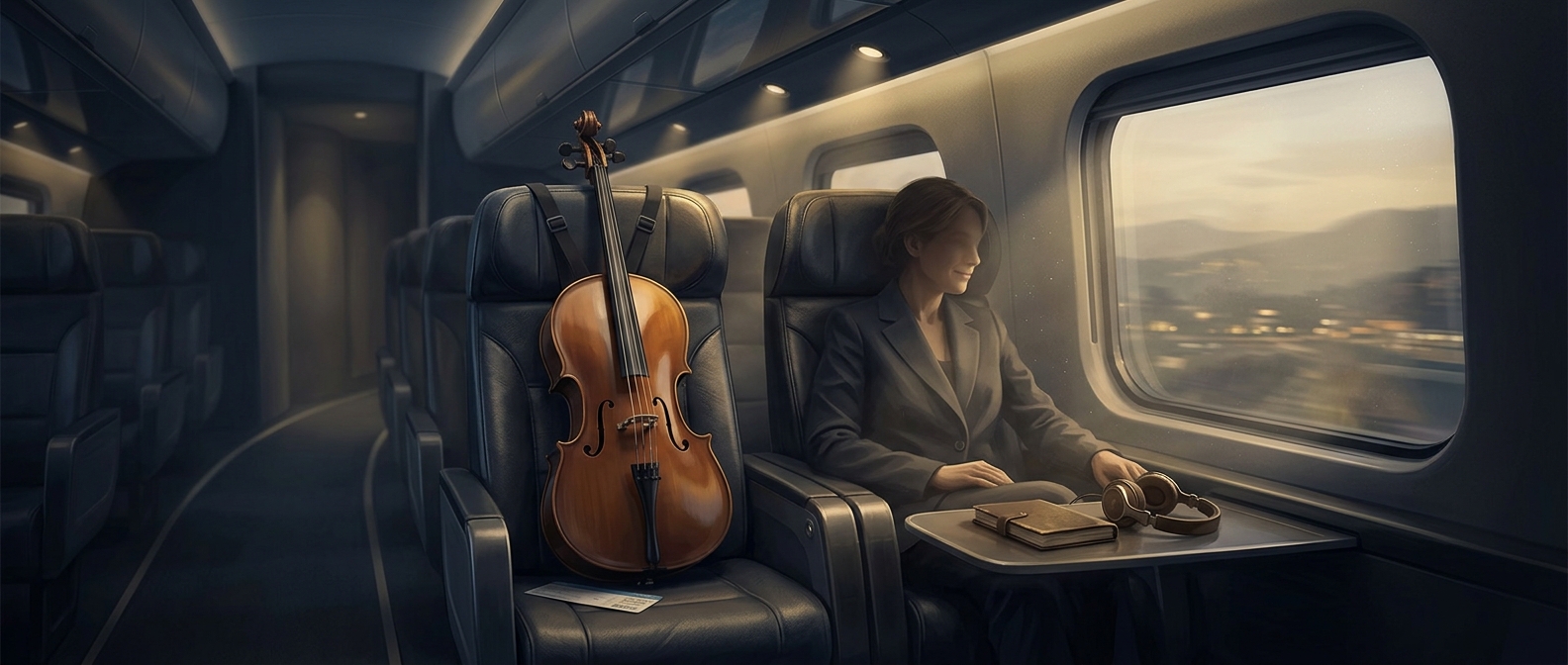
Buying a cabin seat offers a different kind of protection: the instrument stays with its musician, rather than being loaded and unloaded as baggage. The cello is placed in its case and secured in the seat according to the airline’s requirements. It is not simply set down wherever there is room; the case must be restrained so it cannot become a hazard if the plane brakes suddenly or encounters turbulence.
Protection comes with a tradeoff
A separate seat takes space that could otherwise be sold to a person, and the musician must arrange the booking and seating in advance. Airlines may have different limits on how an instrument can be positioned or secured, so a cello seat is a negotiated transport arrangement, not a universal right to bring any large object aboard.
The payoff is control over the most vulnerable part of the journey. Instead of trusting a delicate wooden instrument to the baggage chain, its owner can keep it in view—and keep it buckled in beside them.