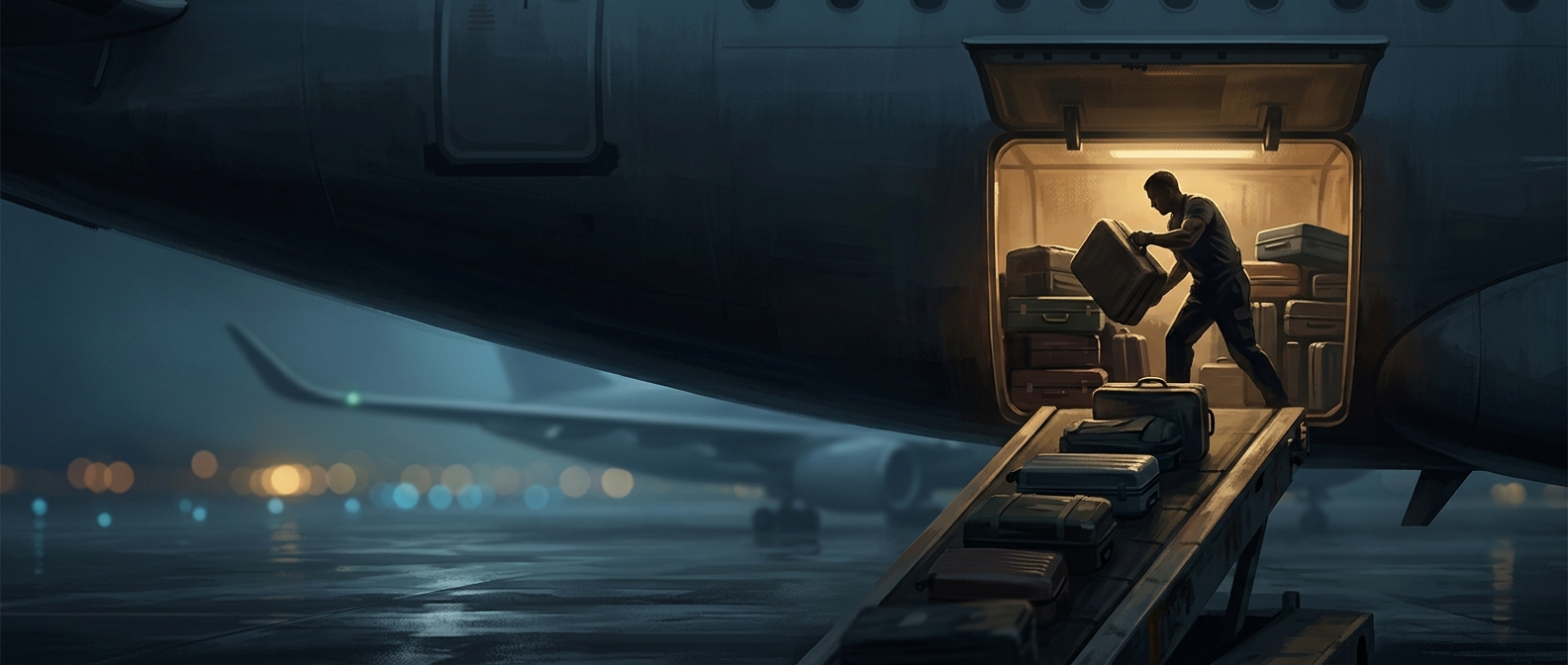
A bag gets an address before it reaches a junction
Before a suitcase can be sent toward a particular flight, the system has to identify it and connect that identity to a destination. A printed barcode on the baggage tag is commonly scanned as the bag enters the system; some airports also use radio-frequency identification, or RFID, which reads a small electronic tag without requiring a direct line of sight. The scan lets control software assign the bag a route through the building.
That route is more than “left” or “right.” A suitcase may need to pass through screening, wait for other bags, or travel toward a particular pier or loading area. The software tracks its expected position so that the correct junction can act at the right moment.
The turn depends on timing and space
Conveyor belts carry bags through a network of junctions. At a sorting point, a moving tray can carry a suitcase sideways, or powered rollers set at an angle can push it off the main line. In either case, the diverter must match the bag’s arrival: act too early or too late, and it could send the wrong suitcase down that branch.
Bags also need enough separation for the equipment to handle them individually. If two suitcases arrive touching or piled together, a scanner or diverter may not be able to treat them as distinct items. Systems therefore use spacing, sensors, and repeated checks to keep track of bags as they move.
When the system loses the thread
A tag that cannot be read, or a bag whose position is uncertain, cannot safely be sent on the basis of a guess. Depending on the airport’s setup, it may be diverted for another scan, sent around again, or handled by staff. That extra trip takes time, but it helps prevent a suitcase from being routed to the wrong flight.
The hidden choreography is why a bag’s path can include several turns before it reaches the loading area: each one is a timed handoff between tracking software and physical machinery.