Why the rear wall is built solid
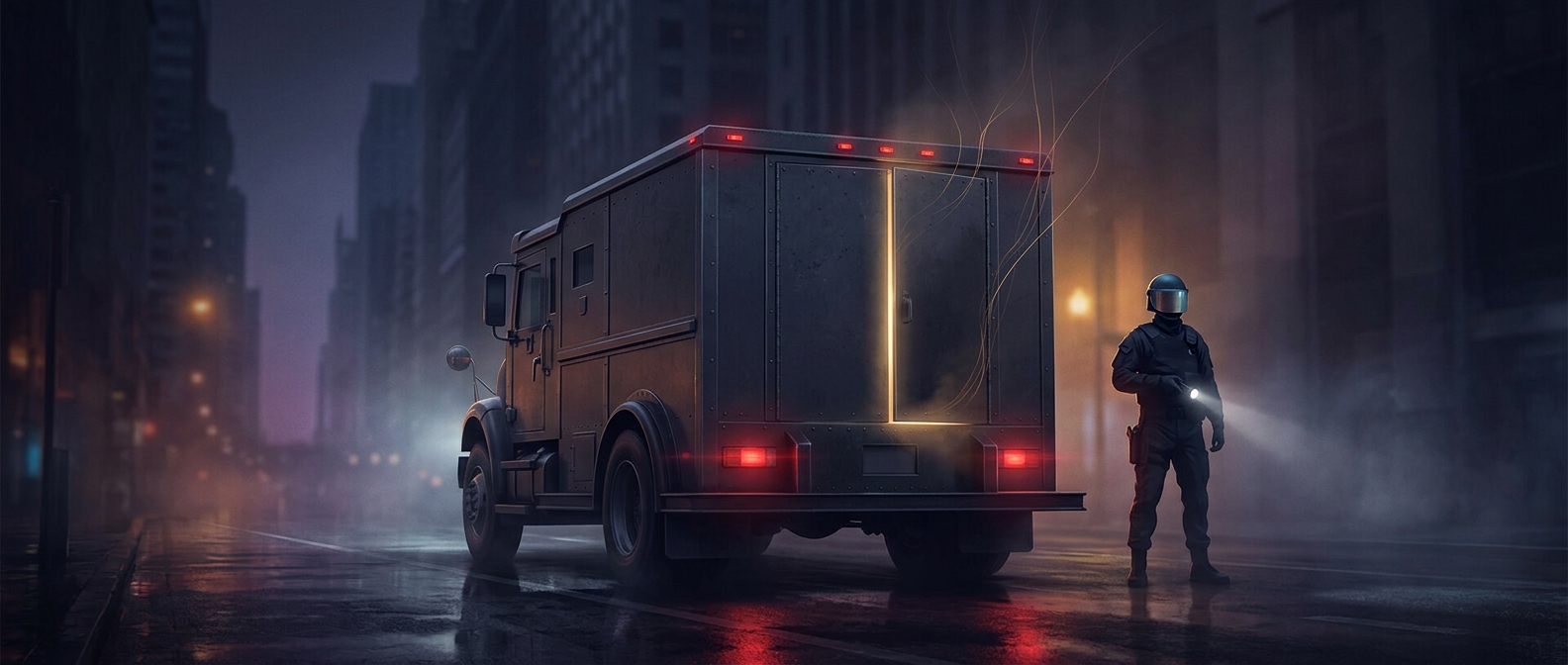
A bank truck’s rear compartment is meant to be a secure box, not a passenger cabin. A solid outer wall keeps people outside from seeing what is being carried, while eliminating a pane of glass that could be targeted to reach the cargo. The wall also makes the vehicle’s layout less revealing: a passerby cannot glance through the back and see where valuables are stored or how the compartment is arranged.
Security trades a view for a barrier
That protection changes what the crew can see. In an ordinary vehicle, a driver can check behind through the rear window; in an armored truck, that direct line of sight is gone. Mirrors and cameras provide views around the vehicle instead, letting the crew monitor traffic and nearby space without opening a physical weak point in the cargo enclosure.
The distinction matters because a camera image is not the same as looking through glass. It depends on the camera’s position and working properly, and it may not show every angle at once. The truck’s security comes with a visibility cost: the crew must rely on equipment and careful checks where other drivers can simply glance back. The cargo gets a concealed, protected compartment; the people operating the truck inherit the blind spot created by its solid rear wall.