A bird that seemed to arrive with the family
Storks were unusually visible neighbors: their large nests sat above homes, and adult birds returned to them year after year. That made them easy to imagine as part of household life rather than distant wildlife. Their seasonal movements also gave people a memorable story of return and renewal—an apt fit for the arrival of a new child.
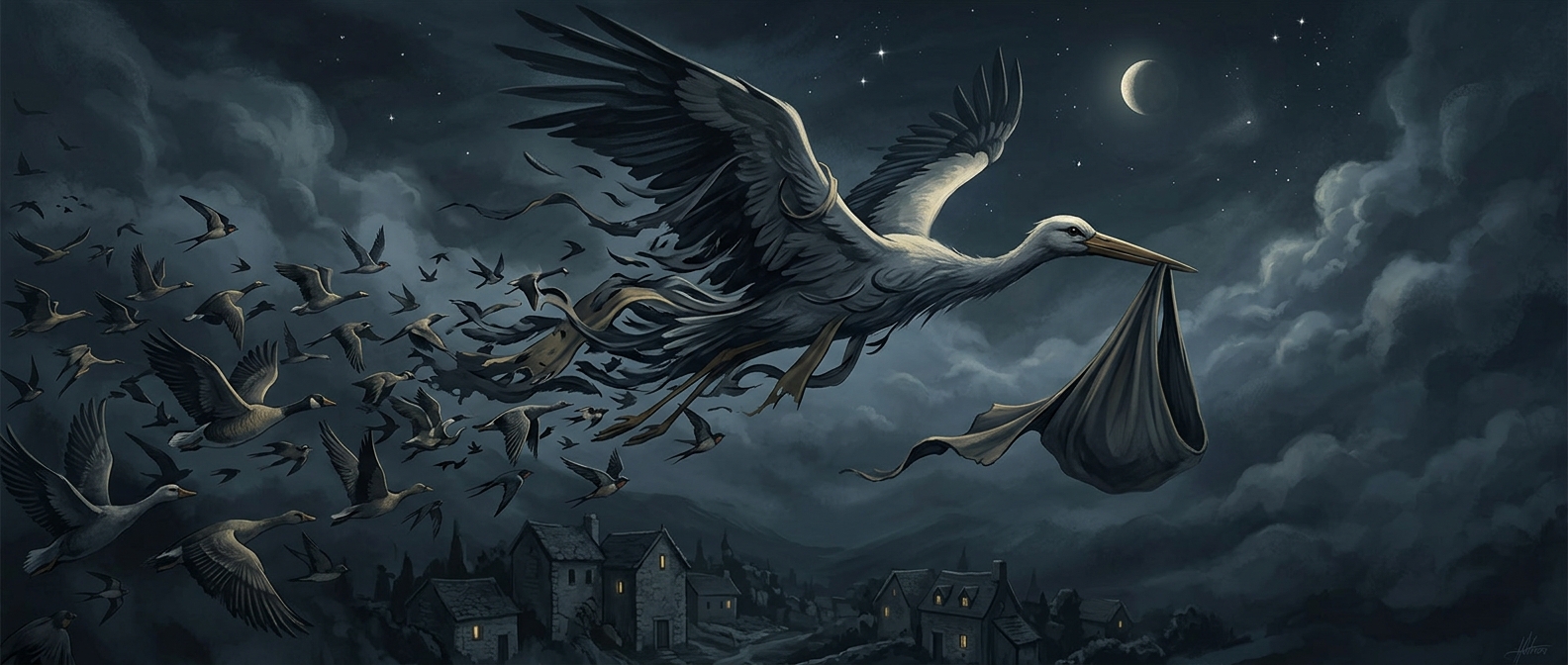
Across European folklore, the association grew into a more literal tale: a stork carried babies to their parents. The bird’s long legs and bill helped make the image feel plausible in storybook terms, as though it could wade into hidden waters and retrieve a child. The details varied, but the central idea was simple enough to pass from one generation to the next.
A gentle way to tell a difficult story
The legend also served a social purpose. For adults answering children’s questions about where babies came from, a stork offered a playful explanation that avoided discussing sex and pregnancy. In stories and illustrations, the bird could stand in for the whole process, turning a private family event into a familiar, harmless delivery.
Once that image became common, it reinforced itself: every drawing of a stork carrying a bundled baby made the next one feel instantly recognizable. The result is a folk symbol built from a real bird’s presence near people—and transformed into a delivery service no one had to explain further.