A moving sun needed a driver
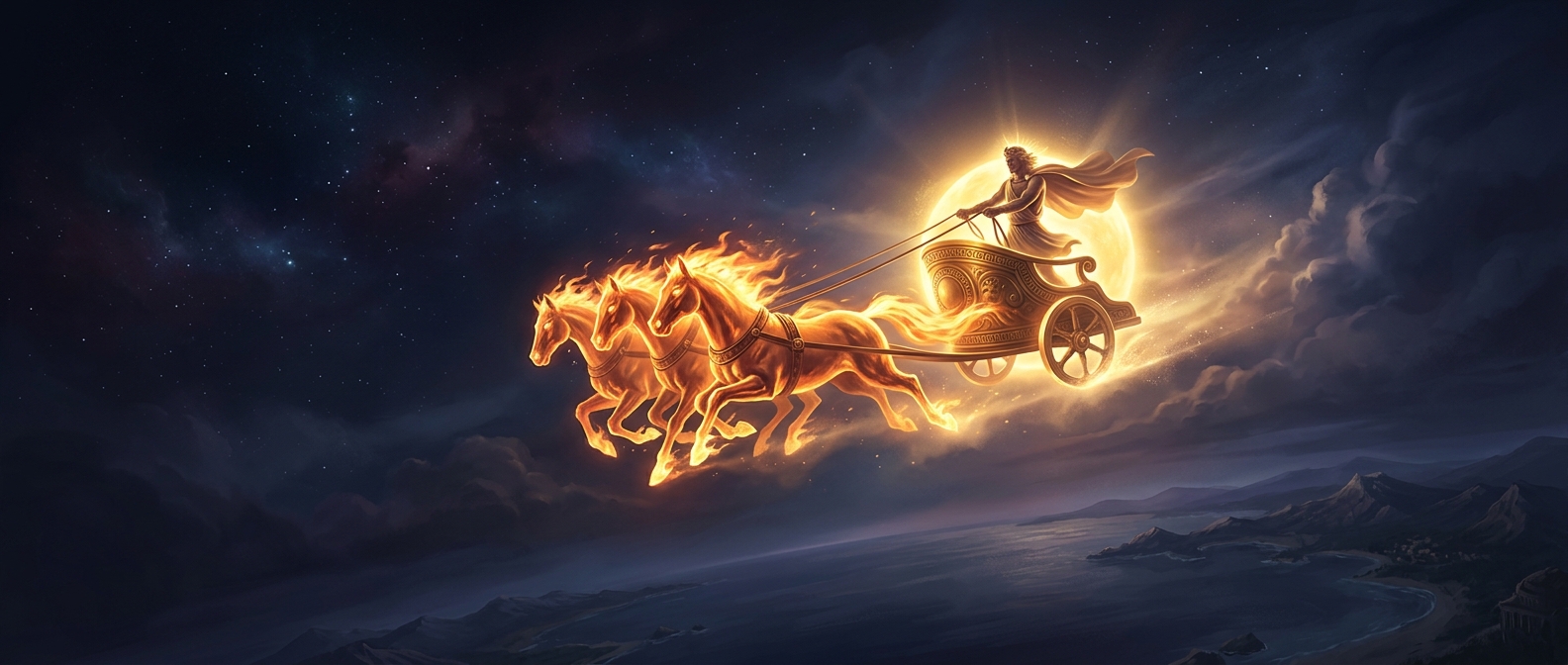
To someone watching the sky, the Sun appears to travel across it each day. Greek myth gave that movement a visible agent: Helios, the divine personification of the Sun, drove a chariot through the heavens. The image turned a vast, regular motion into something people could picture—a driver, a vehicle, and a route.
The chariot also made the Sun’s progress feel purposeful. Its passage brought daylight to the world below, while its disappearance in the west marked the end of the visible journey. Rather than describe the sky as a system of distant bodies, the story framed the day as a trip made by a powerful being.
A route with a return built in
The chariot image raises an obvious question: if Helios traveled west, how did he appear in the east again? In some ancient accounts, he returned during the night by traveling around the world, sometimes in a golden vessel. Details vary across Greek stories; the myth was not a single, fixed travel itinerary.
That nighttime return completed the cycle. The Sun’s reappearance was not a new beginning without explanation but the arrival of a traveler who had made the circuit out of sight. The story’s memorable transportation detail is doing real work: it links sunset to sunrise and turns the daily sky into a journey with a route, a vehicle, and a return.