Why a hammer throw only rearranges motion
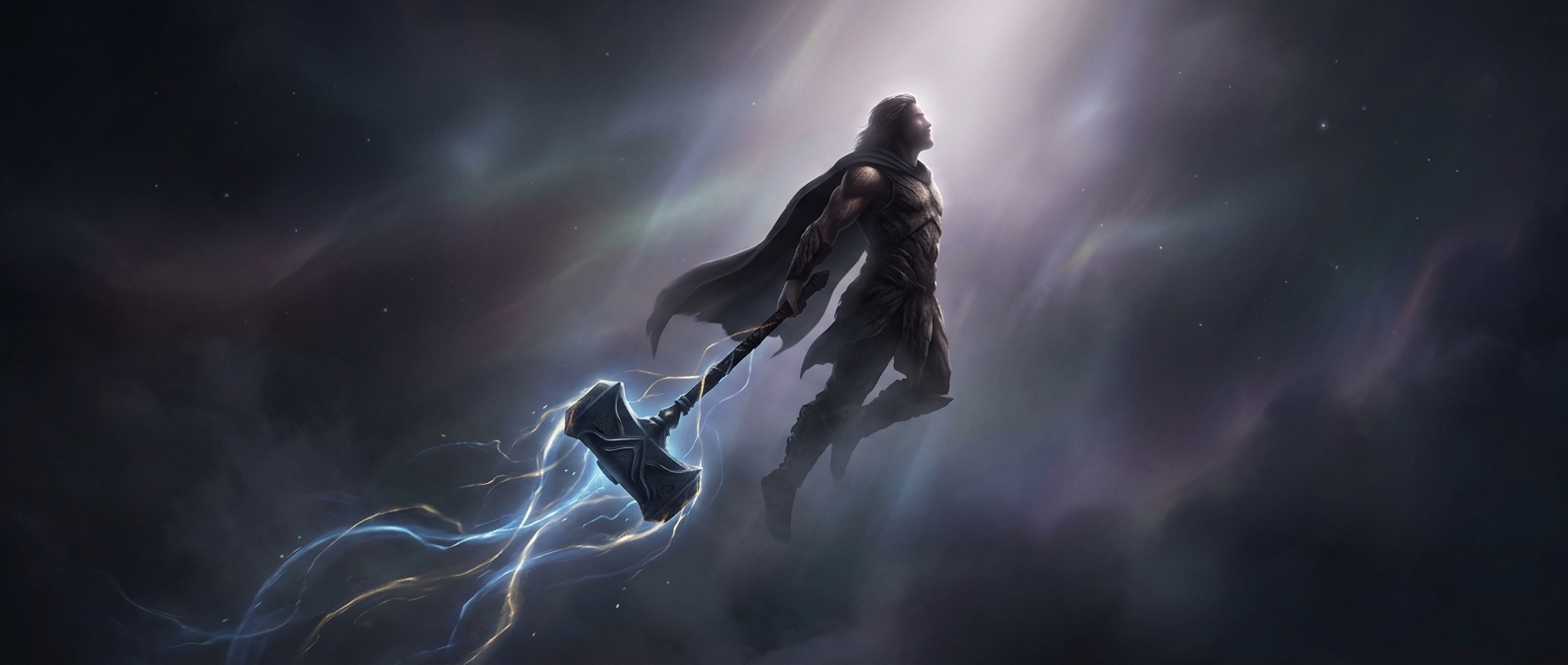
When you throw a hammer, your hands push it away, and the hammer pushes back on you with an equal force in the opposite direction. That push can make you recoil. But it does not give the pair of you a net upward boost: while you are holding the hammer, the push is an interaction within one combined system.
The useful measure is the system’s center of mass—the balance point of you and the hammer considered together. If no outside force acts, internal pushes can move the hammer one way and you the other, but they cannot accelerate that balance point. In the air, you might rise briefly as the hammer moves downward, or shift position as it flies away; the two motions offset rather than lifting the whole system.
What actually makes you rise
To gain upward motion as a whole, something outside the person-and-hammer system must push upward. On the ground, that can be the ground: your feet press down, and the ground pushes you up. A helicopter rotor gets lift by pushing air downward. Simply gripping a hammer creates no comparable connection to the ground or air.
The hammer can still change your motion in a noticeable way. A heavy hammer thrown hard may send you backward, and a downward throw can give you an upward recoil. But that upward movement comes with the hammer moving downward; once it is gone, it cannot keep pulling you up. The throw changes where you and the hammer move relative to each other—not the motion of the pair’s balance point.