Why the swing gathers speed at the bottom
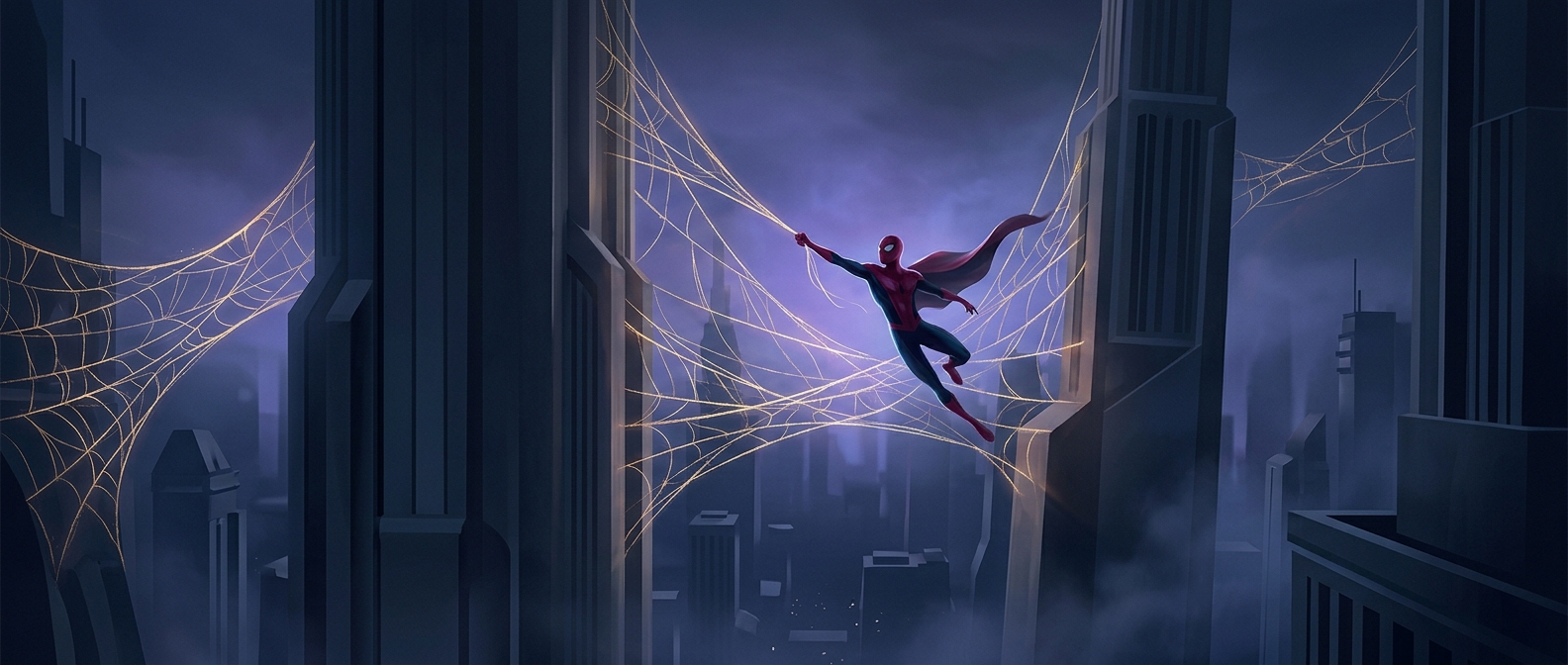
A person moving on a taut web behaves like a pendulum: the web acts as a flexible tether, and gravity pulls the rider toward the lowest point of the arc. As they drop, gravitational potential energy—the energy of being higher up—turns into motion. That is why the swing is fastest at the bottom, where the rider has lost the most height.
The web’s tension continually redirects the rider’s motion, pulling them along a curved path rather than letting them travel in a straight line. In a real swing, air resistance and energy lost as the web stretches or shifts mean the rider will not climb back to exactly the same height without another push.
Turning speed into height
After passing the bottom, the rider’s momentum carries them upward even as gravity slows them. Some of the motion energy becomes height again. To reach a building across the gap, the rider must arrive with enough speed and travel in the right direction; simply having a strong tether does not guarantee a successful landing.
The route also depends on geometry. A longer web creates a wider, slower pendulum arc, while a shorter one swings more quickly through a tighter path. The anchor points must withstand the changing pull, which can be greatest when the rider is moving quickly at the bottom. The dramatic crossing is a trade: speed gained on the descent pays for height on the climb, while the web and its anchors carry the load throughout.