A third wheel changes the ride
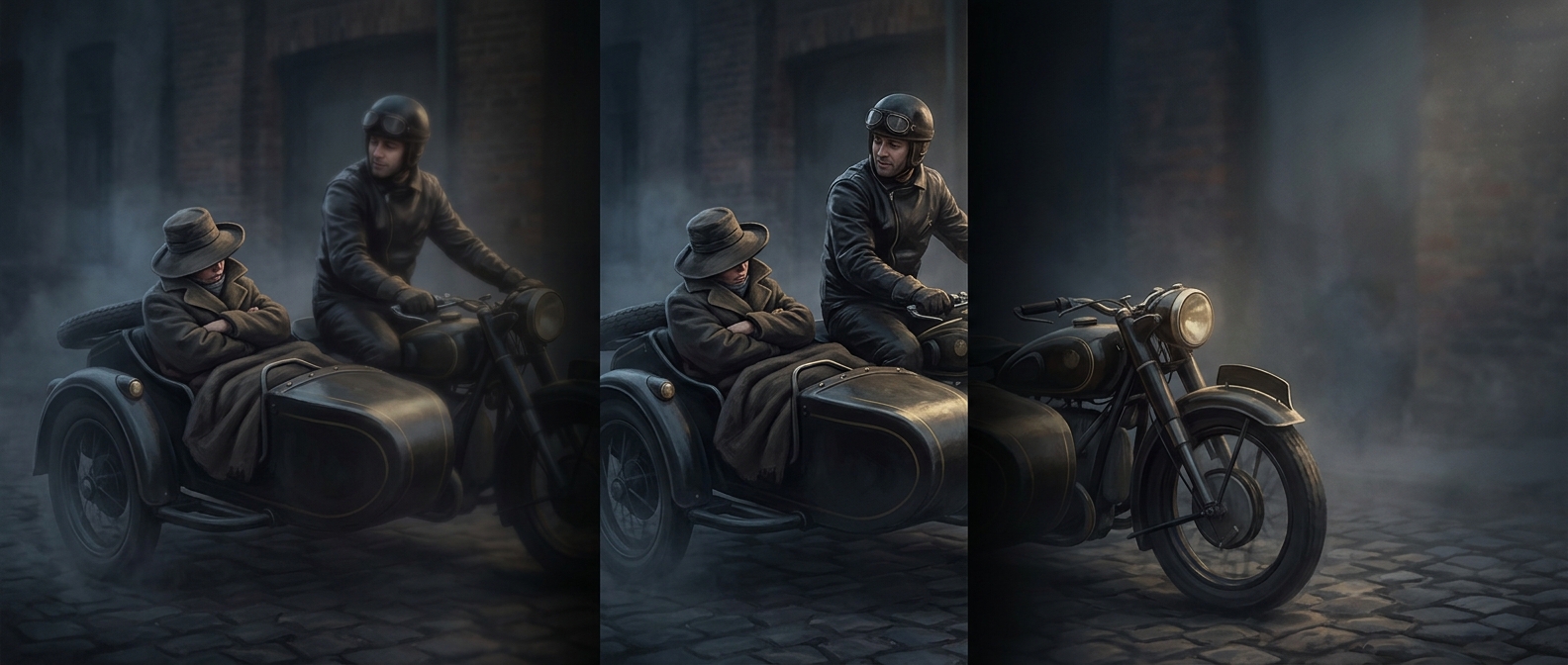
A sidecar is more than an extra seat: its frame is attached to the motorcycle, and its own wheel creates a third point of contact with the road. That lets the passenger sit alongside the rider rather than directly behind, but it also changes how the vehicle behaves. A solo motorcycle leans into a turn; a conventional sidecar outfit cannot lean in the same way because the sidecar wheel holds one side of the vehicle up.
The rider must steer through turns instead of relying on the familiar lean-and-countersteer motion of a motorcycle. The sidecar’s position also makes handling asymmetric: turning toward the sidecar feels different from turning away from it, and bumps or uneven pavement can tug at the outfit differently from side to side.
Stability comes with a tradeoff
Three wheels can make the vehicle feel more planted when stopped or moving slowly, since it does not need to balance like a two-wheeler. But stability is not automatic in every turn. If the sidecar is on the outside of a corner, a hard turn can lift its wheel; a passenger’s weight and the way the outfit is loaded affect how it responds.
That is why a sidecar is best understood as a small, attached vehicle, not simply a motorcycle with a roomy passenger seat. It gives the passenger a separate place to sit, while asking the rider to adapt to a machine that turns, balances, and carries weight differently.