Why one train can take two routes
Some rail services run as a single train for part of a journey, then divide at a junction. The front and rear sections are uncoupled, and each continues as a separate train—often toward destinations that share the same route up to that point. This lets a railway offer more direct journeys without running two full-length trains over the entire shared stretch.
The split depends on where you sit
Before the division, the carriages may look and feel like one continuous train. But the sections are assigned different destinations, so passengers need to board the correct portion. Notices on platforms, carriage doors, or onboard displays identify which coaches are going where. The catch is that the train may stop only briefly at the place where it divides, leaving little time to move between sections.
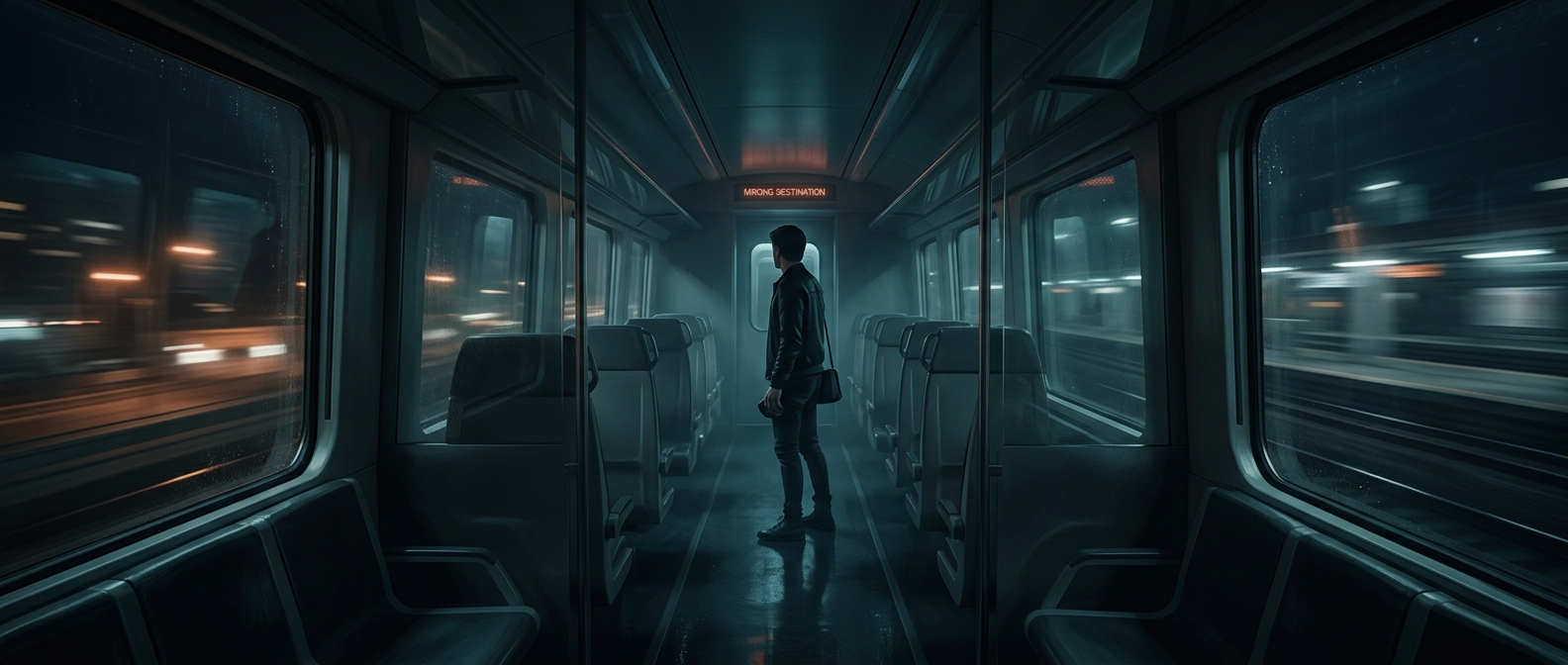
Rail staff use the coupling system to separate the portions, while signals and operating procedures ensure each section can depart safely on its own. The split is planned into the service; it is not a last-minute change of direction. Still, a missed notice can turn an ordinary seat choice into a route choice: once the train divides, your carriage may be headed away from your intended destination.
A small check prevents a long detour
On a train marked for more than one destination, check the coach or carriage number against the destination shown for that section—not just the train’s overall name or final destination on the platform board. The train can be correct while your part of it is not.